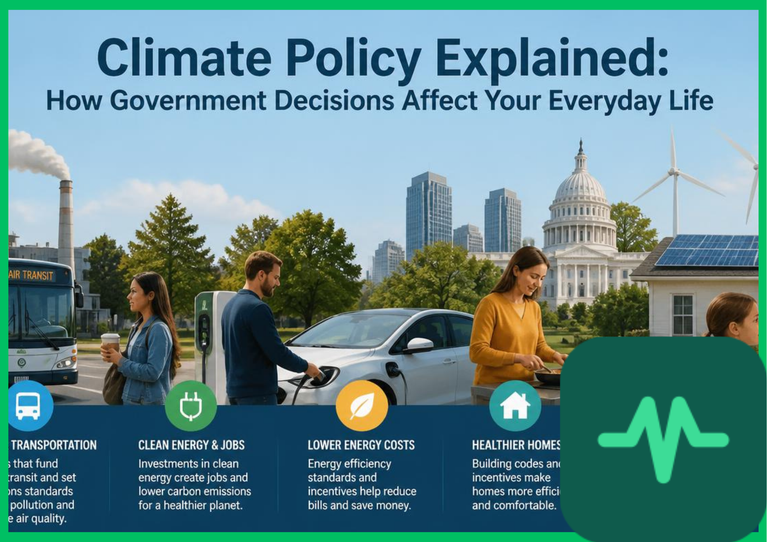
Governments make real decisions about how their countries respond to climate change. These decisions are called climate policy, and they reach further into daily life than most people realize.
They can affect energy. They can affect transportation. They can affect buildings. They can affect entire industries. They can even shape which products actually show up on store shelves.
Understanding these policies, in other words, helps you understand where the broader economy is actually heading, not just where it stands today.
Renewable Energy Policies
Governments can encourage renewable energy in several concrete ways. They may support solar power directly through funding. They may create incentives for wind projects to get built faster. They may invest in electricity grids to handle new clean generation.
They may also set clear targets for renewable generation over time. These decisions genuinely influence how quickly clean-energy technologies grow and reach everyday consumers.
Electric Vehicle Policies
Transportation is another major policy area worth watching. Governments may introduce emissions standards that push automakers toward cleaner vehicles. They may support charging infrastructure with public investment. Some countries offer direct incentives for buying electric vehicles too.
These policies genuinely influence which vehicles manufacturers choose to build, and which models actually reach dealership lots near you.
Why This Matters to Car Buyers
Here's something worth thinking about: a consumer buying a car today may keep it for many years to come. That's exactly why government transportation policy matters so much, even if it feels distant.
If a country rapidly expands charging infrastructure, owning an EV becomes noticeably easier over time. If fuel taxes shift, petrol and diesel running costs shift right along with them. Policy, in short, genuinely shapes the total cost of vehicle ownership, not just the sticker price on day one.
Building Policies
Buildings consume enormous amounts of energy, often more than people assume. Governments can introduce efficiency standards for new construction specifically. They can create rules around insulation, heating, and cooling systems too.
These policies improve energy efficiency steadily over time. For consumers, that often translates into genuinely lower energy use in newer homes, sometimes without buyers even realizing why.
Appliance Efficiency
Climate-related rules reach into household appliances too, quietly shaping what's available. Governments may set minimum efficiency standards that manufacturers have to meet before selling a product.
Over time, this means consumers see more efficient refrigerators, air conditioners, washing machines, and countless other everyday products, all without necessarily paying attention to the regulation behind the improvement.
Carbon Pricing
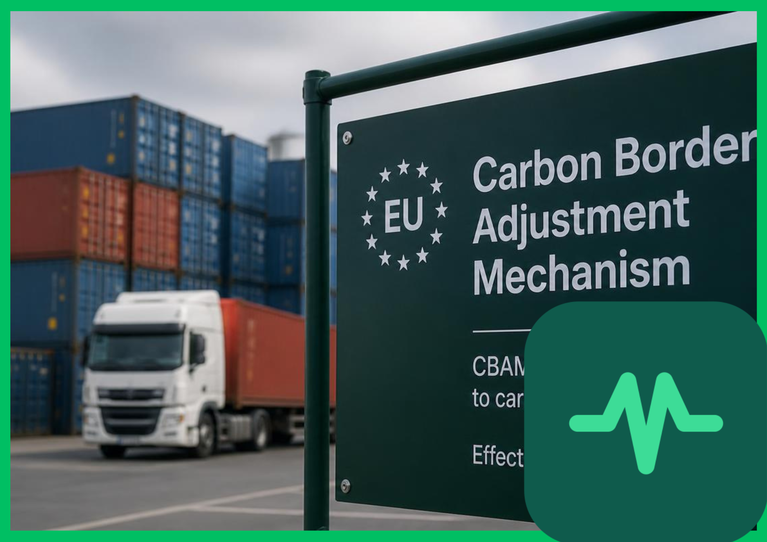
Carbon pricing is another important policy tool worth understanding. The basic idea is straightforward: place a real financial cost on carbon emissions, making pollution more expensive.
The exact design varies between countries. Some use carbon taxes directly. Others use emissions-trading systems instead. The underlying goal, either way, is encouraging lower-emission choices across the economy.
Climate Policy Can Create New Markets
Government rules can create genuine demand for entirely new technologies. Solar companies benefit from strong renewable-energy targets. Battery companies benefit from storage-friendly policies. EV charging businesses benefit from transport electrification pushes. Energy-efficiency companies benefit from stricter building standards.
Policy, in other words, can help shape entire industries from the ground up, not just tweak existing ones at the margins.
Climate Policy Can Also Create Challenges
Policy changes aren't always smooth for businesses and consumers alike. Companies may need to swap out equipment entirely. Workers may need genuinely new skills to stay employed. Consumers may face higher upfront costs for certain products during the transition.
This is exactly why governments often have to balance ambitious environmental goals against real, everyday affordability concerns.
The Importance of Fairness
Climate policies affect different people very differently, and that's worth acknowledging honestly. A wealthy household may find it genuinely easy to buy a new electric vehicle. Another household may depend entirely on an older, less efficient car simply because that's what they can afford.
Similarly, homeowners can install solar panels on their own roofs. Renters often can't make that same choice at all. Good climate policy needs to genuinely consider these different starting points, not assume everyone faces the same options.
Climate Policy and Energy Security
Climate policy connects increasingly to energy security too, a link that's easy to overlook. Renewable energy reduces dependence on imported fossil fuels from unstable markets. Energy efficiency reduces overall demand on the system. Battery storage improves flexibility when supply gets tight.
Domestic clean-energy production can also create genuine new economic opportunities at home, rather than sending energy dollars overseas indefinitely.
What Consumers Should Watch
Pay attention to policies touching:
- Electricity
- Cars
- Buildings
- Solar power
- Batteries
- Energy efficiency
- Waste
- Recycling
These policies genuinely shape future product choices and prices, often years before consumers notice the shift firsthand.
EcoGreenPulse View
Climate policy doesn't just exist in distant government offices, disconnected from real life. It eventually reaches households directly, whether people realize the connection or not.
It can influence your electricity bill. It can influence which car you end up choosing. It can influence the home technology available to you. It can influence what actually sits on store shelves when you go shopping.
Conclusion
Understanding climate policy helps consumers understand the direction the broader economy is actually heading. Governments set the rules. Companies respond to those rules. New technologies develop as a result. Consumers then gain genuinely new choices they didn't have before.
The transition itself can feel challenging at times, no question. Smart policies, though, can also create real opportunities for cleaner, more efficient, and more resilient technologies, benefiting far more people than just the businesses building them.
Sources: International Energy Agency, International Renewable Energy Agency, and United Nations Environment Programme resources on climate, energy, and clean-technology policy.

Comments (0)
Login to leave a comment.
No comments yet. Be the first to share your thoughts!