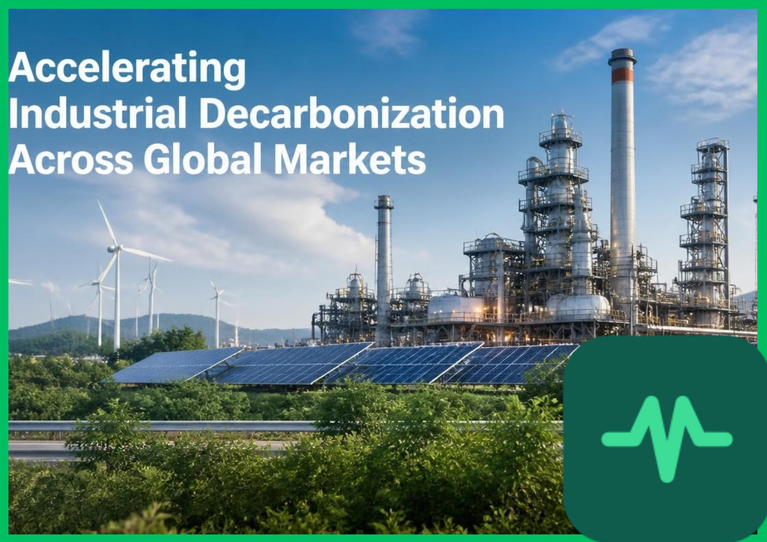
Steel mills forged the skeleton of modern cities. Cargo ships crossed oceans carrying global trade. Also, chemical plants manufactured the materials of daily life.
That industrial progress came with a massive hidden cost.
This industrial progress accounts for steelmaking, cement production, chemical manufacturing, and long-distance shipping. At the same time, it results in heavy industrial usage leading to a staggering share of global greenhouse gas emissions.
Unlike passenger cars or residential homes, these heavy sectors cannot easily run on standard batteries. Their high-heat processes and heavy load requirements demand heavy chemical energy.
Accelerating industrial decarbonization is the next great frontier in global climate policy.
Here is how international policy frameworks and market mechanisms are driving heavy industries to adopt clean technologies and slash carbon outputs.
The Hard-to-Abate Industrial Challenge
To understand industrial decarbonization, you have to look at why these sectors are so difficult to clean up.
Making traditional steel requires burning metallurgical coal inside massive blast furnaces at blistering temperatures to strip oxygen from iron ore. Making cement requires heating limestone until it releases stored carbon dioxide gas directly into the air.
These emissions are process-related, meaning they happen because of the chemical reactions required to make the product, not just from burning fuel for power.
To eliminate industrial emissions, companies must completely reinvent their underlying manufacturing chemistry.
That transition requires massive capital investment, long-term technological development, and synchronized global policy support.
Policy Frameworks and Market Mechanisms
Governments and international bodies are deploying powerful economic tools to drive industrial change.
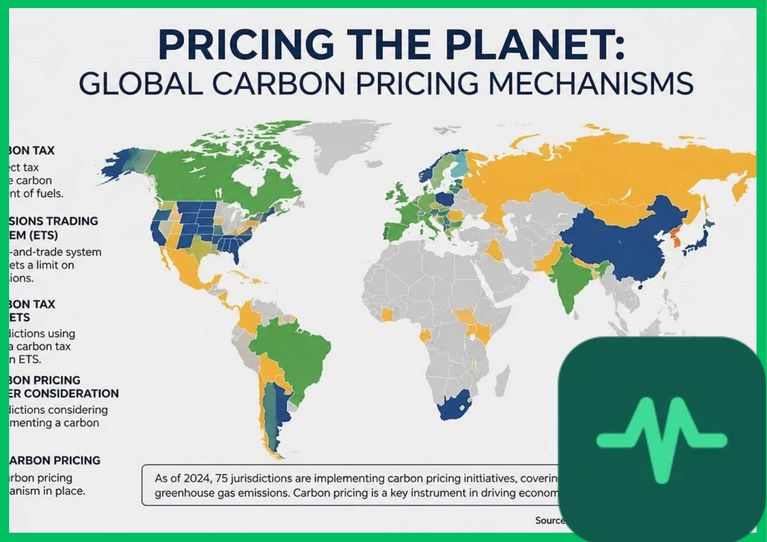
Global carbon pricing mechanisms place a direct financial penalty on greenhouse gas emissions, turning pollution from an externalized byproduct into a costly business liability.
When carbon carries a real-time financial price, heavy industries have an immediate economic incentive to innovate.
Furthermore, cross-border carbon adjustment mechanisms protect domestic manufacturers who invest in clean tech by placing import tariffs on high-emission goods coming from regions with lax environmental rules.
This levels the playing field and encourages international trading partners to clean up their own production lines.
Clean Tech Innovations in Heavy Industry
Driven by these policy pressures, breakthrough technologies are moving from laboratories to factory floors:
- Green Hydrogen: Using water electrolysis powered by zero-emission renewables to produce green hydrogen, replacing metallurgical coal in steelmaking with clean water vapor as a byproduct.
- Carbon Capture and Storage (CCS): Capturing unavoidable industrial carbon emissions directly from smokestacks and injecting them deep underground into secure geological formations.
- Electrified Industrial Heating: Replacing fossil-fuel kilns with high-efficiency electric arc furnaces and induction heating systems powered by clean electricity grids.
Building a Sustainable Industrial Future
Decarbonizing heavy industry is no longer an optional environmental aspiration. It is an economic and ecological necessity.
By combining rigorous international policy frameworks, carbon pricing, and clean technology innovation, we can build a thriving industrial economy that honors planetary limits and secures a zero-carbon future.

Comments (0)
Login to leave a comment.
No comments yet. Be the first to share your thoughts!