You want to do the right thing. You look for a recycling bin, or you check to see if the item can be repaired.
Then you pause.
What kind of plastic is this casing made of? Are there hazardous chemicals soldered onto the internal circuit board? Can these parts be safely separated and reused, or is the whole machine destined to sit forever in a landfill?
Most of the time, you have no way of knowing.
For generations, our global economy operated on a one-way street. Manufacturers extracted raw materials, built products, sold them to consumers, and threw them away.
That linear take-make-waste model hides the true identity of every material inside our goods.
A digital transformation is taking root across global manufacturing.
According to resource efficiency frameworks from the United Nations Environment Programme (UNEP), International Energy Agency (IEA) transition reports, and academic sustainability research, digital product passports are rewriting the rules of commerce.
By tracking materials transparently from factory floor to recycling plant, digital passports turn opaque waste into valuable resources.
Here is how material traceability works, why it unlocks a true circular economy, and how transparency changes our relationship with consumer goods.
The Blind Spot of the Linear Economy
To understand why we need digital product passports, you have to look at the massive information gap in modern manufacturing.
When a factory builds a washing machine, a smartphone, or a commercial battery, it combines dozens of different materials.
Plastics, rare earth metals, adhesives, chemical compounds, and glass fuse together into a finished product.
When that product reaches the end of its working life years later, recycling facilities face a frustrating guessing game.
Without knowing the exact chemical recipe of a plastic housing or the toxic composition of internal wiring, recyclers cannot sort materials cleanly.
Mixed plastics contaminate recycling streams. Valuable metals get crushed and lost in industrial shredders.
As academic circular economy studies point out, recycling fails not because materials lack value, but because we lack information about what those materials actually are.
We cannot recycle what we cannot identify.
What Is a Digital Product Passport?
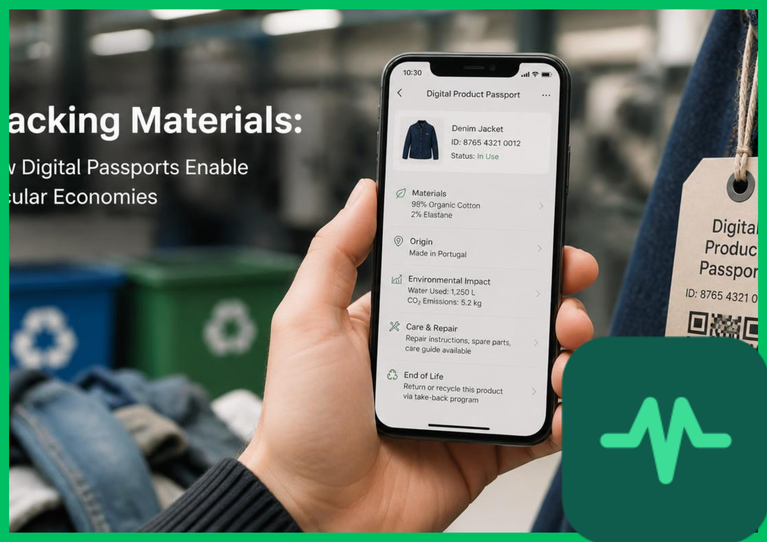
A digital product passport is a secure, digital record that contains the complete lifecycle story of a manufactured item.
Think of it as an interactive birth certificate and medical history combined into one.
A unique QR code, RFID tag, or secure blockchain identifier sits directly on the product or its packaging.
When you scan that code with a standard smartphone or a commercial industrial scanner, it opens a secure cloud database revealing the item's entire background.
The passport lists every raw material used during manufacturing, the carbon footprint generated during production, repair instructions for technicians, and precise guidelines for disassembling the product when it breaks.
Instead of guessing what is inside a device, anyone—from a repair technician to a municipal recycler—instantaneously reads its exact material composition.
Closing the Loop Through Complete Transparency
Material traceability changes how products are designed, used, and recycled.
When manufacturers know they must attach a digital passport to their goods, their design philosophy shifts overnight.
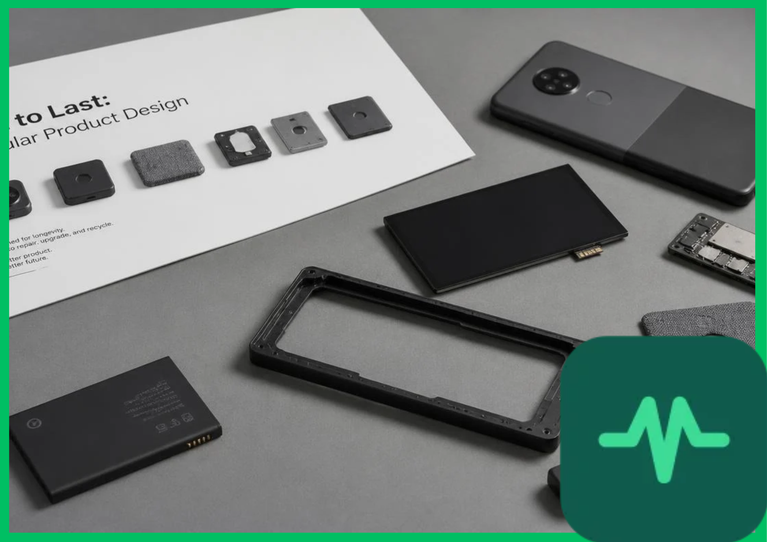
They stop using glues that fuse incompatible plastics together. They design products with modular components that can be unscrewed, repaired, and replaced easily.
When a product finally breaks down beyond repair, waste facilities use the digital passport to guide automated sorting robots.
Metals separate cleanly. Pure polymers get diverted back into manufacturing lines as high-quality secondary raw materials.
According to UNEP resource efficiency assessments, tracking materials digitally eliminates massive volumes of industrial waste, reducing the need to mine fresh virgin ores from the earth.
Protecting Consumer Rights and Right to Repair
Digital product passports do more than help industrial recyclers; they empower everyday people.
For too long, consumer electronics and appliances were designed as black boxes. When something broke, fixing it cost more than buying a new one, fueling a wasteful culture of planned obsolescence.
A digital passport puts repair power back into your hands.
When an appliance stops working, scanning its passport pulls up step-by-step repair manuals, exact spare part numbers, and diagrams showing how to swap out a faulty component.
Independent repair shops get the technical data they need to fix items quickly, extending product lifespans and saving households money.
Transparency drives accountability.
Building a Traceable Global Future
Adopting digital product passports represents a profound shift in human enterprise.
We are moving away from anonymous, disposable consumption and building a transparent, accountable global economy.
By tracking materials from creation to rebirth, we close the loop on resource waste.
We stop treating the Earth as a temporary dumpster and start managing our resources with care and precision.
Through digital traceability, we build a sustainable, circular future where every material matters and nothing goes to waste.



Comments (0)
Login to leave a comment.
No comments yet. Be the first to share your thoughts!