Then you notice something frustrating. The casing is sealed shut with industrial glue, the internal screws require a custom tool that does not exist, and the fragile plastic parts snap the moment you apply pressure.
You toss the machine into the trash.
That frustrating experience happens millions of times every day across the globe.
For generations, our industrial economy followed a simple, destructive pipeline: extract raw materials from the earth, manufacture goods, use them briefly, and throw them away.
Take, make, waste.
That linear model treats our planet as an infinite trash bin. It assumes resources never run out and pollution never catches up with us.
Both assumptions are false.
According to resource efficiency frameworks from the United Nations Environment Programme (UNEP), International Energy Agency (IEA) industrial transition reports, and academic manufacturing research, our linear manufacturing limits have arrived.
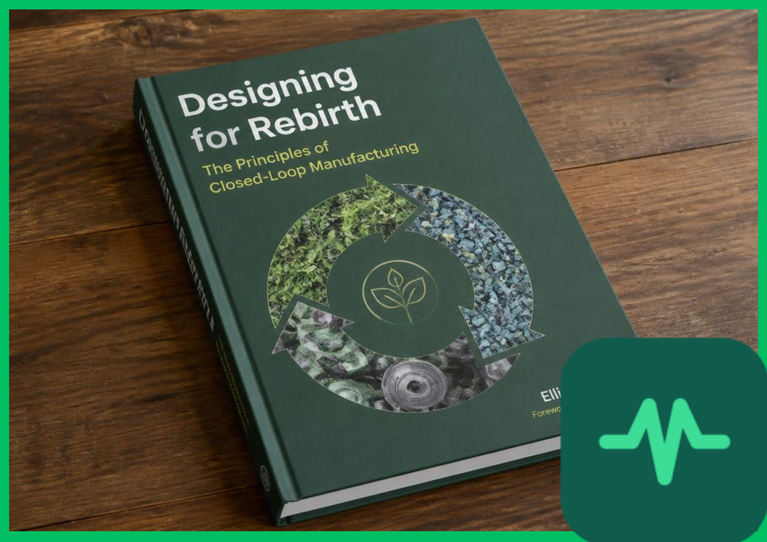
A profound industrial philosophy is taking its place. It is called closed-loop manufacturing.
Here is how extended producer responsibility models, product durability standards, and circular design principles work, why they matter, and how designing for rebirth transforms our global economy.
The Hidden Waste of the Linear Industrial Model
To understand why we must change, you have to look at the immense physical waste buried inside traditional manufacturing.
Every year, factories extract tens of billions of metric tons of raw minerals, metals, and fossil fuels.
They melt, mold, and stamp those materials into consumer products.
Yet, much of that newly manufactured value vanishes within a few years. When a product breaks down, repairing it is often harder and more expensive than buying a replacement.
This culture of planned obsolescence drains natural ecosystems.
Mining virgin ores consumes staggering amounts of energy, releasing massive carbon footprints long before a product ever reaches a store shelf.
At the same time, overflowing landfills release toxic leachate and methane gas, while plastic waste accumulates in natural soils and oceans.
We cannot mine our way out of global resource scarcity.
We need an industrial system that builds products for infinite rebirth.
What Is Closed-Loop Manufacturing?
Closed-loop manufacturing is an industrial design model inspired by natural ecosystems.
In nature, waste does not exist. The decaying matter of one organism becomes the vital nutrient for the next generation of life.
Closed-loop manufacturing applies that exact principle to human commerce.
Instead of designing products to be thrown away, visionary manufacturers design goods from the very first blueprint for durability, repairability, modular upgrades, and eventual recycling.
When a closed-loop product reaches the end of its initial operational life, its components do not become garbage.
They are collected, separated cleanly, and melted down or repurposed into high-value raw materials for the next production cycle.
This model decouples economic prosperity from environmental destruction.
You can build thriving industrial societies without constantly digging up new earth or filling up endless landfills.
The Core Principles of Circular Design
Transitioning from a linear factory floor to a closed-loop system requires changing how products are conceived from inception.
Academic sustainability studies and UNEP circular economy frameworks highlight several core principles that drive closed-loop manufacturing:
1. Design for Disassembly
Manufacturers stop using permanent glues, chemical welds, and mixed plastics that cannot be separated. Products are assembled using standard mechanical fasteners like screws and snap-fits, allowing technicians or recycling robots to take them apart cleanly.
2. Prioritize Material Purity
Factories choose pure, high-grade metals, mono-materials, and safe bio-based polymers that retain their structural integrity through multiple recycling cycles, avoiding contamination in recovery streams.
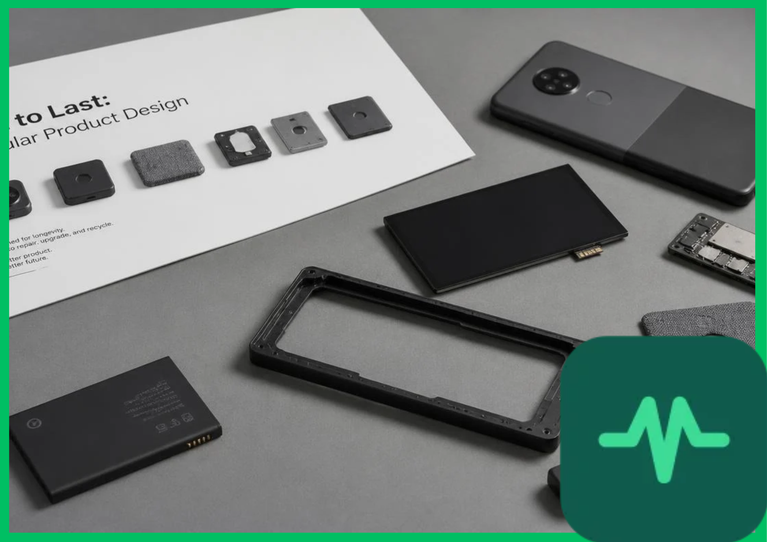
3. Build for Modular Upgrades
Instead of discarding an entire machine when a single internal component becomes outdated, products are built with modular parts. You replace a single circuit board or motor module rather than trashing the entire appliance.
When these principles guide production, products last longer and transition seamlessly into material recovery when their active life finally ends.
Extended Producer Responsibility and Accountability
A closed-loop manufacturing model extends far beyond factory walls. It transforms corporate responsibility through extended producer responsibility frameworks.
In a linear economy, once a manufacturer sells a product, they wash their hands of its eventual disposal.
Under extended producer responsibility models, companies remain legally and financially responsible for their products across the entire lifecycle—all the way through final recycling.
When manufacturers must take back and recycle their retired goods, their design priorities shift overnight.
They stop building disposable junk because taking back toxic waste is expensive.
Instead, they design durable, easily recyclable goods that retain their material value, turning end-of-life returns into profitable secondary raw material sources for future manufacturing runs.
Building a Resilient, Reborn Global Economy
Adopting closed-loop manufacturing is not an act of charity. It is a smart, essential economic strategy.
As global populations grow and raw material costs rise, companies that embrace circularity secure an unbeatable competitive advantage.
They insulate their supply chains from resource shocks, lower their material input costs, and eliminate wasteful manufacturing steps.
By designing products for rebirth, we stop treating the Earth as a temporary warehouse.
We build a resilient, sustainable global economy where resources circulate endlessly, waste becomes a thing of the past, and both human society and natural ecosystems thrive together.

Comments (0)
Login to leave a comment.
No comments yet. Be the first to share your thoughts!