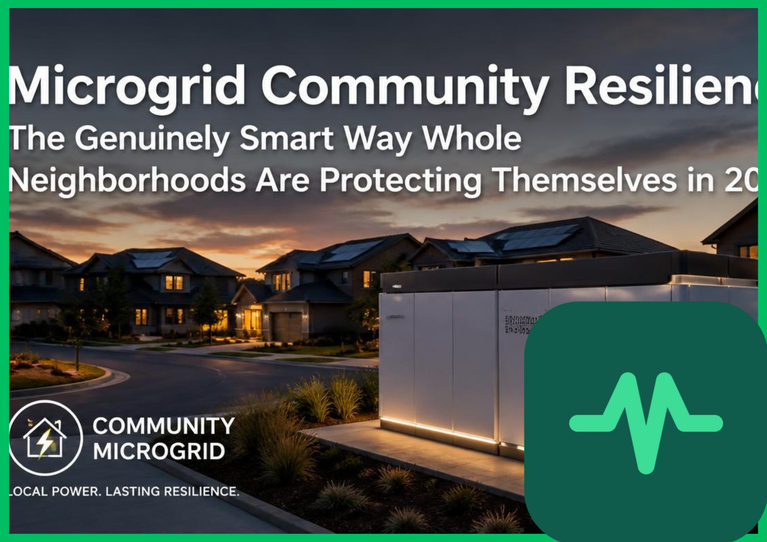
Imagine your whole street genuinely keeping power while nearby areas sit in the dark during a big storm. Microgrid community resilience genuinely makes this possible in 2026.
Let's talk simply about this smart, caring idea.
Why One Home Battery Genuinely Has Limits
We've genuinely talked about home batteries before. Microgrid community resilience genuinely takes this idea further. It genuinely connects whole neighborhoods together, sharing power as a team.
This genuine team effort gives stronger protection than one house alone.
How a Microgrid Actually Works
A genuine microgrid genuinely joins local solar panels, batteries, and smart controls to power several homes or buildings together. When the main grid genuinely fails, the microgrid genuinely cuts itself off and runs on its own.
This genuine independence keeps power flowing inside the community, even during a wide outage.
Why 2026 Brought Real Growth Here
More neighborhoods have genuinely installed microgrid systems this year. This has genuinely happened most in areas that genuinely face bad storms often. Growing worry about grid failures has genuinely driven this rise.
Why This Matters for Vulnerable Neighbors
Microgrid community resilience genuinely protects everyone nearby, including older people and those genuinely needing medical machines. This genuine team protection matters far more than simple convenience.
Communities genuinely choosing this technology often genuinely think of their weakest members first.
Why This Feels Like Real Neighborly Care
There's something genuinely moving about neighbors genuinely working together for shared safety. This genuine team action feels stronger than everyone fending for themselves alone.
The Honest Cost and Teamwork Challenges
Let's be fair. Building a microgrid genuinely takes real money upfront. It genuinely needs careful teamwork between many property owners too. This genuine complexity makes it harder than one home system.
Why Schools Genuinely Make Great Anchor Points
Many microgrid projects genuinely center around a school or community center. These genuine spots can become safe shelters with steady power during a disaster, helping the whole area.
Why This Connects to Grid Forming Inverters
We've genuinely talked about grid forming inverters before. Microgrids genuinely rely on this same kind of technology to stay steady when genuinely running on their own, apart from the main grid.
Why Government Help Matters for Growth
Some funding programs genuinely support microgrid projects directly. They genuinely see real value in this kind of disaster planning as storms genuinely grow more severe.
What Comes Next
Expect microgrid community resilience to genuinely grow through 2026 as more neighborhoods genuinely see the real value in sharing power together during emergencies.
Common Questions
How is a microgrid genuinely different from one home battery?
It genuinely links many homes or buildings together, sharing power instead of protecting just one house.
Do microgrids genuinely cost a lot?
Yes. They genuinely need real upfront money and teamwork, though funding help is genuinely growing.
Why do schools often genuinely become anchor points?
They genuinely can become safe shelters with steady power, helping the whole community during a crisis.
Final Thoughts
Microgrid community resilience in 2026 genuinely offers powerful, shared protection as storms genuinely grow more severe. This idea genuinely deserves real credit as neighbors work together for shared safety.



Comments (0)
Login to leave a comment.
No comments yet. Be the first to share your thoughts!