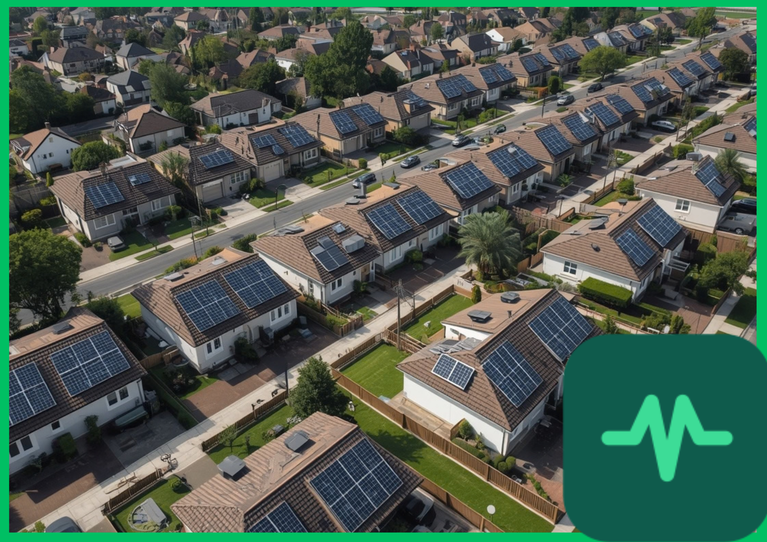
Miles away, a massive centralized power plant hums along, completely unaware that your home has lost power.
For over a century, our electrical grid has operated on a fragile, top-down model. Giant power stations burn fossil fuels or harness massive dams, pushing electricity across hundreds of kilometers of transmission lines straight to your wall.
When a storm breaks a single link in that long chain, thousands of homes go dark.
That centralized model is cracking. A quiet revolution is replacing it, turning individual homes into active energy hubs and linking neighborhoods together into resilient local networks.
It is the rise of the residential microgrid, and it is completely changing clean energy.
The Fragility of the Centralized Grid
To understand why microgrids matter, you have to look at the flaws of the old electrical grid.
Our legacy power grids were built for a different era. They were designed for one-way traffic: power flows from a massive central station out to passive consumers.
As extreme weather events grow more frequent, centralized grids face unprecedented stress. High winds, heavy snowstorms, and extreme heatwaves cause widespread blackouts that leave communities stranded for days.
Furthermore, transmitting electricity over hundreds of kilometers results in massive energy loss through line resistance. Power literal miles away vanishes into thin air before it ever reaches a lightbulb.
We need a smarter, more localized approach to power distribution.
What Is a Residential Microgrid?
A microgrid is a localized group of electricity sources and loads that operates independently from, or in tandem with, the traditional centralized electrical grid.
Think of it as a localized power ecosystem. A residential microgrid connects multiple homes, rooftop solar installations, battery storage units, and local wind or geothermal generators into a single, coordinated web.
Each home generates its own clean power during the day. When one house produces surplus energy, it does not waste it. It shares that electricity locally with a neighbor whose batteries are running low.
If the main regional grid goes down during a storm, the microgrid simply disconnects itself, operating independently as a self-sustaining island until the storm passes.
The Power of Decentralized Energy Independence
Decentralization shifts power—literally and figuratively—from giant utility monopolies back to everyday people.
When you combine rooftop solar panels with residential battery storage, your home transforms from a passive consumer into an active generator. You produce your own clean electricity right where you use it.
This local generation eliminates transmission losses. Power generated on your roof travels a few meters to your appliances, rather than hundreds of kilometers across high-voltage wires.
Decentralization also builds unbreakable community resilience. If a blackout strikes, a neighborhood microgrid keeps refrigerators running, medical equipment powered, and emergency lights on.
Virtual Power Plants and Energy Sharing
Microgrids do more than just survive blackouts. They optimize how clean energy flows across communities.
Advanced software coordinates energy sharing between homes through virtual power plant systems. If your neighbor's electric vehicle needs a fast charge on a cloudy afternoon, your home battery can share surplus solar energy instantly.
This peer-to-peer energy exchange turns neighborhoods into collaborative power networks. Communities balance their own energy loads locally, reducing the need for dirty fossil-fuel peaker plants to fire up during peak evening hours.
Clean energy becomes a shared resource, managed intelligently by software that reacts in milliseconds.
Overcoming Barriers to Local Microgrids
Like any major technological shift, residential microgrids face hurdles on their path to mainstream adoption.
Legacy regulatory frameworks often make local energy sharing legally complex. Many utility monopolies were built around exclusive distribution rights, making peer-to-peer power sales difficult in certain regions.
Additionally, setting up microgrid infrastructure requires upfront investment in smart meters, local battery banks, and secure control software.
Yet, as hardware costs fall and the frequency of grid failures rises, communities and local governments are rewriting regulations to embrace decentralized power.
Building a Resilient Clean Energy Future
The transition to microgrids represents a fundamental rethinking of how we power our lives.
We are moving away from fragile, polluting centralization toward robust, local resilience. We are learning that the strongest electrical grid is not a giant monolith, but an interconnected web of local communities generating and sharing clean energy.
When your home is part of a microgrid, you are never truly powerless. You are part of a living network, powered by the sun and the wind, standing strong together through every storm.

Comments (0)
Login to leave a comment.
No comments yet. Be the first to share your thoughts!