You take a deep breath of clean, crisp air.
You look at the green trees swaying gently in the breeze around your yard.
Every single leaf, branch, and root acts as a tiny, living sponge.
Trees pull carbon dioxide straight out of the atmosphere day after day, locking carbon away in wood and soil as they grow.
Nature designed the ultimate carbon removal machine millions of years ago.
For generations, human civilization looked at plant matter simply as fuel to burn for heat or energy.
When we burned wood, crops, or organic waste, we released that stored carbon right back into the sky.
Cutting emissions is no longer enough to save our shared climate.
Centuries of past pollution linger in the atmosphere, warming our oceans and melting polar ice.
We need to stop adding new carbon.
We also need to pull carbon out of the air permanently.
What if we could combine organic plant growth with industrial carbon capture?
What if a power plant could generate electricity while actually removing carbon dioxide from the earth permanently?
A quiet, brilliant technological revolution is rising across the globe.
According to global climate reports from the International Energy Agency (IEA), resource protection frameworks from the United Nations Environment Programme (UNEP), efficiency benchmarks from ENERGY STAR, and academic bioenergy research, bioenergy with carbon capture and storage technology is changing our environmental horizon.
By burning sustainably grown organic biomass to generate power while trapping every gram of released carbon underground, we turn energy production into a negative emissions engine.
Here is how BECCS works, why negative emissions change climate math, and how capturing biomass secures our sustainable future.
The Hard Math of Historical Emissions
To understand why BECCS technology matters so much, you have to look at the severe reality of our global carbon budget.
Scientists warn that keeping global warming within safe limits requires more than just stopping new pollution.
We must actively remove billions of tons of carbon dioxide from the atmosphere over the coming decades.
Standard renewable energy sources like wind and solar power stop emissions from rising further, but they cannot clean up the carbon legacy already floating in the sky.
Early environmental critics argued that burning any form of biomass was dirty, noting that traditional wood-burning stoves pump smoke and soot into local air.
Engineers and climate scientists agreed on one critical distinction.
Burning unmanaged timber carelessly creates pollution.
However, capturing emissions from sustainable biomass operations creates a completely different outcome.
If you grow fast-growing organic crops, burn them in an advanced industrial boiler equipped with carbon scrubbers, and lock the resulting carbon deep underground, you achieve something remarkable.
You remove more carbon from the atmosphere than the entire process releases.
You create negative emissions.
What Is BECCS Technology?
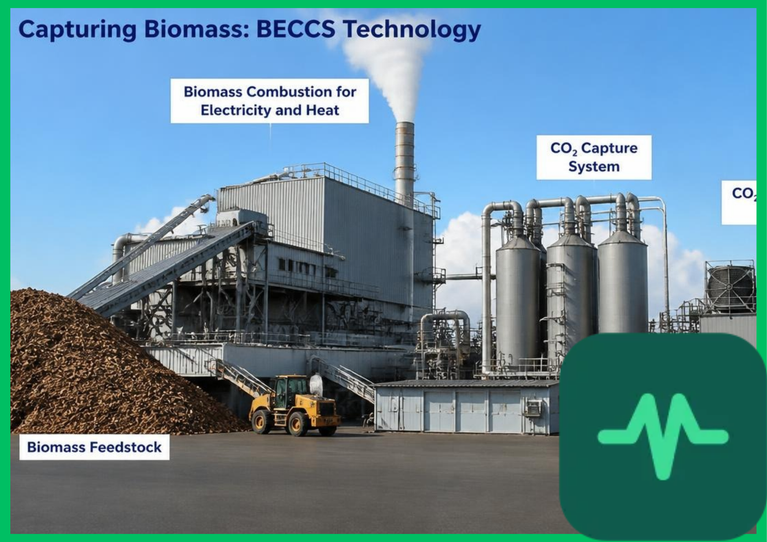
Bioenergy with carbon capture and storage—widely known as BECCS—is an engineered industrial power generation system that burns organic biomass, such as agricultural waste, fast-growing grasses, or sustainable forestry residues, to generate electricity while capturing 90% or more of the resulting carbon dioxide emissions and pumping them deep underground into permanent geological storage.
The process operates in a closed, circular loop:
- Organic Growth: Plants absorb carbon dioxide from the atmosphere as they grow through natural photosynthesis.
- Biomass Combustion: Facilities burn the organic material cleanly inside specialized industrial boilers to spin steam turbines and generate zero-carbon electricity.
- Carbon Capture: Industrial scrubbers intercept the exhaust stack gases, capturing the carbon dioxide before it escapes into the air.
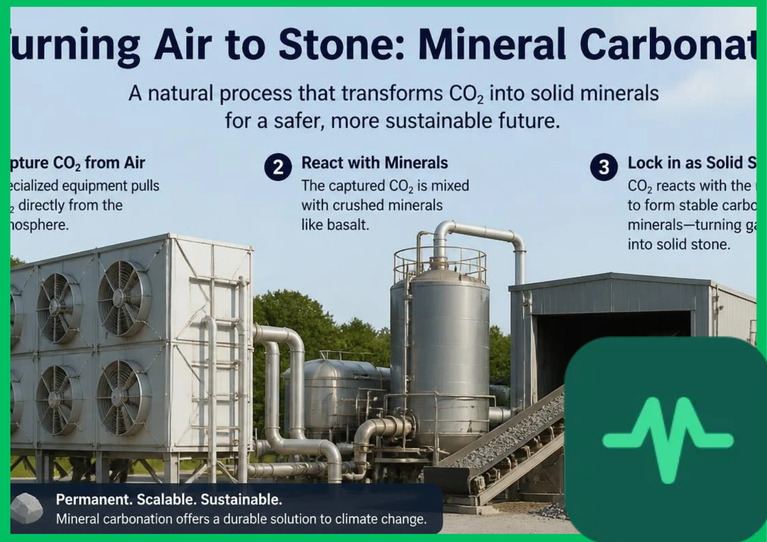
- Geological Sequestration: The captured carbon is compressed into a liquid state and pumped deep underground into saline aquifers or basalt rock formations, where it turns permanently into solid stone.
The power plant generates electricity while scrubbing the sky clean.
The Science of Negative Emissions and Energy Balance
How can burning organic material create a net-negative carbon footprint instead of adding pollution to our atmosphere?
It comes down to biogenic carbon accounting and geological permanence.
Academic bioenergy research shows that the carbon released when biomass burns is carbon that the plants pulled out of the air during their lifetime.
It is part of the natural, short-term carbon cycle.
When you intercept that biogenic carbon at the smokestack and lock it deep inside the earth's crust for thousands of years, you remove it from the active carbon cycle permanently.
That subtraction creates negative emissions.
Furthermore, BECCS power plants provide a vital advantage that wind and solar cannot match.
They generate steady, reliable baseload electricity on demand, day or night, rain or shine.
According to ENERGY STAR and international industrial efficiency evaluations, optimizing thermal heat recovery loops inside biomass power plants increases overall energy conversion efficiency by up to 35%, ensuring that every ton of harvested biomass yields maximum electricity with minimum waste.
Environmental Integrity and Global Land Stewardship
The environmental benefits of BECCS technology extend far beyond generating negative carbon emissions or stabilizing power grids.
They demand rigorous ecological protection standards.
According to UNEP resource governance frameworks, biomass feedstock must be sourced sustainably, using agricultural waste husks, municipal organic scraps, and wood residues from certified forest thinning rather than clearing native forests or competing with food crop agriculture.
When biomass supply chains are managed responsibly, bioenergy projects protect local watersheds, reduce wildfire risks by clearing dry underbrush from forests, and support rural economies.
According to IEA climate roadmaps, deploying BECCS is an essential pillar to offset hard-to-abate residual emissions from aviation, shipping, and heavy industry.
When humanity balances energy production with permanent carbon storage, our planetary climate begins to heal.
Overcoming Infrastructure and Scaling Realties
Scaling bioenergy with carbon capture and storage from pilot facilities into global gigaton-scale operations involves navigating real-world infrastructure hurdles.
These facilities require steady supplies of sustainable biomass, large-scale industrial capture equipment, and reliable access to deep underground geological storage basins.
Governments, energy developers, and academic research institutions are collaborating to streamline supply chains, improve solvent capture efficiencies, and expand dedicated CO2 pipeline networks.
As engineering standards mature and carbon markets attach real economic value to permanent negative emissions, BECCS is transitioning successfully from experimental climate models into operational power infrastructure worldwide.
Capturing Biomass Toward a Sustainable Future
Bioenergy with carbon capture and storage proves that human engineering can align industrial power generation with natural planetary cycles.
We no longer have to accept that making electricity requires adding permanent pollution to our shared atmosphere.
By burning sustainable biomass cleanly and locking the captured carbon deep inside the earth, we turn power plants into net-negative climate champions.
We step away from passive environmental decline, embracing an active, scientific, and enduring standard of carbon removal.
Through brilliant chemical engineering, rigorous academic research, and a deep respect for our planetary biosphere, capturing biomass secures a clean, breathable, and sustainable future for every person on Earth.


Comments (0)
Login to leave a comment.
No comments yet. Be the first to share your thoughts!