
 ) because solar radiation is absorbed throughout the entire liquid bulk, causing massive conductive heat losses to the underlying water reservoir and surrounding environment. Solar-driven interfacial evaporation decouples light absorption from bulk heating by restricting photothermal conversion strictly to the air-water interface. By floating a porous, highly absorbing photothermal layer directly at the water surface, thermal energy is confined locally where phase change occurs, elevating local temperatures and driving evaporation rates beyond theoretical bulk limits. Analyzing photothermal conversion mechanics, localized thermal confinement, mass transport resistance, and latent heat mitigation is essential for evaluating interfacial evaporation efficiency.
Photothermal Absorption Mechanics and Plasmonic Nanoparticles
The foundational physical process governing interfacial evaporation is the conversion of broadband solar radiation into thermal energy within an engineered photothermal absorber layer. High-performance interfacial evaporators utilize plasmonic metal nanoparticles (such as gold, silver, or titanium sesquioxide), carbon-based nanomaterials (carbon nanotubes, graphene oxide, carbon black), or narrow-bandgap transition metal carbides and nitrides (MXenes).
When incident solar radiation strikes the photothermal matrix, free conduction electrons within plasmonic metal nanoparticles or conjugated carbon lattices undergo collective coherent oscillations known as localized surface plasmon resonance (LSPR). This resonant interaction absorbs incoming photons across the ultraviolet, visible, and near-infrared spectrum (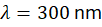 to
 ), converting photon energy into energetic "hot carriers" (electron-hole pairs).
Non-radiative relaxation via electron-phonon scattering thermalizes these hot carriers within picoseconds, generating intense localized heat directly at the nanostructure surfaces. Optimal photothermal materials achieve broad optical absorption exceeding 92% to 98% across the entire solar spectrum, minimizing optical reflection and transmission losses.
Localized Thermal Confinement and Heat Loss Reduction
Maximizing solar-to-vapor conversion efficiency requires strict localized thermal confinement at the air-water boundary. In traditional bulk water heating systems, conductive heat loss ( ) through the underlying water body dominates thermal dissipation, formulated mathematically as:
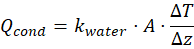
where  represents the thermal conductivity of water (
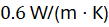 at
 [
 ]),
 is surface area, and
 is the thermal boundary layer thickness.
Interfacial evaporators suppress bulk conduction losses by incorporating thermally insulating porous substrates—such as hydrophilic polymer foams, nanocellulose aerogels, or expanded diatomaceous earth—directly beneath the photothermal top layer. These porous scaffolds possess low thermal conductivity ( ), trapping stagnant water and air pockets that decouple the hot evaporating surface from the cold bulk water reservoir below.
By restricting thermal energy accumulation to a microscopic interfacial zone (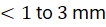 [
 ] thickness), steady-state interfacial temperatures reach
 to
 (
 to
 ) under standard one-sun illumination (
 ), elevating vapor pressure differentials and boosting evaporation enthalpy utilization.
Technical Data Specifications of Interfacial Evaporators
| Interfacial Evaporation Parameter | Engineering & Materials Specification Standard |
|---|---|
Solar-to-Vapor Conversion Efficiency ( ) | 85% to 95% under 1-sun illumination ( ) |
Solar Spectrum Optical Absorption ( ) |  to  broadband capture |
Effective Evaporation Enthalpy ( ) |  (reduced via hydrogen bonding) |
| Steady-State Interfacial Temperature |  to  (  to  ) at  |
Substrate Thermal Conductivity ( ) |  thermal insulation |
| Water Mass Flux Evaporation Rate |  under  |
| Porous Scaffold Porosity Volume | 85% to 95% interconnected micro-channel void fraction |
Mass Transport Resistance and Water Supply Kinetics
Sustaining high evaporation rates ( ) requires continuous, uninterrupted water transport from the bulk reservoir to the heated evaporating interface. If mass transport resistance is high, water supply fails to match vaporization demand, causing localized dry-out, salt crystallization within porous channels, and catastrophic thermal degradation of the photothermal layer.
Engineers manage mass transport kinetics by designing hierarchically porous structures featuring interconnected open-cell micro-channels ( [
 ]) and hydrophilic surface chemistry. Capillary pressure (
 ), governed by the Young-Laplace equation, drives upward wicking against gravity:
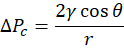
where  is water surface tension,
 is the contact angle (
 for superhydrophilic surfaces), and
 is the capillary pore radius. Optimizing pore radius balances hydraulic permeability against capillary suction height, ensuring rapid water resupply without excessive viscous drag resistance.
Latent Heat Modification and Effective Evaporation Enthalpy
The fundamental thermodynamic energy barrier of water evaporation is its high latent heat of vaporization ( at
 [
 ], rising to
 at
 [
 ]). Standard bulk evaporation requires absorbing this exact thermal quantum per kilogram of water vaporized.
Advanced interfacial evaporation studies published in materials science literature demonstrate that water molecules confined within sub-nano hydrogel polymer networks or interacting with hydrophilic functional groups experience altered hydrogen-bonding coordination states. In hydrogel-based and cellulosic evaporators, polymer chains coordinate water molecules via strong hydrogen bonds, weakening water-water intermolecular clusters.
This confinement-induced structural modification lowers the effective enthalpy of vaporization ( ) down to
 . By reducing the thermodynamic energy required to break molecular clusters, solar-driven interfacial evaporators achieve evaporation rates that surpass traditional energy balance limits calculated under bulk thermodynamic assumptions.
Anti-Fouling Resilience and Long-Term Salinity Tolerance
Desalination technologies operating continuously in high-salinity brines (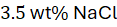 ocean water or hypersaline industrial wastewater) face severe performance degradation caused by salt crystal precipitation. As pure water evaporates at the interface, solute concentration rises rapidly. When local salinity exceeds saturation limits (
 at room temperature), sodium chloride crystals nucleate and precipitate inside the porous evaporation channels, blocking light absorption, sealing off water transport paths, and halting vapor generation entirely.
Modern interfacial evaporators resolve salt fouling through engineered salt-rejection and salt-regeneration mechanisms. Hydrophilic Janus membranes feature asymmetric wettability, where the top evaporating surface remains porous and salt-tolerant while bottom channels maintain direct hydraulic connectivity with the bulk water.
Furthermore, osmotic back-diffusion driven by concentration gradients transports accumulated salt ions downward back into the bulk reservoir during dark resting cycles or continuous cross-flow circulation. These anti-fouling mechanisms maintain stable, long-term solar desalination performance exceeding thousands of operational hours without requiring chemical pre-treatment or manual descaling.

Comments (0)
Login to leave a comment.
No comments yet. Be the first to share your thoughts!