Rain lashes against the windowpanes. Gusts of wind tear through tree branches overhead.
Suddenly, the lights flicker once, twice, and die. Darkness fills the room.
Across the neighborhood, houses go black. Televisions shut off, refrigerators stop humming, and heating systems fall silent.
For millions of people worldwide, a severe storm or a technical failure on a distant transmission line means an immediate, helpless descent into blackout conditions.
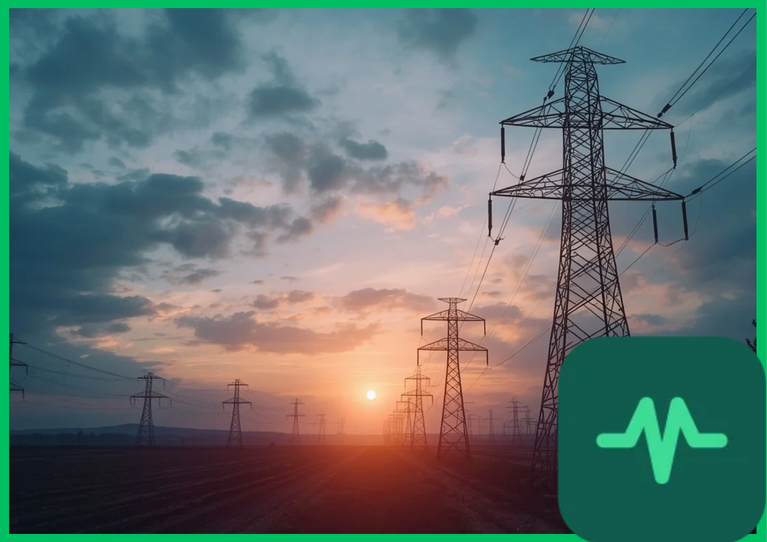
We grew up accepting that electricity flows from massive, faraway power stations through miles of vulnerable overhead wires. If a single tree branch brings down a main trunk line thirty miles or fifty kilometers away, an entire city loses power.
That brittle, top-down energy model is changing.
According to urban infrastructure reports from the United Nations Environment Programme (UNEP), grid modernization studies from the International Energy Agency (IEA), efficiency metrics from ENERGY STAR, and academic power systems research, local energy independence is taking root.
Smart urban microgrids are transforming how communities generate, manage, and share electricity.
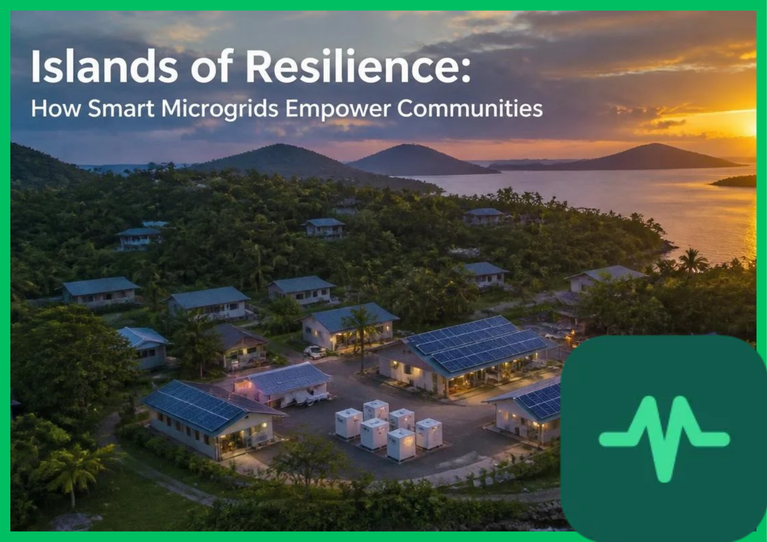
By combining local renewable generation, battery storage, and automated software, these decentralized systems create islands of resilience that keep communities powered when the main grid fails.
Here is how smart microgrids work, why islanding resilience protects neighborhoods, and how peer-to-peer energy sharing empowers everyday people.
The Fragility of Centralized Power Lines
To understand why smart microgrids matter, you have to look at the inherent weakness of traditional electrical grids.
For over a century, electrical power systems expanded outward from massive central fossil-fuel plants.
Electricity travels across vast distances through high-voltage transmission towers and neighborhood distribution lines, losing energy as heat along the way.
This sprawling, centralized architecture is vulnerable to disruption.
When extreme weather events—fueled by a changing climate—batter regional infrastructure, ancient transmission lines snap easily.
A single fault at a central substation can plunge hundreds of thousands of homes into darkness for days or weeks.
Communities sit completely helpless, waiting for repair crews to travel miles across damaged terrain to restore power.
We needed a localized backup model. We needed a way for communities to stand on their own two feet when the wider grid collapses.
What Is a Smart Urban Microgrid?
A smart urban microgrid is a localized cluster of electricity sources, storage units, and loads that operates as a single, self-controlled system.
It can connect smoothly to the broader regional power grid, drawing clean power during normal conditions.
When trouble strikes outside, however, the microgrid can disconnect instantly and operate entirely on its own.
Inside a typical smart microgrid, you find a collection of decentralized community power assets:
- Rooftop solar panels on residential homes, schools, and municipal buildings
- Community-scale lithium or LFP battery energy storage containers
- Local wind turbines or biomass generators
- Smart electric vehicle chargers and automated building controls
What ties this physical hardware together is an intelligent software brain.
Automated controllers monitor local weather patterns, energy demand, and battery states in real-time, balancing power flows across the neighborhood second by second.
Islanding and Grid Resilience
The most powerful feature of a smart microgrid is its ability to perform what engineers call islanding.
When a major blackout hits the regional power grid, traditional solar panels on residential roofs are automatically forced to shut down for safety reasons. That rule prevents solar systems from feeding live electricity back into downed wires where repair workers might get shocked.
Smart microgrids solve this limitation through advanced islanding technology.
Academic power systems research shows that when a blackout occurs, automated disconnect switches isolate the microgrid from the failing regional transmission lines within milliseconds.
The neighborhood becomes a safe, self-contained energy island.
Rooftop solar panels keep generating clean electricity, local battery banks discharge stored energy to stabilize local voltage, and essential community buildings—like hospitals, water treatment plants, and emergency shelters—keep running without missing a beat.
Families stay warm, food stays cold in refrigerators, and medical equipment stays powered while the wider grid repairs itself outside.
Decentralized Community Power and Local Self-Sufficiency
Smart microgrids shift the entire philosophy of urban energy management.
Instead of relying passively on distant utility companies, neighborhoods achieve local renewable self-sufficiency.
Communities generate their own clean power right where they consume it, eliminating transmission losses and reducing the need to build expensive, polluting central power plants.
UNEP governance frameworks and IEA integration studies highlight that decentralized microgrids empower local municipalities to take control of their energy security.
Neighborhoods reduce their reliance on imported fossil fuels, cut local air pollution, and protect their households from volatile wholesale electricity price spikes.
Energy becomes a shared local resource rather than a corporate commodity controlled from afar.
Peer-to-Peer Energy Sharing
Beyond keeping the lights on during emergencies, smart microgrids unlock exciting new economic opportunities through peer-to-peer energy sharing.
Imagine your rooftop solar panels produce more clean electricity on a bright sunny afternoon than your home can possibly use.
In a traditional setup, that surplus energy is either lost or sent back to the utility for a tiny fraction of its retail value.
In a smart microgrid enabled by blockchain or secure local software platforms, you can share or sell your surplus solar power directly to your neighbor down the street.
If your neighbor's electric vehicle needs a charge just as the sun goes down, they can buy your stored solar energy locally at a fair price.
Money stays within the community, neighbors support each other directly, and every clean kilowatt-hour is utilized efficiently.
Academic economic studies prove that peer-to-peer energy trading creates vibrant local micro-economies, funding further neighborhood investments in clean technology and battery storage.
Building Islands of Lasting Strength
Smart microgrids prove that the future of energy is local, connected, and resilient.
We no longer have to accept that a single storm can plunge an entire city into helpless darkness.
By combining decentralized community power, intelligent islanding resilience, local renewable self-sufficiency, and peer-to-peer energy sharing, we transform fragile neighborhoods into robust islands of strength.
We step away from vulnerable, centralized fossil systems, building a clean and dependable energy network from the ground up.
Through community collaboration and smart engineering, microgrids empower people everywhere to light their own way toward a sustainable future.

Comments (0)
Login to leave a comment.
No comments yet. Be the first to share your thoughts!