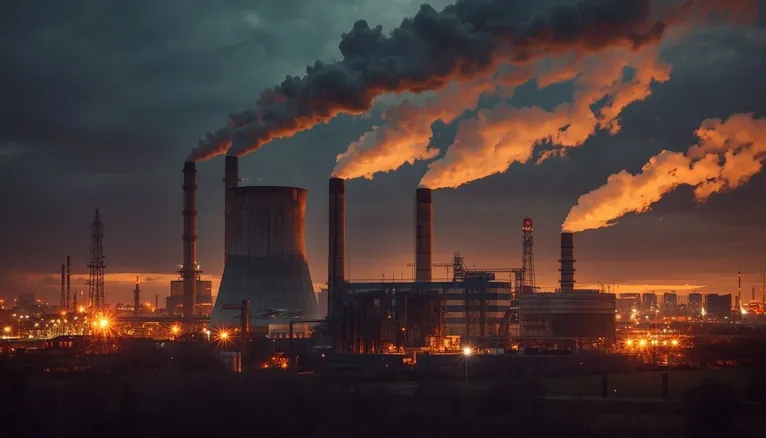
Making steel takes extreme heat. Making cement takes extreme heat too. Batteries simply cannot deliver that kind of power yet. Because of this, heavy industry alone creates over 20 percent of all global carbon emissions. That is a staggering number, and it is easy to feel discouraged by it.
But here is the hopeful part. Industrial carbon capture offers a real answer. It does not ask factories to shut down or start over. Instead, it catches pollution right before it escapes into the sky. In this guide, we will explore industrial carbon capture in simple terms. We will look at the chemistry. We will look at the technology. By the end, you will understand why so many engineers feel genuinely hopeful about this quiet, powerful solution.
Why Heavy Industry Is So Hard to Clean Up
Let's start with the core problem. Making steel or cement is not like charging a phone. It requires massive amounts of heat, often thousands of degrees. Electric heaters cannot easily reach these temperatures at the scale factories need.
This creates a painful gap. We can clean up cars. We can clean up homes. But factories keep burning fuel because, right now, there is no easy substitute. This gap has frustrated environmental engineers for years. It felt like an unsolvable piece of the climate puzzle.
Industrial carbon capture steps into this gap with a clever, practical idea. Instead of changing how factories make heat, it changes what happens to the pollution afterward. It catches the carbon before it escapes. This shift in thinking feels almost like a relief, offering hope where progress once felt stuck.
What Is Industrial Carbon Capture, Exactly?
So what is industrial carbon capture in plain terms? It is a set of technologies installed directly inside factory smoke stacks. Their job is simple but powerful: trap carbon dioxide before it drifts into the atmosphere.
Instead of letting dirty exhaust gas escape freely, industrial carbon capture intercepts it. Specialized materials grab onto the carbon dioxide molecules. They pull them out of the gas stream. What remains gets stored safely, often deep underground or locked inside solid materials like concrete.
This approach feels deeply practical. Factories keep running. Jobs stay intact. Yet pollution gets stopped in its tracks. That balance is exactly why industrial carbon capture has become such an important tool in the fight against climate change.
Liquid Amine Scrubbing: The Reliable Workhorse
The most common form of industrial carbon capture today is called liquid amine scrubbing. It sounds complicated, but the idea is fairly simple once you break it down.
Factory exhaust gas rises into a tall tower. As it moves upward, a special liquid rains down from above. This liquid contains chemicals called amines. Amines have a strong attraction to carbon dioxide. They grab onto it eagerly, almost like a magnet pulling in metal.
Clean gases pass right through untouched. But carbon dioxide gets trapped in the liquid. That carbon-rich liquid then moves to a second tower. There, heat breaks the chemical bond, releasing pure carbon dioxide for storage. The liquid gets cleaned and sent back to repeat the process again.
This method works well. It captures over 90 percent of emissions in many cases. Because of its reliability, liquid amine scrubbing remains the backbone of industrial carbon capture around the world today.
The Hidden Cost: Energy Demand
As effective as this method is, it comes with a real downside. Heating that liquid to release trapped carbon takes a huge amount of energy. This creates a frustrating trade-off. You clean up pollution, but you also burn more fuel just to run the system.
This tension has pushed scientists to search for something better. They wanted a solution that captures carbon just as well, without draining so much extra energy. That search led to one of the most exciting breakthroughs in industrial carbon capture history.
Metal-Organic Frameworks: A Tiny, Powerful Sponge
Enter Metal-Organic Frameworks, often shortened to MOFs. These materials sound like something from science fiction, and honestly, they kind of are.
Picture a material so full of tiny holes that a single gram could cover an entire football field on the inside. That is the astonishing scale of a MOF crystal. These structures are built from metal pieces connected by organic molecules, creating a sponge-like framework at the microscopic level.
Scientists can design these tiny pores to specifically trap carbon dioxide molecules. Once trapped, the carbon can be released using far less heat than older liquid systems require. This makes MOFs a genuinely exciting advancement inside the world of industrial carbon capture.
There is something almost beautiful about this technology. A material invisible to the naked eye, engineered atom by atom, working quietly to protect our shared atmosphere. For many researchers, MOFs represent a hopeful glimpse into the next generation of industrial carbon capture.
Polymeric Membranes: Simple, Elegant Filtering
The third major tool in industrial carbon capture is the polymeric membrane. Think of it as an extremely precise filter, almost like a microscopic sieve.
These membranes are built with tiny pores, sized perfectly to separate different gas molecules. When exhaust gas is pushed against the membrane, smaller molecules like nitrogen slip through easily. Larger carbon dioxide molecules get blocked and funneled away for storage.
What makes this method so appealing is its simplicity. There are no chemical reactions involved. There is no need for constant heating and cooling cycles. Because of this, polymeric membranes are relatively easy to install onto existing factories. This makes them a practical, low-maintenance option within the broader industrial carbon capture toolkit.
Where the Captured Carbon Goes
Capturing carbon dioxide is only half the story. Once it is trapped, it needs somewhere to go. This is another important piece of industrial carbon capture that deserves attention.
Some captured carbon gets pumped deep underground into secure geological wells, where it can stay locked away safely for centuries. Other captured carbon becomes a raw material itself. It can be mineralized directly into concrete, permanently trapped inside buildings and infrastructure. In some cases, captured carbon even becomes the base ingredient for synthetic fuels, giving old pollution a genuinely useful second life.
This full-circle process feels quietly hopeful. Instead of treating carbon dioxide as pure waste, industrial carbon capture treats it as a resource to be managed, redirected, or reused. That shift in mindset matters just as much as the technology itself.
Why This Technology Feels So Important Right Now
There is something emotionally powerful about industrial carbon capture. It tackles a problem that felt, for years, almost impossible to solve. Heavy industry seemed locked into pollution by necessity. Now, there is a real, working path forward.
This matters deeply for communities living near factories and industrial plants. These neighborhoods often bear the heaviest burden of pollution, breathing dirtier air simply because of where they live. As industrial carbon capture spreads, these same communities stand to benefit the most, breathing cleaner air after years of quiet suffering.
It also matters for anyone worried about the pace of climate change. Industrial carbon capture will not fix everything alone. But it buys precious time. It protects jobs while still protecting the planet. That balance offers a rare, comforting sense of progress in a conversation that often feels overwhelming.
Common Questions About Industrial Carbon Capture
Does industrial carbon capture actually work? Yes. Mature methods like liquid amine scrubbing already capture 90 to 95 percent of emissions in many facilities. Newer technologies like MOFs and membranes are pushing efficiency even further.
Is industrial carbon capture expensive? It can be, especially for energy-intensive methods like liquid scrubbing. However, newer materials like MOFs and membranes are helping lower these costs over time.
Can industrial carbon capture be added to existing factories? In many cases, yes. Membrane systems especially are designed to retrofit onto existing smoke stacks without requiring a complete factory overhaul.
What happens to the carbon after it's captured? Captured carbon is typically stored underground, mineralized into concrete, or converted into synthetic fuel. Each path helps keep that carbon safely out of the atmosphere.
Where Industrial Carbon Capture Is Growing Fastest
Around the world, different regions are embracing industrial carbon capture at different speeds. Countries with strong industrial bases, like the United States, parts of Europe, and China, are investing heavily in this technology. These regions face the biggest emissions from steel, cement, and chemical production, so the pressure to act feels especially urgent.
Government policy is playing a huge role in this growth. Many countries now offer tax credits or grants specifically for industrial carbon capture projects. This financial support helps offset the high upfront costs of building capture systems, making adoption more realistic for factory owners who might otherwise hesitate.
Private investment is rising too. Energy companies, engineering firms, and climate-focused startups are pouring resources into industrial carbon capture research. This growing momentum is a strong signal that the technology is moving from experimental pilot projects into serious, large-scale deployment.
The Road Ahead for Industrial Carbon Capture
Looking forward, the future of industrial carbon capture looks genuinely promising. Researchers continue refining Metal-Organic Frameworks, hoping to lower energy costs even further. Every improvement here means factories can capture more carbon while burning less extra fuel to do it.
Membrane technology is advancing quickly as well. Engineers are developing thinner, more durable membranes that can handle harsher industrial conditions without breaking down. As these materials improve, industrial carbon capture should become easier and cheaper to install across a wider range of facilities.
There is also growing interest in combining multiple industrial carbon capture methods within a single facility. A factory might use liquid scrubbing for its main exhaust stream, while relying on membranes for smaller, secondary emissions sources. This layered approach could push overall capture rates even higher than any single method alone.
As these advances continue, industrial carbon capture is expected to spread far beyond its current strongholds. Smaller manufacturers, once priced out of this technology, may soon find it accessible as costs continue to fall. This expansion feels like real, tangible progress toward a cleaner industrial future.
Final Thoughts
Industrial carbon capture proves that even our toughest pollution problems have real, workable solutions. Heavy industry once felt like an unmovable obstacle in the climate fight. Now, thanks to clever chemistry and careful engineering, that obstacle is finally starting to shrink.
From reliable liquid scrubbers to astonishing MOF crystals, and simple, elegant membranes, every version of industrial carbon capture chips away at the same stubborn problem. Each one offers factories a real path toward cleaner operations, without asking them to shut their doors.
As this technology keeps improving, expect industrial carbon capture to become an even bigger part of the climate conversation. It will not replace the need for cleaner electricity or greener transportation. But it fills a critical gap that nothing else quite can.
In the end, industrial carbon capture offers something we all need right now: real, tangible hope. Hope that even our biggest, dirtiest industries can find a cleaner path forward, one captured molecule at a time.



Comments (0)
Login to leave a comment.
No comments yet. Be the first to share your thoughts!