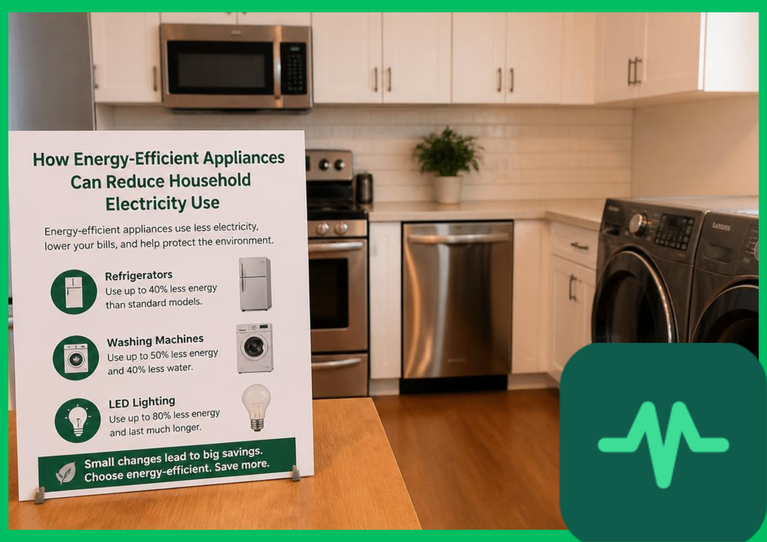
Almost every modern home depends on electrical appliances. Refrigerators keep food cold. Air conditioners provide cooling. Washing machines clean clothes. Televisions provide entertainment. Computers support work and education.
Fans, water heaters, cookers, and other devices also use electricity. Together, all these appliances can account for a large share of household energy use. That is exactly why energy efficient appliances matter so much.
An efficient appliance does the same job. It just uses less energy to do it. But efficiency isn't as simple as buying the newest product. Consumers need to understand how an appliance actually uses electricity. They also need to think about how often it gets used.
What Does Energy Efficiency Mean?
Energy efficiency means getting the same useful result while using less energy.
Take two refrigerators as an example. Both keep food cold. One, however, uses less electricity over a year. That refrigerator is the more energy efficient choice.
The same logic applies to air conditioners. Two units might cool a room equally well. One still uses less electricity to get there. This is exactly why consumers should look past the purchase price alone. A cheaper appliance can sometimes cost more to run over its lifetime.
The Purchase Price Is Not the Whole Cost
This is one of the most important things consumers should understand.
Picture two refrigerators. One costs less upfront. The other costs more. But the pricier, more efficient model uses significantly less electricity every year. Over several years, those electricity savings can close the price gap entirely.
This is why total cost of ownership matters more than sticker price. Consider:
- Purchase price
- Electricity consumption
- Maintenance
- Repairs
- Expected lifespan
- Replacement costs
Weighing all of these together leads to better buying decisions.
Refrigerators Are Important
Refrigerators work differently from most other appliances. They run continuously.
A television gets switched off for hours at a time. A refrigerator, by contrast, stays connected to electricity around the clock. This is exactly why efficiency matters so much here.
When shopping for a refrigerator, check its energy rating first. Also consider its size. A very large refrigerator can use more electricity than a smaller model. So buying the biggest option available isn't always the smartest efficient choice.
Air Conditioners Can Use Significant Electricity
In hot climates, air conditioning can become one of the largest electricity loads in a home. That makes efficient cooling especially important.
An efficient air conditioner delivers the cooling you need while using less power. But the appliance is only part of the story. The building itself matters too.
Poor insulation lets cooled air escape. Open doors and windows increase cooling demand. Dirty filters reduce performance. Energy efficient appliances work best when paired with good household habits, not in isolation.
Choosing the Right Size Matters
Bigger is not always better. This rule applies across many appliance categories.
An air conditioner too large for a room won't run at peak efficiency. One too small has to work harder just to keep up. The goal is matching the equipment to the actual size and needs of the space.
For appliances like air conditioners and heat pumps, professional advice can help you avoid costly sizing mistakes.
Washing Machines Can Save Water and Energy
Modern washing machines use less water and electricity than older models. But the appliance is only half the equation.
Everyday habits matter too:
- Washing clothes at lower temperatures cuts the energy needed to heat water
- Running full loads makes every cycle more productive
Efficiency depends on both the machine and how you use it.
Water Heaters Are Another Important Area
Heating water takes real energy, which makes water heaters a significant household energy user.
An efficient water heater reduces demand on its own. But insulation matters just as much. If hot water loses heat while stored or moving through pipes, the system has to work harder to maintain temperature.
Consider the entire hot-water system, not just the heater itself.
Lighting Has Changed Too
Traditional incandescent bulbs use far more electricity than modern LED lighting. LED bulbs provide similar brightness while using much less power. They also tend to last longer.
This makes lighting one of the simplest places to improve efficiency at home. You don't need to replace every bulb at once. Swap them out gradually as old ones burn out.
Standby Electricity Also Matters
Some appliances quietly draw power even when they're not in use. This is often called standby power.
A single device might only use a small amount. But most households have many devices plugged in at once:
- Televisions
- Game consoles
- Computers
- Chargers
- Speakers
- Printers
- Streaming devices
Add all of these together, and the waste adds up fast. Smart power strips can help manage this hidden drain.
Smart Appliances Are Changing Energy Management
Newer appliances can connect to home networks, letting you monitor energy use directly. Some can even respond to electricity prices or run on automated schedules.
For instance, a smart appliance might run during off-peak hours when demand, and prices, are lower. The real benefit depends on your local electricity market and the specific appliance.
One important caveat: smart does not automatically mean efficient. A smart appliance still has to use energy wisely to actually save you money.
Energy Labels Can Help Consumers
Many countries use energy-efficiency labels to help shoppers compare products. These labels aren't standardized worldwide, though. Rating systems vary by country and region.
Take time to learn how your local system works. And always compare like with like: a refrigerator against other refrigerators, an air conditioner against other air conditioners.
Efficiency Is Becoming More Important
The International Energy Agency says energy efficiency remains a major part of global efforts to cut energy demand and emissions. Its global efficiency work highlights the importance of improving buildings, appliances, transport, and industry alike.
This matters directly to households. Energy efficiency can:
- Reduce overall energy use
- Lower household energy bills
- Ease pressure on electricity systems
- Cut emissions where power still comes from fossil fuels
How to Choose an Efficient Appliance
Before buying, ask yourself a few key questions:
- How much electricity does it use?
- How often will I use it?
- How long is it expected to last?
- What does its energy label say?
- Does its size actually match my needs?
- Are spare parts available?
- What does maintenance cost?
These questions reveal the true value of an appliance, well beyond the price tag.
Do Not Replace Working Appliances Automatically
Efficiency matters, but replacing every working appliance immediately isn't always the best environmental choice. Manufacturing new products still requires materials and energy.
Weigh the condition and efficiency of what you already own. If an old appliance is inefficient and near the end of its life, replacement likely makes sense. If it's still running well, it might be worth keeping a while longer.
Small Changes Can Also Help
Buying efficient appliances is only one part of the solution. How you use them matters just as much.
Simple habits that add up:
- Turning off unnecessary equipment
- Using eco modes
- Washing clothes at appropriate temperatures
- Keeping refrigerator doors closed
- Cleaning air-conditioner filters
- Avoiding unnecessary cooling
- Using efficient lighting
- Unplugging equipment that isn't needed
Each of these feels small on its own. Together, they meaningfully reduce household energy demand.
The Future of Home Efficiency
The home of the future will likely combine several technologies at once. Efficient appliances will reduce baseline electricity demand. Solar panels will generate power. Batteries will store the excess. Smart controls will coordinate it all. Electric vehicles could even become another flexible electricity load.
This adds up to a more connected, more responsive energy system. The IEA expects electrification and digitalization to play growing roles in buildings and energy systems in the years ahead.
EcoGreenPulse View
Energy efficient appliances are among the simplest ways consumers can improve household energy performance. You don't need solar panels or batteries to start. You just need to think differently about something every home already does: using appliances.
The key is looking beyond the purchase price. Electricity consumption, expected lifespan, and maintenance all matter just as much.
Conclusion
Energy efficient appliances can help households cut unnecessary electricity use. Refrigerators, air conditioners, washing machines, water heaters, and lighting can all make a real difference.
But efficiency depends on both technology and behavior. Compare energy ratings. Choose appropriate sizes. Use appliances wisely.
The result is a home that uses less energy, while still providing everything a family actually needs.
Sources: International Energy Agency, energy-efficiency resources.


Comments (0)
Login to leave a comment.
No comments yet. Be the first to share your thoughts!