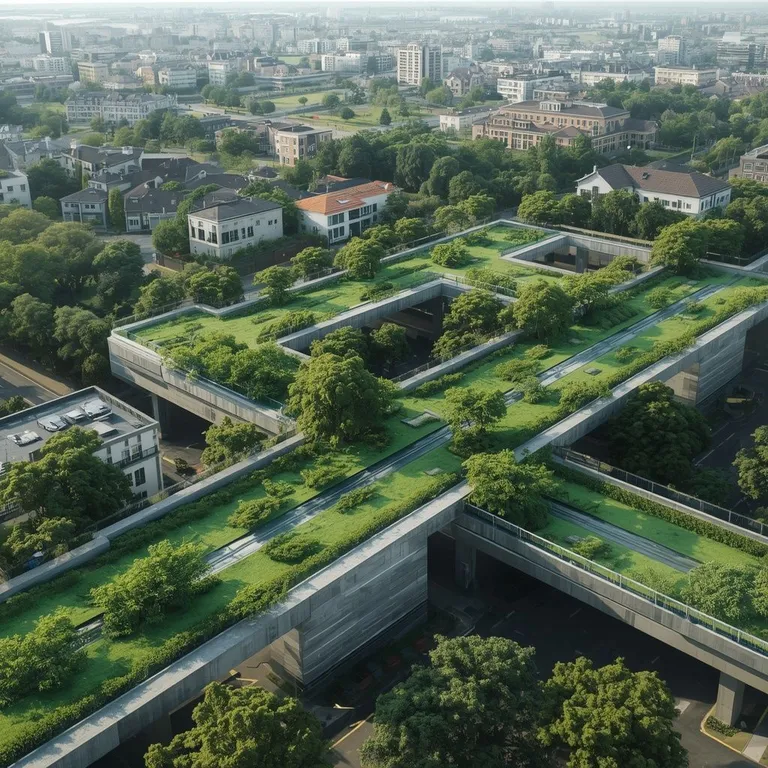
But this quiet giant carries a heavy, hidden burden. Making concrete releases enormous amounts of carbon dioxide into the sky. In fact, traditional cement production causes about 8 percent of all global carbon emissions. That number is staggering. If the concrete industry were its own country, it would rank as the third-largest polluter on Earth, right behind China and the United States.
This is where green concrete steps in, offering something the world desperately needs: real hope. Green concrete is not a small tweak. It is a genuine reinvention of one of humanity's oldest materials. In this guide, we will explore how green concrete works. We will look at recycled materials. We will look at carbon-trapping chemistry. We will even look at concrete that can heal its own wounds. By the end, you will understand why green concrete feels like such a meaningful, hopeful shift for our cities.
Why Regular Concrete Hurts the Planet So Much
To understand green concrete, we first need to understand the wound it is trying to heal. Regular concrete depends on a key ingredient called Portland cement. This cement acts like glue. It holds sand, gravel, and water together into something strong and lasting.
Making Portland cement is a brutal process. Factories bake crushed limestone and clay inside massive kilns. These kilns reach blistering temperatures, often over 1,400 degrees Celsius. That kind of heat does not come cheap, either financially or environmentally.
This process causes damage in two painful ways. First, burning fuel to heat the kilns releases carbon dioxide directly into the air. Second, the heat itself triggers a chemical reaction called calcination. This reaction splits limestone apart, releasing even more carbon dioxide gas as a byproduct. Together, these two forces make cement production one of the dirtiest industrial processes in existence today.
This is exactly why green concrete matters so deeply. It attacks both of these problems at once, offering a real, working alternative instead of empty promises.
What Makes Concrete "Green" in the First Place?
So what exactly turns ordinary concrete into green concrete? It is not one single trick. It is a combination of smart, thoughtful strategies, each one chipping away at the same painful problem.
Some methods replace raw cement with recycled industrial waste. Other methods trap carbon dioxide directly inside the concrete itself. Some go even further, using living bacteria to heal cracks naturally over time. Together, these innovations transform green concrete into something far more than just a cleaner building material. It becomes a quiet, powerful tool for fighting climate change.
Turning Waste Into Strength
One of the most practical strategies behind green concrete involves recycled industrial materials. Two of the most common substitutes are fly ash and blast-furnace slag.
Fly ash comes from power plants. Blast-furnace slag comes from steel factories. For decades, both were treated as pure waste. Both often ended up buried in landfills, forgotten and useless. Yet scientists discovered something remarkable. These leftover materials have strong, natural binding properties, very similar to cement itself.
By blending fly ash and slag into concrete mixes, builders can cut raw cement use dramatically. In some cases, the reduction reaches up to 50 percent. This single change lowers the carbon footprint of a construction project significantly. It also gives a second, meaningful life to materials that would otherwise sit rotting in a landfill forever.
This is one of the most heartening parts of green concrete. It does not just reduce harm. It actively transforms old waste into something genuinely useful again.
Trapping Carbon Inside the Walls Around Us
Now we reach the most exciting piece of the green concrete story. It is called carbon mineralization. Companies like CarbonCure have pioneered this remarkable process, and it feels almost like science fiction the first time you hear it explained.
Here is how it works. During mixing, recycled carbon dioxide gas gets injected directly into the wet concrete. The moment this happens, a chemical reaction begins instantly. The CO2 reacts with calcium inside the mix, forming tiny calcium carbonate crystals.
Once these crystals form, something remarkable happens. The carbon dioxide becomes permanently locked inside the concrete. It stays trapped for centuries, quietly hidden inside buildings, bridges, and sidewalks. Even after a structure is torn down decades later, that carbon never escapes back into the sky.
This process also strengthens the material itself. Tiny crystals fill in microscopic gaps inside the concrete mixture, making it noticeably stronger. Because of this added strength, engineers can often use less concrete overall in a foundation, all without sacrificing safety.
There is something deeply satisfying about this idea. Green concrete does not just avoid making things worse. It actively pulls harmful gas out of our shared atmosphere, sealing it away safely, permanently, inside the very walls that shelter us.
Concrete That Heals Itself
Beyond recycled waste and trapped carbon, researchers are exploring something even more astonishing. It is often called bio-concrete, or living concrete, and it feels almost magical in practice.
This special version of green concrete contains dormant bacterial spores mixed directly into the material. These spores can lie completely inactive for decades, patiently waiting inside the dry structure.
Over time, tiny cracks naturally form in any concrete surface. This happens through weathering, shifting ground, or simple everyday stress. When moisture and air finally reach these cracks, something wonderful happens. The dormant bacteria wake up. They consume nearby nutrients and produce natural limestone crystals, sealing the crack from the inside out.
This self-healing ability feels genuinely moving. Structures using bio-concrete require far less repair work over their lifetime. Bridges last longer. Tunnels stay safer. Rebar inside the concrete stays protected from corrosive water for many more years. Fewer repairs also mean fewer future emissions, adding yet another quiet layer of benefit to green concrete's growing list of achievements.
Where Green Concrete Is Already Changing Skylines
Green concrete is no longer confined to research labs and small pilot projects. It is already being poured into major commercial developments around the world. Corporate headquarters are choosing it. Public transit systems are adopting it. Highway projects are increasingly built using it too.
This growing adoption feels like real, tangible progress. It proves that green concrete is not just a hopeful idea sitting on a shelf somewhere. It is a practical, working solution already reshaping real skylines in real cities, right now, today.
High-rise foundations represent another exciting use case. Since carbon-mineralized green concrete can be stronger than standard mixtures, it fits perfectly into large, demanding structural projects. This makes green concrete not just an environmentally responsible choice, but often a genuinely smart engineering choice as well.
The Challenges Standing in the Way
Despite all of this progress, green concrete still faces real, honest challenges. The biggest hurdle is simple scale. The global construction industry uses an almost unimaginable amount of concrete every single year. Meeting that massive demand requires enormous changes to existing supply chains.
Not every region has easy access to fly ash or blast-furnace slag either. These materials depend heavily on nearby power plants and steel factories. Areas without these industries close by may struggle to source the ingredients needed for green concrete production at scale.
Cost remains a real concern too, at least for now. Some green concrete methods, particularly newer innovations like bio-concrete, still cost more than traditional materials. This price gap can feel discouraging for smaller builders working with tight budgets.
Even so, there is genuine reason for optimism. As adoption grows and manufacturing scales up, prices for green concrete are expected to fall, much like what happened with solar panels years ago. Progress rarely moves in a straight line, but the direction remains clear and hopeful.
Why Green Concrete Matters So Much for Our Future
Cities around the world are growing at an incredible pace. More people need homes. More roads need to be built. More bridges need to connect expanding, hungry communities. All of this construction will require concrete, one way or another, whether we like it or not.
If cities keep relying on traditional concrete at this pace, emissions will keep climbing right alongside every new building. This is exactly why green concrete matters so deeply for our shared future. It offers a genuine path forward, one where we can keep building without repeating the same painful environmental mistakes.
Beyond emissions, green concrete also supports stronger, longer-lasting infrastructure overall. Self-healing designs mean fewer repairs. Carbon-trapped designs mean stronger, more durable foundations. These benefits are not just environmental victories. They are also practical, financial victories, since long-lasting infrastructure ultimately means lower repair costs for cities and taxpayers alike.
The Emotional Weight of Rebuilding Responsibly
There is something quietly emotional about this entire shift. Concrete has always represented permanence, strength, and human ambition. Yet for decades, that ambition came at a hidden cost to the very planet supporting it.
Green concrete offers a chance to heal that old wound. It lets us keep building, keep growing, keep dreaming, without quietly poisoning the atmosphere with every single pour. That feels like real redemption, not just for an industry, but for how we choose to shape our shared future together.
For engineers and material scientists working on green concrete, this work carries real weight. Every new formula, every successful test, brings us one step closer to cities that grow responsibly instead of destructively. That sense of purpose fuels much of the passionate research happening in this field today.
Common Questions About Green Concrete
Is green concrete as strong as regular concrete? Yes, in most cases it matches or even exceeds the strength of standard concrete. Carbon mineralization actually improves compressive strength compared to traditional mixes.
Does green concrete cost more than regular concrete? It depends on the method. Fly ash blends are often similar in price, sometimes even cheaper. Newer methods, like bio-concrete, currently cost more, though prices are expected to fall over time.
Can green concrete be used in any building project? Most projects can use some form of green concrete, though the best method depends on local material availability and specific project needs. Engineers typically choose the mix based on the structure being built.
How long does green concrete last? Green concrete generally lasts as long as, or longer than, traditional Portland cement concrete. Self-healing bio-concrete may extend a structure's lifespan even further, repairing small cracks automatically over time.
Where Green Concrete Is Gaining the Most Ground
Different regions are embracing green concrete at very different speeds, and it helps to understand why. Places with strong environmental regulations, like parts of Europe, are moving fastest. Strict carbon limits push builders toward green concrete almost by necessity, turning what once felt optional into something close to standard practice.
North America is catching up steadily too. Several states now offer incentives for developers who choose green concrete over traditional mixes. These financial nudges matter. They help offset the higher upfront cost some green concrete methods still carry, making the choice easier for builders working within tight budgets.
Asia's rapidly growing cities present a unique opportunity as well. With so much new construction happening at once, adopting green concrete early could prevent enormous amounts of future emissions. Every new building built with green concrete instead of traditional cement represents decades of avoided pollution, baked directly into the very walls of a growing skyline.
This regional patchwork feels encouraging rather than discouraging. It shows that green concrete adoption is not dependent on one single government or one single industry. Instead, it is growing organically, driven by climate goals, cost savings, and a genuine desire among builders to do better for the world they are shaping.
The People Behind the Green Concrete Movement
Behind every innovation in green concrete, there are real people driven by real purpose. Material scientists spend years testing new formulas, often facing failure after failure before finding something that finally works. Structural engineers carefully balance strength and sustainability, refusing to compromise safety in the name of environmental progress.
These are not distant, faceless corporations chasing profit alone. Many researchers describe their work on green concrete as deeply personal, a response to watching climate reports grow more alarming year after year. For them, every successful test feels like a small, meaningful victory, one step closer to cities that no longer have to choose between growth and responsibility.
Construction workers pouring green concrete on job sites today are quietly part of this same story. Each foundation poured represents a small act of care, an investment in a future where buildings help heal the planet rather than harm it. That sense of shared purpose is easy to overlook, but it runs through every stage of the green concrete supply chain.
Final Thoughts
Green concrete proves that even the most common, unglamorous building material on Earth can be reinvented with genuine care and creativity. What was once one of the world's biggest sources of carbon emissions is slowly, steadily becoming part of the climate solution instead.
From recycled industrial waste to carbon-trapping chemistry, and even self-healing bacteria, green concrete brings together several remarkable ideas under one shared roof. Each method chips away at the same core problem: how do we keep building the cities we need without quietly destroying the planet we all call home?
Scaling green concrete to match global demand will not happen overnight. Supply chains still need work. Costs still need to fall further. But the direction is unmistakably clear, and it is genuinely hopeful. Green concrete is moving from a niche innovation into a mainstream building material, one careful, deliberate project at a time.
As more cities adopt green concrete, the impact could be truly massive. Lower emissions. Stronger buildings. Longer-lasting roads and bridges that quietly heal their own wounds. For an industry as vast as global construction, even small shifts toward green concrete can add up to something profound, a much cleaner, more hopeful future for cities and communities everywhere.
Comments (0)
Login to leave a comment.
No comments yet. Be the first to share your thoughts!