You feel good knowing you are not burning gasoline or pumping tailpipe emissions into the air.
Yet, beneath your feet lies a complex chemical storehouse.
Electric vehicle batteries require precious earth minerals—including lithium, cobalt, nickel, and manganese. Mining those critical materials requires heavy industrial extraction, moving tons of earth, consuming massive amounts of water, and creating deep ecological scars.
For years, critics raised a hard question: what happens to all those heavy battery packs when they reach the end of their driving lifespan?
Do they end up piled high in industrial landfills, creating a brand-new environmental crisis?
A quiet industrial transformation is rewriting that story.
According to tracking data from the International Energy Agency (IEA), environmental findings from the United Nations Environment Programme (UNEP), and academic metallurgical research, closed-loop EV battery recycling has evolved from a theoretical concept into a massive, highly efficient global reality.
Here is how advanced recycling technology turns spent batteries back into pristine raw materials without ever needing to dig another mine.
The Mineral Trap of the Clean Energy Transition
To understand why recycling matters, you have to look at the physical limits of raw material supply chains.
As global electric vehicle adoption accelerates toward millions of new cars every year, demand for lithium, nickel, and cobalt skyrockets.
Traditional mining cannot scale infinitely. Extracting raw minerals from deep within the earth is slow, environmentally destructive, and geographically concentrated in a handful of regions.
Relying solely on primary mining creates severe supply bottlenecks and exposes the clean energy transition to price volatility and geopolitical tension.
If we want a truly sustainable transport system, we cannot treat batteries as single-use items.
We must capture, break down, and reuse the materials already trapped inside existing packs.
That shift requires a move from an open-loop extraction model to a closed-loop circular economy.
How Closed-Loop Recycling Works
Closed-loop battery recycling means taking a spent electric vehicle battery, recovering its valuable metals with extreme purity, and feeding those exact same materials straight back into new battery manufacturing lines.
The process is an engineering marvel.
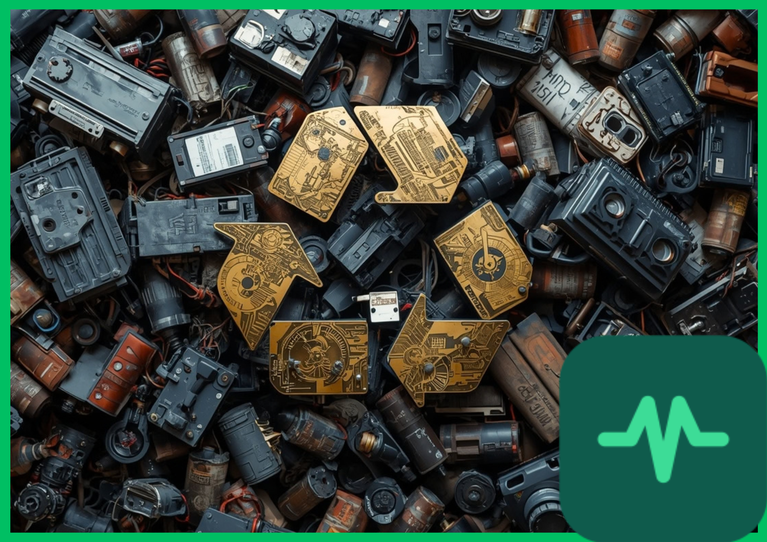
First, spent battery packs undergo automated discharge and mechanical dismantling. Specialized robotic systems shred the heavy housings and modules into smaller fragments inside a controlled, oxygen-free environment to prevent fires.
Next, recycling facilities apply advanced hydrometallurgical techniques—using precise liquid acid solutions to dissolve and separate the components.
Instead of melting down the battery at roaring, high-energy temperatures like old-school pyrometallurgical smelters, hydrometallurgy acts like a chemical wash.
It separates individual elements with remarkable precision.
The process isolates battery-grade lithium carbonate, pure nickel sulfate, cobalt, and manganese with recovery rates exceeding 95%.
The Science of High-Purity Recovery
A common myth is that recycled battery materials are somehow inferior to newly mined elements.
Academic research and industrial evaluations prove the exact opposite.
The chemical elements recovered through modern hydrometallurgical processes are refined until they match or exceed the purity of virgin materials extracted directly from the ground.
When battery manufacturers receive these recycled inputs, they cannot tell the difference between newly mined minerals and recycled elements.
The recycled materials perform identically inside high-performance lithium-ion and lithium-iron phosphate cells.
By feeding recycled minerals back into cell production, manufacturers bypass the mining phase entirely.
Each recycled battery pack becomes the raw material mine for the next generation of electric vehicles.
Building a Truly Sustainable Global Footprint
The rise of closed-loop recycling changes the fundamental arithmetic of electric mobility.
When battery production relies on infinite loops of material reuse, the environmental footprint of transportation shrinks dramatically.
Recycling facilities require significantly less energy and water than primary mining operations, cutting industrial greenhouse gas emissions by up to 70% compared to using virgin ores.
As regulatory frameworks and industrial investments scale up worldwide, recycling infrastructure is expanding to match the surging wave of retiring vehicles.
We are building a truly closed-loop system where nothing is wasted.
By recovering our valuable minerals and treating batteries as permanent assets, we secure an independent, abundant supply of clean energy materials for generations to come.


Comments (0)
Login to leave a comment.
No comments yet. Be the first to share your thoughts!