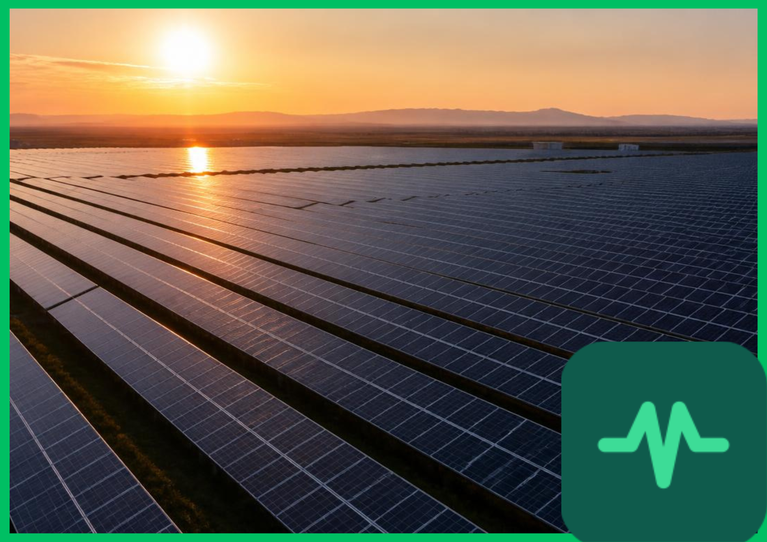
Solar power growth has reached another major milestone. Solar PV remained the biggest source of new renewable-energy capacity added around the world in 2025. According to the International Energy Agency, global solar PV additions passed 600 GW for the first time.
That is a major change for the global energy system. For years, solar power was seen as an important clean-energy technology with long-term potential. Now, it has become one of the fastest-growing sources of electricity capacity.
The reason is simple. Solar technology has become cheaper. Manufacturing has expanded. More countries are building solar farms. At the same time, households and businesses are installing their own systems.
As a result, solar power growth is no longer limited to a few major markets.
Solar Is Driving Renewable Expansion
Global renewable capacity additions reached a record level in 2025. The IEA estimates that annual renewable capacity additions reached about 800 GW, with solar accounting for more than three-quarters of the total.
IRENA also reported strong renewable expansion, although its methodology and figures differ from the IEA's assessment. IRENA recorded 692 GW of renewable capacity additions in 2025, with solar accounting for about 510 GW.
The different estimates reflect differences in data coverage and methodology.
However, the overall message is clear. Solar power growth is accelerating.
China Remains the Biggest Driver
China continues to play a major role in global solar development.
The IEA estimates that China added almost 500 GW of renewable capacity in 2025, representing more than 60% of global growth in its assessment.
Solar was a major part of that expansion. China's enormous manufacturing industry has also helped reduce the cost of solar equipment around the world.
This matters because lower equipment costs can make solar projects more attractive in other markets. Therefore, China's role in solar power growth extends beyond its domestic market.
India Is Also Expanding Quickly
India is another important market. The IEA reports that India's annual renewable-capacity additions increased by almost 60% in 2025. Almost 50 GW of solar PV was commissioned during the year. The country's large population and growing electricity demand make solar particularly important.
India also has strong solar resources across many regions. Therefore, solar power growth could continue to play an important role in meeting the country's future electricity needs.
Africa Has a Growing Opportunity
Africa has enormous solar potential. Many African countries receive strong sunlight for much of the year.
However, installed solar capacity remains relatively small compared with the continent's potential. IRENA reports that Africa added 11.3 GW of renewable capacity in 2025. That represented about 1.6% of global renewable additions. This shows both progress and the remaining gap.
More solar investment could help countries expand electricity access and reduce dependence on expensive fuel imports. However, financing remains a major challenge.
Solar Is Changing Electricity Markets
The importance of solar power growth goes beyond new solar panels. Solar is changing how electricity markets operate. Traditional power stations can often generate electricity when operators choose.
Solar generation is different. It depends on sunlight. Therefore, as solar becomes a larger part of electricity systems, countries need more flexibility.
That can include batteries, stronger grids, flexible demand and better forecasting.
Batteries Become More Important
Solar and batteries are increasingly connected. Solar panels produce electricity during the day. Batteries can store some of that electricity.
Then, the stored power can be used later. This makes solar more useful during evening periods when electricity demand can remain high.
The IEA reports that battery storage was the fastest-growing power technology in 2025, with about 108 GW of new capacity deployed worldwide.
Therefore, solar power growth is also helping create demand for energy storage.
The Grid Must Keep Up
There is another challenge. Solar projects need electricity-grid connections. If the grid cannot carry electricity from a solar farm to consumers, the project cannot operate at its full potential.
This is becoming increasingly important as solar deployment accelerates. The IEA expects renewable electricity to continue growing rapidly through 2030. At the same time, it stresses the need for grid investment and greater system flexibility.
EcoGreenPulse View
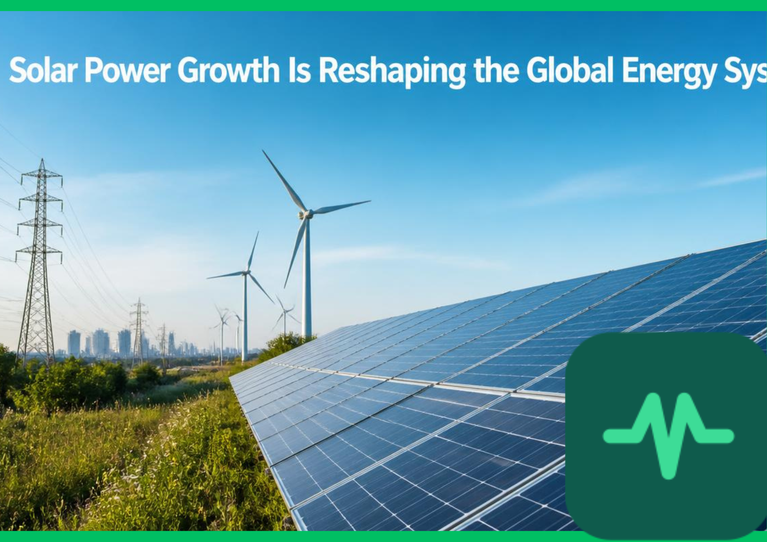
The biggest story about solar power growth is no longer simply that solar is expanding. It is how quickly the technology is becoming part of the world's main electricity system.
Solar is now affecting manufacturing, electricity markets, battery demand, grid planning and energy policy.
For consumers, this could create more opportunities to generate electricity at home.
For businesses, it creates new markets for solar installation, storage and energy management.
For governments, it creates both opportunities and challenges.
Conclusion
Solar power growth is becoming one of the defining trends in the global energy market. Record installations in 2025 show that solar is expanding at remarkable speed.
However, the next stage will require more than solar panels. Countries will need stronger grids, energy storage and better electricity planning.
If those systems develop alongside solar generation, solar power growth could continue to reshape the global energy system.
Sources: IEA, Global Energy Review 2026; IRENA, Renewable Capacity Statistics 2026.
Comments (0)
Login to leave a comment.
No comments yet. Be the first to share your thoughts!