You look up at the towering glass skyscrapers surrounding you on every side.
The glass gleams brightly in the afternoon sun, reflecting light and heat back down onto the busy street below.
Those massive glass towers consume staggering amounts of electricity.
They run giant air conditioning systems, blazing interior lights, and elevators all day long.
For over a century, urban architecture treated windows as passive barriers.
Glass let light in, kept the wind out, and did nothing else.
Meanwhile, traditional solar panels required dark, opaque silicon blocks that could only be mounted on roofs or open land, leaving the massive surface area of skyscraper walls completely wasted.
We cannot power modern, dense cities if we only look at rooftops for our clean energy.
What if every window on every skyscraper could generate electricity?
What if transparent glass itself acted as a solar panel without blocking your view of the sky?
A quiet, brilliant architectural revolution is transforming our urban skylines.
According to global energy reports from the International Energy Agency (IEA), resource protection frameworks from the United Nations Environment Programme (UNEP), efficiency benchmarks from ENERGY STAR, and academic photovoltaic research, transparent solar window glass technology is changing our built environment.
By coating ordinary windows with specialized transparent photovoltaic materials that harvest invisible light, we turn every glass skyscraper into an active clean power generator.
Here is how transparent solar works, why power-generating windows change urban economics, and how building-integrated photovoltaics secure our sustainable future.
The Hidden Waste of Skyscraper Glass
To understand why transparent solar window glass matters so much, you have to look at the energy reality of modern cities.
Urban buildings account for a massive share of global energy consumption.
Skyscrapers are wrapped from top to bottom in miles of architectural glass.
That glass absorbs solar radiation, turning office towers into giant heat traps that demand constant, energy-intensive air conditioning.
Early solar engineers faced a stubborn dilemma.
To harvest solar energy, traditional photovoltaic panels had to absorb visible light, which made them dark and completely opaque.
You could not put an opaque black solar panel on a skyscraper window unless you wanted to sit in total darkness.
Skeptics argued that harvesting electricity from transparent glass was physically impossible because light passing through a window cannot be captured for power.
Materials scientists and physicists refused to accept that limit.
They realized that visible light is only one small part of the sun's radiation spectrum.
The sun also beams down vast amounts of invisible infrared and ultraviolet light every single second.
If we could capture those invisible rays while letting visible light pass right through, ordinary windows could become power plants.
What Is Transparent Solar Window Glass?
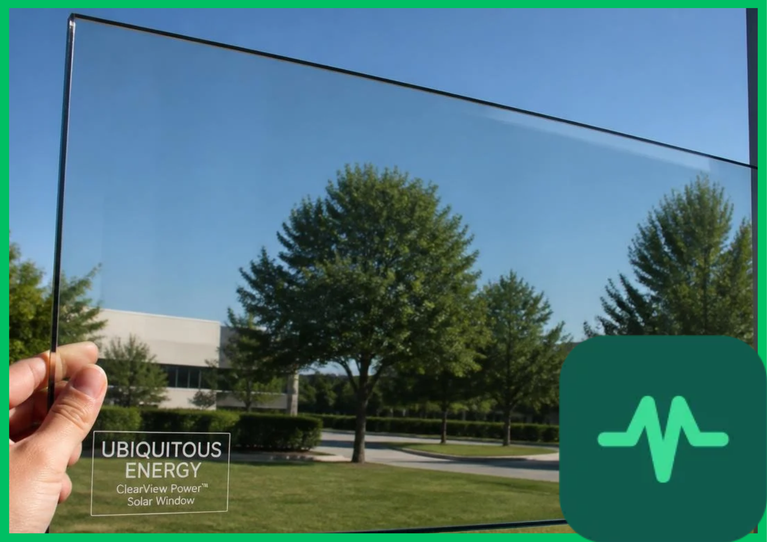
Transparent solar window glass is an advanced building-integrated photovoltaic technology that uses specialized organic salts, quantum dots, or transparent luminescent solar concentrators to absorb invisible ultraviolet and infrared light, converting those rays into electricity while letting visible light pass through completely clear.
Instead of replacing windows with dark silicon panels, manufacturers coat standard architectural glass with a microscopic, clear film.
Invisible busbars and ultra-thin wiring hidden along the window frames capture the electrical charge generated across the glass surface.
The window looks completely normal to the human eye.
You look out your office window at the city skyline with absolute clarity.
Yet quietly, invisibly, every single window pane across the entire facade of the building is drinking in solar radiation and feeding clean electricity straight into the building's electrical grid.
The Science of Invisible Light Harvesting
How can a clear glass window capture energy from sunshine without darkening your room or changing your view?
It comes down to optical physics and selective light absorption.
Academic photovoltaic research shows that transparent solar coatings are tuned to target specific wavelengths outside human vision.
Ultraviolet and near-infrared rays carry thermal energy but remain completely invisible to our eyes.
When sunlight hits a transparent solar window, the coating absorbs those invisible wavelengths and guides the trapped energy toward the microscopic edges of the glass frame, where thin strips of photovoltaic cells convert it into electrical current.
According to ENERGY STAR and international building efficiency evaluations, outfitting a commercial skyscraper with transparent solar window glass reduces the building's net grid electricity consumption by up to 30% to 40%.
The windows generate clean power while cutting indoor cooling loads by blocking heat-carrying infrared rays.
Environmental Integrity and Urban Decarbonization
The environmental benefits of transparent solar technology extend far beyond generating on-site renewable electricity for skyscrapers.
They transform how dense urban centers meet strict net-zero climate targets.
Most downtown city centers lack the open land needed to build large solar farms or wind parks.
Space is scarce and expensive.
By turning vertical building facades into active solar generators, transparent solar window glass unlocks vast new acreage for clean energy generation right where electricity demand is highest.
According to UNEP resource governance frameworks, integrating power-generating materials directly into standard building supplies reduces raw material waste and lowers the lifecycle carbon footprint of urban construction.
According to IEA clean energy roadmaps, scaling up building-integrated photovoltaics is an essential pillar to decarbonize global real estate over the coming decades.
When urban skyscrapers generate their own power, cities become self-reliant ecosystems.
Overcoming Manufacturing and Integration Realties
Scaling transparent solar window glass from laboratory prototypes into commercial skyscraper construction involves navigating real-world manufacturing hurdles.
Producers must ensure that transparent solar coatings maintain long-term durability, resisting degradation from decades of harsh outdoor weather, wind, and thermal stress.
Glass manufacturers and innovative clean-tech startups are scaling up roll-to-roll coating lines, reducing production costs, and partnering with major architectural firms to feature power-generating windows in upcoming commercial developments.
As building codes increasingly mandate net-zero efficiency for new construction, transparent solar glass is transitioning successfully from experimental architecture displays into standard commercial skyscrapers worldwide.
Generating Power From Our Views Toward a Sustainable Future
Transparent solar window glass proves that human ingenuity can turn everyday architectural surfaces into clean energy generators.
We no longer have to accept that skyscraper windows are merely passive barriers that waste vertical space.
By coating architectural glass with materials that harvest invisible light, we unlock a massive new frontier for urban renewable power.
We step away from energy waste, embracing a clear, brilliant, and enduring standard of sustainable building design.
Through brilliant optical physics, rigorous academic research, and a deep respect for our planetary climate, glass that generates power secures a clean, bright, and sustainable future for every city on Earth.




Comments (0)
Login to leave a comment.
No comments yet. Be the first to share your thoughts!