Then a severe storm rolls across the horizon. Lightning flashes, power lines snap, and your neighborhood plunges into sudden, pitch-black darkness.
You walk over to your lights and flip the switch. Nothing happens.
You look outside and notice your rooftop solar system is completely dark, too.
Panic sets in. You have solar panels on your roof, yet your home has no power.
This common surprise catches many new solar owners off guard. Understanding residential solar battery backup systems explains why grid-tied solar goes down during blackouts—and whether adding a home battery is right for your energy goals.
Why Grid-Tied Solar Shuts Down During Blackouts
To understand why solar systems turn off during a power outage, you have to look at grid safety regulations.
Standard grid-tied solar installations are legally and technically required to include an anti-islanding inverter safety switch.
When the main utility grid loses power, your solar inverter automatically shuts down within milliseconds.
Why? Because your solar panels continue generating electricity during daylight. If your panels pushed electricity out onto dead power lines while line repair crews were working outside, that backfeed could electrocute utility workers miles away.
Without a battery storage system to isolate your home safely from the wider grid, standard solar panels cannot power your house during a blackout.
How Residential Battery Storage Works
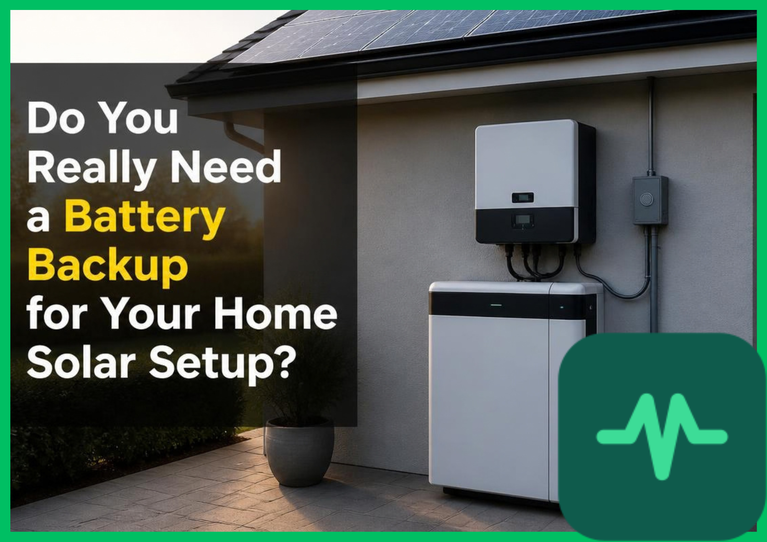
A home battery backup system solves this problem by adding an intelligent energy storage unit and an automatic transfer switch to your solar setup.
During normal daily operation, your rooftop solar panels generate electricity. Your home consumes what it needs, and any surplus power flows into your residential battery pack instead of being sent back to the grid for pennies.
Once your battery is fully charged, any extra energy can still be exported outward.
When the utility grid goes down during a storm, the automatic transfer switch instantly disconnects your home from the external power lines, isolating your property into a safe, self-sustaining microgrid.
Your home battery takes over instantly, keeping your refrigerator running, internet router active, and lights glowing without interruption.
Evaluating Capacity and Energy Needs
Adding a battery backup requires careful planning around your household power needs.
Batteries are measured in kilowatt-hours of storage capacity. A small battery might store 5 to 10 kilowatt-hours of energy, while larger setups scale up to 30 kilowatt-hours or more.
Before investing, look closely at what you actually need to run during an emergency:
- Essential Loads: Keeping a refrigerator, medical equipment, phone chargers, Wi-Fi routers, and LED lights running requires modest battery capacity.
- Heavy Loads: Running an entire central air conditioning system, electric clothes dryer, or electric oven draws massive electrical loads that will drain a standard home battery in minutes.
Most homeowners configure their battery backup to power essential circuits only, ensuring critical household operations survive multi-day blackouts.
Weighing the Benefits Beyond Blackouts
While emergency backup protection is the primary reason people buy home batteries, storage offers financial benefits during normal daily operations, too.
Many regional utilities use time-of-use pricing, charging high rates for electricity during peak evening hours when demand spikes and solar production drops.
With a home battery, you can store your cheap midday solar energy and use that stored power to run your home during expensive evening hours, bypassing high utility rates entirely.
Deciding whether you need a battery backup depends on how often your local grid fails, how much you value uninterrupted power security, and how your local utility structures electricity pricing.
For many homeowners, the peace of mind of keeping the lights on when the rest of the neighborhood goes dark makes battery storage an invaluable addition.



Comments (0)
Login to leave a comment.
No comments yet. Be the first to share your thoughts!