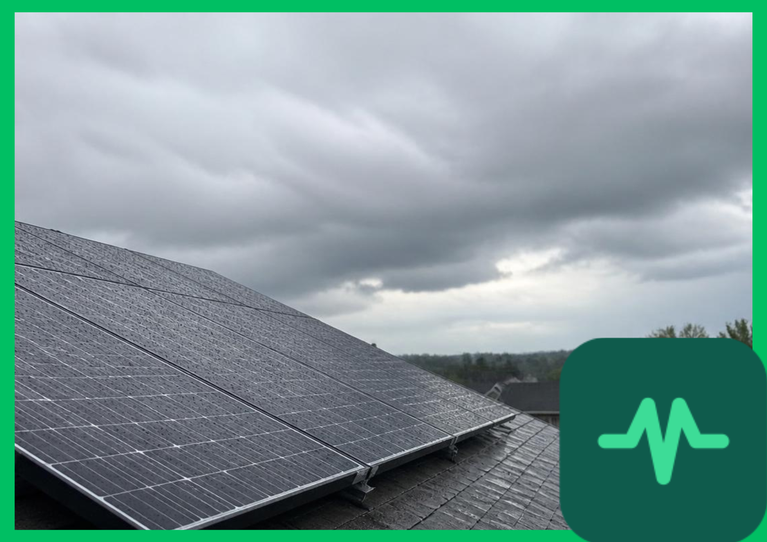
Yes.
This is one of the most common misunderstandings about solar energy. Solar power in cloudy weather is still possible, because solar panels don't need direct, bright sunshine every second to work.
Solar photovoltaic panels use light. That light can still reach the panels even when clouds cover the sun. There is one important difference, though: panels usually produce less electricity when the sky is heavily overcast.
So cloudy weather affects how much electricity gets produced. It doesn't simply switch the system off.
How Solar Panels Produce Electricity
Solar photovoltaic (PV) panels contain cells that convert sunlight into electricity. When light reaches those cells, electrical energy gets produced.
On a clear day, more solar radiation is available overall. Clouds block or scatter some of that radiation, so panels produce less power as a result.
The exact drop depends on cloud thickness:
- Thin cloud cover → smaller effect on output
- Heavy, dark clouds → much larger effect on output
This means there's no single percentage that applies to every cloudy day. It varies with conditions.
What Happens During Rain?
Rain itself doesn't normally stop a solar panel from producing electricity. The real issue is the clouds that often come with rain.
If the sky is heavily covered, less light reaches the panels, and production falls. On the bright side, rainfall can help clean dust and dirt off panel surfaces, which is genuinely useful in dusty environments.
Still, don't rely on rain as a complete cleaning solution. Regular inspection is still worthwhile.
Does Solar Power Work at Night?
No — and this distinction matters.
Solar panels in cloudy weather need light. At night, there's no meaningful sunlight for normal solar PV generation. That means households using solar power after sunset need another source of electricity, such as:
- The electricity grid
- A battery
- A backup generator
- Another energy source
This is exactly why solar systems are so often paired with batteries or grid connections.
Cloudy Countries Can Still Use Solar
Some people assume solar only makes sense in hot, sunny countries. That's not correct.
Solar PV works across many different climates. What actually matters is the total solar resource over time, not clear skies every single day. Developers and installers assess expected solar radiation and annual energy production, not daily weather alone.
The numbers back this up. The IEA continues to identify solar PV as one of the major sources of global electricity growth. IRENA also reported that solar PV accounted for nearly three-quarters of renewable capacity additions in 2025, with around 510 GW added globally.
These figures show just how widely this technology is being deployed, cloudy regions included.
Why Solar Output Changes During the Day
Weather isn't the only factor shaping solar production. The sun's position in the sky changes throughout the day too.
A typical daily production curve looks like this:
- Morning: Lower output
- Midday: Peak output
- Afternoon: Output declines again
Clouds make this curve even more variable. So households shouldn't expect the same output every single hour, regardless of weather.
Solar Panels Can Still Be Useful in Rainy Regions
A rainy climate doesn't automatically make solar a bad investment. The real question is how much electricity the system produces over a full year.
A household might see plenty of cloudy days, but still get many hours of useful sunlight overall. Total annual output matters far more than any single rainy afternoon. This is exactly why professional solar assessments rely on local solar-resource data, not assumptions about the weather.
Batteries Can Help During Poor Weather
This is where energy storage becomes genuinely useful.
Picture a solar system producing more electricity than a household needs on a sunny afternoon. That excess power can get stored instead of wasted. Later, when clouds reduce production, the household draws on that stored energy instead.
A battery essentially separates when electricity gets produced from when it gets used. The IEA has highlighted storage as an important flexibility tool as variable renewable energy keeps expanding.
Solar and the Electricity Grid
A grid-connected solar system offers another layer of flexibility. When solar production is low, the home pulls power from the grid. When production is high, the household uses its own solar electricity, and depending on local rules, may even export the excess.
Export rules vary considerably between countries and electricity markets, so it's worth checking local regulations before assuming how this will work for you.
Does More Heat Mean More Solar Power?
Not necessarily. This is another common misconception.
Solar panels need sunlight, not heat. In fact, very high temperatures can actually reduce the efficiency of many photovoltaic modules. A hot day isn't automatically a better solar day than a cooler one.
What really matters is the amount and quality of solar radiation reaching the panels, not the temperature outside.
Panel Position Matters
Installation quality plays a real role in output too. Panels need to be positioned to capture useful sunlight throughout the day.
Shade reduces production, so nearby buildings, trees, and other structures matter more than people often expect. A good installer should assess the site carefully before recommending a system, especially for residential rooftops.
New Solar Technology Is Improving Performance
Solar technology keeps evolving. Manufacturers are improving panel efficiency and designing better products for different environments.
At the same time, better inverters and monitoring systems help consumers actually understand how their system is performing in real time. This means it's worth looking at the complete system, not just a panel's headline efficiency number.
How Should Consumers Judge a Solar System?
Instead of asking:
"Will my solar panels work when it rains?"
A better question is:
"How much electricity will this system produce at my location over a full year?"
That's the more useful measure. Before buying, ask your installer:
- What is the estimated annual production?
- What assumptions were used to calculate it?
- How much production is expected across different seasons?
- How will the system behave during grid outages?
These questions give you a far clearer picture than weather-day speculation ever could.
Solar Power in Different Seasons
Solar production shifts significantly across the year. Some regions get more sunlight in summer. Others follow different seasonal patterns entirely. Rainy seasons can reduce output for a stretch.
Still, annual energy output is what matters most when evaluating a system. Don't judge solar technology based on a single season or a single string of cloudy days.
Why This Matters for Homeowners
Understanding solar power in cloudy weather helps consumers make better, more realistic decisions. It prevents both unrealistic expectations and unnecessary worry.
Solar panels aren't designed only for perfect sunny days. They're built to generate electricity from available solar radiation over time, which means a system can still provide real, useful electricity even as weather conditions change.
EcoGreenPulse View
Cloudy and rainy weather is a completely normal part of solar energy planning. The real question isn't whether solar panels work perfectly every single day. They don't.
The real question is whether the system produces enough electricity over time to meet a household's goals. For some homes, solar alone is enough. Others benefit from adding batteries. Some will keep relying on the grid as a backup. In many cases, the best solution blends all three approaches together.
Conclusion
Solar power in cloudy weather is still very much possible. Panels can generate electricity from available light even when clouds cover the sun, though output normally falls as cloud cover gets heavier.
Rain itself isn't the real problem, reduced sunlight is. Consumers should judge solar systems by expected annual production, not by assuming any single cloudy or rainy day makes solar useless.
With better panels, batteries, smart controls, and stronger electricity networks, solar can play an increasingly important role in household energy systems, in sunny climates and cloudy ones alike.
Sources: International Energy Agency and International Renewable Energy Agency.
Comments (0)
Login to leave a comment.
No comments yet. Be the first to share your thoughts!