They sit neatly in rigid frames, catching the bright afternoon sunlight and converting it into clean electricity for your home.
Those traditional silicon panels perform an incredible service. They transformed renewable energy from a scientific dream into a global everyday reality.
For decades, silicon was the undisputed king of solar technology.
Yet, traditional silicon has physical limits. It is heavy, rigid, expensive to manufacture in high-purity form, and tops out in its ability to convert sunlight into usable power.
If we want to power our entire global civilization with clean solar energy, we need technology that reaches higher.
A quiet, crystalline breakthrough is taking place in physics and materials laboratories across the world.
According to global photovoltaic reports from the International Energy Agency (IEA), resource sustainability frameworks from the United Nations Environment Programme (UNEP), efficiency standards from ENERGY STAR, and advanced academic materials research, perovskite solar cells are changing the future of solar energy.
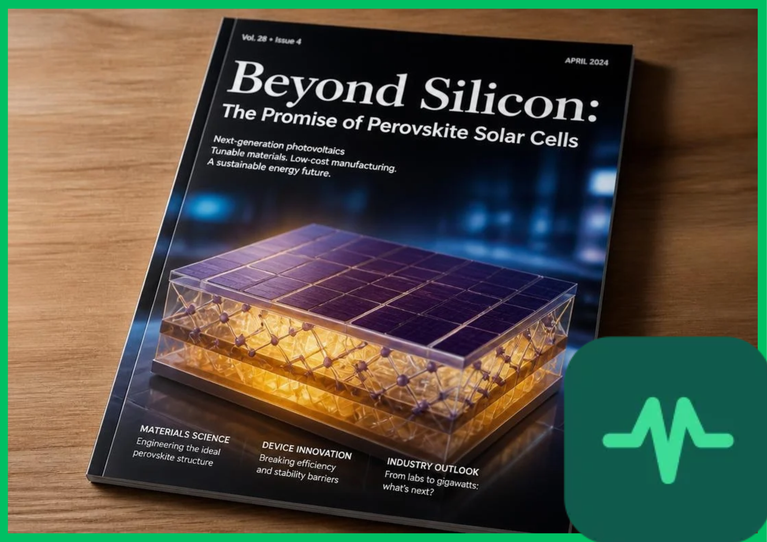
By utilizing unique crystal structures and pairing with traditional silicon in tandem designs, next-generation photovoltaics push clean energy conversion rates to unprecedented heights.
Here is how perovskite solar cells work, why tandem photovoltaic designs break efficiency records, and how thin-film material science secures our renewable future.
The Physical Limits of Traditional Silicon
To understand why perovskites represent such a massive leap forward, you have to look closely at standard silicon solar panels.
Silicon works by absorbing photons of light, knocking electrons free, and creating an electrical current.
That process is clean and reliable.
Silicon crystals also have strict optical limitations defined by physics. A single-junction silicon solar panel can only absorb a specific portion of the light spectrum, letting infrared light pass right through and wasting high-energy ultraviolet light as heat.
Because of those physical boundaries, standard commercial silicon panels max out their conversion efficiency at roughly 22% to 26% in real-world conditions.
Furthermore, manufacturing pure silicon requires melting quartz rock in massive industrial furnaces at temperatures exceeding 1,400°C (approx. 2,552°F), consuming significant energy and producing carbon emissions.
We needed a material that absorbs light differently, costs less to manufacture, and layers seamlessly on top of existing technology.
What Is a Perovskite Solar Cell?
A perovskite solar cell is built around a specific crystal structure named after the Russian mineralogist L. A. Perovski.
Unlike traditional silicon, which requires thick, rigid, high-purity wafers, perovskite materials are synthetic crystals that can be dissolved in simple liquids and printed like ink onto glass, plastic, or metal foils.
The atomic structure of a perovskite crystal is remarkably flexible.
When sunlight hits a perovskite layer, its unique crystal lattice absorbs photons with incredible efficiency across a much wider band of the light spectrum than silicon can manage alone.
Academic materials research shows that perovskites capture high-energy blue and green light effortlessly, converting those rays into electricity with astonishing speed.
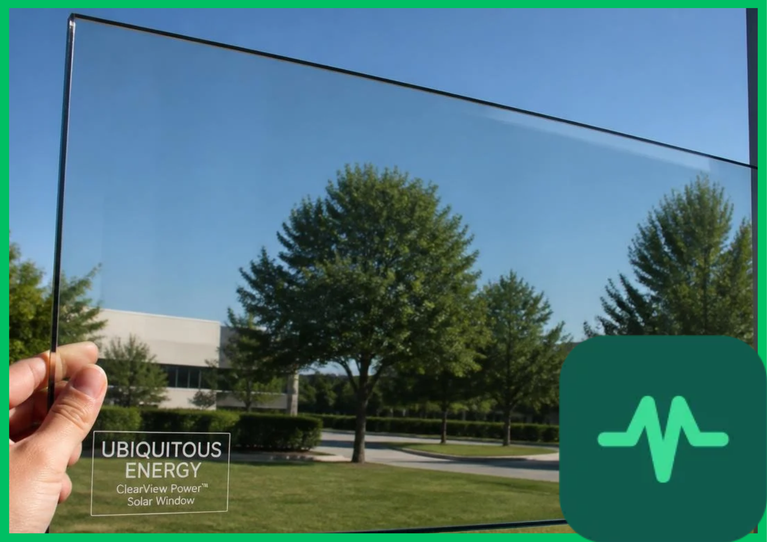
They are cheap to produce, require low-temperature manufacturing processes, and can be made thin, lightweight, and semi-transparent.
The Power of Tandem Photovoltaic Cells
The real magic happens when you stop treating perovskite and silicon as rivals and start combining them as partners.
This breakthrough is known as a tandem photovoltaic cell.
Imagine stacking two specialized solar filters on top of each other.
The top layer is made of a thin, semi-transparent perovskite film. It captures high-energy blue light and lets low-energy red and infrared light pass straight through.
Directly underneath sits a traditional silicon solar layer. It catches the infrared light that the top layer skipped.
By working together in a tandem stack, the two materials capture a vastly broader slice of the sun's energy spectrum.
Academic laboratory tests and IEA technology assessments demonstrate that perovskite-silicon tandem cells achieve conversion efficiencies surpassing 30% to 34%, shattering the old limits of single-layer panels.
More power is squeezed out of the exact same surface area, lowering installation costs and maximizing clean energy yields for homes and utility-scale solar farms alike.
Overcoming Manufacturing and Durability Hurdles
If perovskite solar cells offer such incredible efficiency gains, why aren't they dominating every commercial rooftop today?
Every revolutionary material faces early-stage hurdles.
The primary challenge with early perovskite cells was stability. While silicon panels last 25 to 30 years exposed to rain, wind, and scorching heat, early perovskite films degraded rapidly when exposed to moisture, oxygen, and ultraviolet light.
Scientists and academic researchers spent years redesigning crystal compositions, adding protective chemical coatings, and sealing the cells inside durable encapsulations.
Recent laboratory durability testing proves that modern perovskite formulations match the operational stability of traditional panels while maintaining high efficiency.
According to ENERGY STAR and international photovoltaic standards, commercial manufacturing lines are scaling up rapidly to bring these high-efficiency tandem panels to the global market.
Pushing the Boundaries of Clean Energy
Perovskite solar cells prove that human science can continually reinvent our clean energy toolkit.
We no longer have to accept that traditional silicon represents the final peak of solar efficiency.
By combining unique crystal structures, low-temperature solution processing, and powerful tandem photovoltaic designs, perovskites unlock a new era of high-performance solar power.
UNEP resource efficiency frameworks highlight that manufacturing thin-film materials consumes a fraction of the energy required for traditional silicon wafers, reducing industrial footprints from the very start.
We step beyond old limitations, capturing more sunlight, generating cheaper electricity, and accelerating our global transition away from fossil fuels.
Through brilliant materials science and relentless innovation, perovskite solar cells light our way toward a bright, fully renewable future.



Comments (0)
Login to leave a comment.
No comments yet. Be the first to share your thoughts!