

Ground Surface Reflectivity and Spectral Albedo Coefficients
The foundational physical parameter governing bifacial photovoltaic performance is ground surface reflectivity, quantified as the albedo coefficient ( ). Albedo represents the dimensionless ratio of reflected shortwave radiation flux (
 ) to incoming global horizontal irradiance (
 ) striking the terrain beneath the solar array:
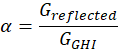
Albedo values vary dramatically across different terrain and ground cover types. Fresh snow exhibits exceptionally high spectral albedo coefficients ranging from  to
 , reflecting up to 85% of incident solar irradiance upward toward the rear face of elevated photovoltaic panels. Conversely, green grass, agricultural soil, and dark asphalt pavements exhibit lower albedo coefficients ranging from
 to
 .
Furthermore, spectral albedo coefficients fluctuate across specific solar wavelength bands (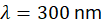 to
 ). Silicon semiconductor bandgaps respond efficiently to near-infrared wavelengths, meaning ground surfaces that reflect high fractions of near-infrared radiation deliver superior rear-side electrical generation gains, even when visual albedo appears low.
Rear-Side Irradiance Yield and Bifaciality Factor
Capturing reflected ground irradiance requires analyzing rear-side irradiance yield and the intrinsic bifaciality factor ( ) of the photovoltaic module. Unlike monofacial cells possessing opaque polymeric backsheets, bifacial cells feature symmetrical or passivated emitter and rear cell (PERC) architectures that permit light absorption from both directions. The bifaciality factor defines the ratio of rear-side conversion efficiency to front-side conversion efficiency, typically ranging from 70% to 85% in commercial n-type tunnel oxide passivated contact (TOPCon) and heterojunction (HJT) solar cells.
Rear-side irradiance distribution is non-uniform across the span of tilted module rows. Shading cast by mounting torque tubes, structural torque rails, and adjacent rows creates complex irradiance gradients, where the center of the rear module surface receives lower photon flux than the outer edges. Optical modeling utilizing view-factor algorithms and ray-tracing simulations calculates total rear-side irradiance by integrating direct beam reflections, diffuse sky radiation, and multiple inter-row ground reflections.
Technical Data Specifications of Bifacial Solar Panels
| Bifacial Photovoltaic Parameter | Engineering & Material Specification Standard |
|---|---|
Bifaciality Factor ( ) | 70% to 85% rear-to-front efficiency ratio |
Fresh Snow Surface Albedo ( ) |  to  maximum ground reflectivity |
Desert Sand Surface Albedo ( ) |  to  high-reflectivity arid terrain |
Green Grass / Soil Albedo ( ) |  to  standard vegetation baseline |
| Nominal Mounting Clearance Height |  to  (  ) above ground |
| Net Annual Energy Gain Range | 5% to 30% additional electricity yield |
| Optimal Ground Coverage Ratio (GCR) |  to  for tracker optimization |
Mounting Height Optimization and Tilt Angle Dynamics
Optimizing rear-side energy yield requires precise engineering of mounting height optimization and structural tilt angle dynamics. When solar arrays are mounted close to the ground (clearance heights below  [
 ]), the ground area directly beneath the module centerline remains heavily shaded by the module itself, blocking reflected light from reaching the center of the rear surface and creating severe irradiance non-uniformity.
Raising the mounting clearance height ( ) to
 to
 (
 to
 ) broadens the field of view of the rear module surface, exposing the entire rear active area to uniform ground-reflected radiation. Single-axis tracking bifacial systems mounted at optimal heights maximize rear irradiance collection throughout diurnal solar arcs. As trackers rotate eastward to westward, the relative position of the ground shadow shifts continuously across the terrain, exposing unshaded high-albedo ground surfaces to direct solar radiation and enhancing rear-side photon capture during early morning and late afternoon hours.
Thermal Performance and Levelized Cost of Electricity Impacts
Bifacial photovoltaic installations deliver thermodynamic advantages beyond direct optical albedo gain. Standard monofacial modules trap thermal energy beneath opaque backsheets, elevating operating cell temperatures to  (
 ) and degrading electrical voltage output via negative temperature coefficients (
 ).
Bifacial modules utilizing transparent dual-glass packaging exhibit enhanced radiative thermal dissipation from both front and rear glass surfaces. This dual-sided convective and radiative cooling lowers operating cell temperatures by  to
 (
 to
 ) relative to monofacial equivalents, preserving nominal operating voltage and boosting electrical conversion efficiency during peak irradiance intervals.
According to International Energy Agency and renewable energy economic assessments, the cumulative impact of optical albedo energy gains (5% to 30% depending on ground cover) and enhanced thermal dissipation reduces the levelized cost of electricity (LCOE) by 3% to 6%, accelerating global utility-scale decarbonization trajectories without proportional increases in capital expenditure.



Comments (0)
Login to leave a comment.
No comments yet. Be the first to share your thoughts!