What this actually means
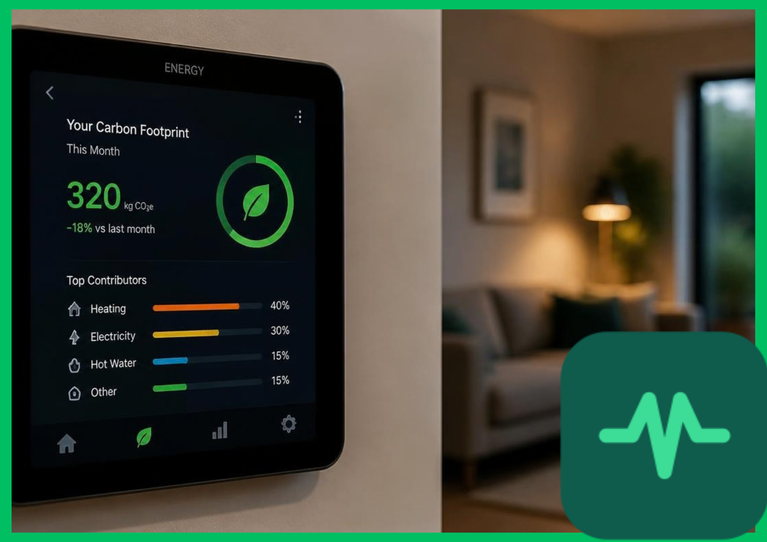
A home carbon footprint tracker connects to your smart devices and turns your energy use into a simple number. That number represents the emissions tied to your electricity, heating, and cooling.
Instead of just seeing a bill once a month, you see the environmental side of your habits as they happen.
Why this feels different from a regular energy bill
A bill shows cost. Cost feels abstract. It's just a number that goes up or down.
Carbon numbers feel more direct. Turning on the air conditioner isn't just money leaving your account. It becomes a small, visible choice with a visible impact attached to it.
How this tracking actually works
Sensors and smart meters record how much electricity different parts of your home use. This data gets compared against how clean or dirty the local electricity grid is at that exact moment.
Some grids run cleaner at certain hours, when more solar or wind power is available. The system factors this in, giving you a number that shifts throughout the day, not just a flat average.
Why timing suddenly matters more
Here's something most people never think about. The same amount of electricity can carry a very different carbon cost depending on when you use it.
Running your washing machine at noon, when solar power is strong, might create far less carbon than running it at night, when the grid relies more on other sources. A good tracker shows you this difference clearly.
What you can actually do with this information
Once you see this pattern, you can start shifting habits. Charge devices earlier in the day. Run appliances when clean energy is more available. Small shifts, repeated daily, add up over a year.
None of this requires buying new appliances. It simply means using the ones you already have at smarter times.
The honest limits of this technology
This system only tracks what it can measure. If part of your home isn't connected to smart sensors, it won't show up in the total.
The accuracy also depends on how well the system understands your local grid's mix of energy sources. Some regions have very detailed data. Others have less, which makes the numbers a bit more approximate.
Why some people find this motivating
Seeing a number tied to your own choices can be surprisingly powerful. It turns something abstract, climate change, into something personal and immediate.
Many people report this kind of visible feedback helps them stick with better habits longer than a vague sense of "trying to be green" ever did on its own.
Why others might find it stressful
Not everyone wants a constant reminder of their environmental impact. For some, this kind of daily tracking can feel like pressure rather than helpful information.
It's worth being honest about this. A tool that motivates one person might overwhelm another. There's no universally correct reaction to seeing this data.
How this fits into the bigger smart home trend
Smart homes have been shifting from simple automation toward genuine energy awareness. Turning lights on and off automatically was just the beginning.
Now, systems increasingly focus on helping you understand and actively manage your energy use, not just automate it without any real insight into what's actually happening.
What this could look like a few years from now
Expect these dashboards to get smarter and more personalized. Instead of just showing today's number, future systems may suggest specific changes, like shifting one particular habit that would make the biggest difference.
This moves the technology from simply informing you toward genuinely coaching you, based on your own actual patterns rather than generic advice.
Is this worth setting up in your own home
If you already have smart home devices, adding this kind of tracking is often a simple extra step, sometimes just a setting within an app you already use.
If you're starting from scratch, it's worth considering as part of a broader smart home setup, rather than a separate, standalone purchase on its own.
The bottom line
A home carbon footprint tracker turns your daily energy habits into something visible and personal. It won't fix anything by itself, but seeing the real impact of your choices can genuinely change how you use energy day to day.
Like any tool, its value depends on what you actually do with the information. For those willing to look and adjust, it offers a simple, honest way to make smarter, more informed choices at home.


Comments (0)
Login to leave a comment.
No comments yet. Be the first to share your thoughts!