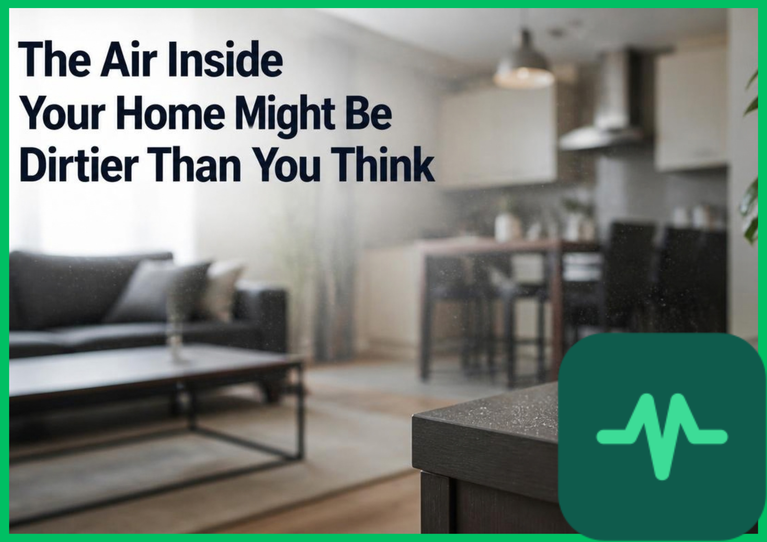
Why indoor air quality matters so much
We spend most of our time indoors, at home, at work, in cars. This means indoor air quality affects our health far more than most people realize.
Poor indoor air has been linked to headaches, fatigue, and breathing problems. Over time, this can genuinely affect long-term health, not just a passing bad day.
Where indoor pollution actually comes from
A lot of it comes from things we bring into our homes without thinking twice. Paint, furniture, flooring, and cleaning products can release invisible chemicals into the air, often called volatile organic compounds, or VOCs for short.
Cooking, especially with gas stoves, adds another layer. Humidity and poor ventilation can also allow mold and dust to build up quietly over time.
Why this problem has grown more attention recently
As homes have become better sealed for energy efficiency, they've also become better at trapping pollutants inside. A tightly sealed home saves on heating and cooling, but it can also hold onto stale, polluted air longer than an older, leakier home would.
This tradeoff has pushed more attention toward actively managing air quality, rather than just relying on a house's natural airflow to handle it.
The materials making a real difference
Builders and homeowners are increasingly choosing materials specifically designed to avoid releasing harmful chemicals. Water-based paints and finishes have replaced many older, stronger-smelling products loaded with VOCs.
Furniture and flooring made without added toxic glues or finishes are also becoming more common, giving people real, practical options that didn't exist as widely just a few years ago.
How smart technology is helping track this
Small, affordable air quality monitors can now sit quietly in a room, tracking things like particulates, humidity, and VOC levels continuously.
Instead of guessing whether your air feels "stuffy," you get an actual number, letting you know exactly when it's time to open a window or run an air purifier.
What proactive air management actually looks like
Some smart home systems now go further, automatically adjusting ventilation or air purifiers based on what the sensors detect. If VOC levels rise after cleaning, the system can respond immediately, rather than waiting for you to notice a smell.
This shifts air quality management from something reactive, noticing a problem after it happens, into something proactive, catching it as it starts.
Simple things you can do without any technology at all
Open windows regularly, even for a few minutes a day, especially after cooking or cleaning. This alone makes a genuine difference in many homes.
Choose lower-VOC products when repainting or buying new furniture. Read labels, since many manufacturers now clearly mark these options.
Keep humidity in check. Both very dry and very damp air create their own separate problems, so aiming for a comfortable middle ground genuinely helps.
Why plants alone aren't a complete solution
Houseplants are often marketed as natural air purifiers. While they do offer some benefit, the honest reality is that you'd need an impractical number of plants to meaningfully clean the air in an average room.
Plants are a nice addition to a home, but they shouldn't replace proper ventilation and thoughtful material choices as your main strategy.
Why this connects to the bigger wellness trend
Homes are increasingly designed with health in mind, not just comfort or style. Better lighting, cleaner materials, and improved air quality are becoming part of what people expect from a well-designed living space.
This reflects a genuine shift in priorities, treating a home as something that should actively support your health, not just shelter you from the weather outside.
What to prioritize if you're starting today
Start with ventilation. It's the cheapest, simplest fix available to almost everyone. Then consider a basic air quality monitor, so you're working with real data rather than guesswork.
From there, gradually shift toward lower-VOC materials whenever you're buying something new for your home, rather than trying to replace everything you already own all at once.
The bottom line
Indoor air quality deserves the same attention we give outdoor pollution, since it affects our daily health just as directly, if not more. Simple changes, better ventilation, smarter material choices, and honest monitoring, make a genuine difference.
You don't need to overhaul your entire home overnight. Small, consistent changes, applied over time, quietly add up to noticeably healthier air for everyone living there.

Comments (0)
Login to leave a comment.
No comments yet. Be the first to share your thoughts!