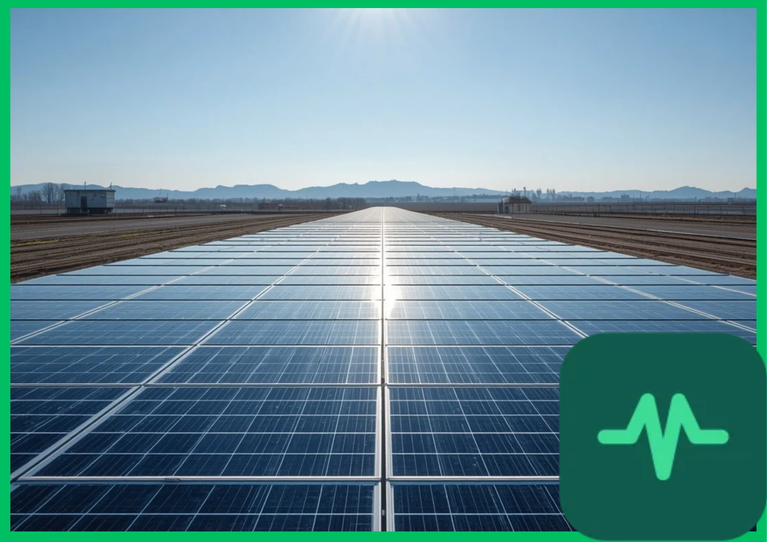
Albedo Coefficient Dynamics and Surface Reflectance Physics
The fundamental driver of rear-side generation is the albedo coefficient defined as the ratio of reflected shortwave radiation to incident shortwave radiation upon a surface. Surface reflectance varies across different geological and civil substrates, directly altering rear-side incident irradiance.
| Fresh Snow | Albedo ranges from 0.80 to 0.90 (80% to 90% reflectance), yielding maximum rear-side power gains. |
| Concrete and Light Gravel | Albedo ranges from 0.30 to 0.35 (30% to 35% reflectance). |
| Dry Bare Soil and Sand | Albedo ranges from 0.15 to 0.25 (15% to 25% reflectance). |
| Vegetation and Grass | Albedo ranges from 0.18 to 0.25 (18% to 25% reflectance), dropping during seasonal growth cycles. |
| Dark Asphalt | Albedo ranges from 0.10 to 0.15 (10% to 15% reflectance). |
Academic research published by solar engineering laboratories demonstrates that spectral albedo varies across specific wavelengths, particularly within the near-infrared spectrum. Silicon heterojunction (HJT) and tunnel oxide passivated contact (TOPCon) cells exhibit distinct quantum efficiency responses at the rear interface. Accurately modeling spectral albedo prevents performance underestimation in utility-scale plant designs.
Bifaciality Factor and Rear-Side Power Conversion Efficiency
The conversion efficiency of the rear side is governed by the bifaciality factor, expressed as the ratio of rear-side efficiency to front-side efficiency under standard test conditions (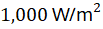 irradiance,
 or
 cell temperature, and AM1.5 solar spectrum).
Modern n-type solar cells achieve bifaciality factors between 80% and 95%. Unlike p-type Passivated Emitter Rear Cell (PERC) architectures with bifaciality factors near 70%, n-type cells feature symmetrical or near-symmetrical emitter structures. This structural symmetry minimizes optical and electrical recombination losses on the rear surface.
Despite high bifaciality, rear-side power output is rarely uniform. Spatial irradiance distribution across the rear side is disrupted by mechanical shading from mounting structures, torque tubes, wiring harnesses, and pile foundations. Uneven rear irradiance creates localized electrical mismatch within string configurations, necessitating advanced ray-tracing simulations to optimize module spacing and minimize resistive losses.
Mounting Height, Ground Clearance, and View Factor Calculations
Geometric configuration dictates the view factor ( ), which quantifies the fraction of radiation emitted or reflected from the ground that is intercepted by the rear surface of the PV module. Optimizing the view factor requires precise control over mounting height and ground clearance.
Elevating single-axis tracker pivot heights from  to
 (
 to
 ) significantly enhances rear-side irradiance uniformity. Higher clearance reduces ground-shadowing interference cast by the module strings themselves, allowing a broader swath of reflected photons to reach the center and edges of the rear glass.
Furthermore, ground coverage ratio (GCR)—defined as the ratio of total module surface area to total ground area—influences multiple reflections between the ground and the underside of the array. Lower GCR values increase ground exposure to direct sunlight, elevating ambient ground radiance and boosting rear-side yield. However, excessively low GCR increases land acquisition costs, requiring a techno-economic optimization between land footprint and rear-side gain.
Thermal Performance and Operating Temperature Coefficients
Bifacial modules exhibit distinct thermodynamic behavior compared to monofacial equivalents. Because both front and rear encapsulants transmit thermal energy, bifacial modules often operate at lower operational temperatures than monofacial panels under identical meteorological conditions. The rear glass-glass structure provides superior thermal dissipation and radiative cooling to the ambient environment.
The temperature coefficient of maximum power ( ) for high-efficiency n-type modules typically ranges from
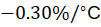 to
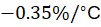 (
 to
 ). When operating in high-albedo environments with elevated ambient temperatures, the improved thermal dissipation of dual-glass bifacial modules reduces operating cell temperatures by
 to
 (
 to
 ). This thermal advantage translates directly into a 0.4% to 1.2% relative boost in daily energy harvest, mitigating thermal-induced voltage degradation.
Empirical Validation and IEA Performance Metrics
Field data compiled by the IEA and United Nations Environment Programme (UNEP) validate that optimizing ground reflection mechanics reduces the Levelized Cost of Electricity (LCOE) by 4% to 8% across utility-scale photovoltaic portfolios. Empirical studies tracking single-axis tracker installations in arid and snowy climates confirm that dynamic albedo management—such as applying high-albedo gravel aggregates or utilizing white geotextile ground covers—elevates local albedo coefficients from 0.20 to over 0.60.
This artificial albedo enhancement drives rear-side power contributions up to 25% of total nameplate capacity during peak solar noon hours. Electrical engineers utilize specialized ray-tracing software to model these gains, accounting for diffuse sky irradiance, horizon obstruction angles, and anisotropic sky models. Integrating these precise physical parameters ensures that energy yield simulations align closely with actual operational generation data, minimizing financial variance for asset owners and project developers.




Comments (0)
Login to leave a comment.
No comments yet. Be the first to share your thoughts!