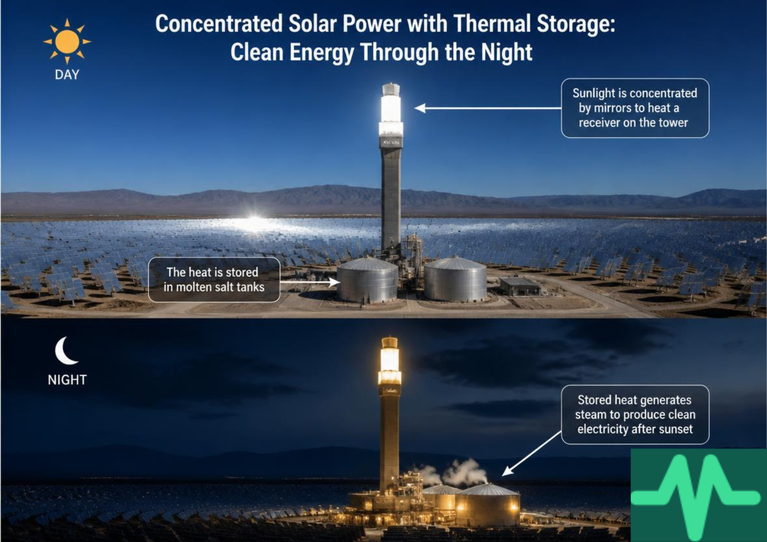
Regular solar panels turn sunlight directly into electricity. That electricity must be used right away or stored in batteries. Once the sun sets, panel output drops straight to zero. This nighttime gap has long been one of solar power's biggest challenges.
Concentrated solar power takes a completely different approach. Instead of making electricity directly, it captures heat first. In this guide, we will explore how concentrated solar power works. We will look at the giant mirrors and molten salt making it possible. We will also look at why this technology can keep the lights on long after dark. By the end, you will understand why this idea feels like such a smart answer to solar's biggest weakness.
Why Nighttime Has Always Been Solar's Problem
Let's start with the core issue. Standard solar panels are simple. Sunlight hits silicon cells. Electrons start moving. Electricity flows out instantly. This works beautifully during the day.
The problem shows up the moment the sun disappears. With no sunlight, panels produce nothing. Communities relying only on solar power face a real gap every single evening, right when many people get home and start using more electricity.
This is exactly the gap concentrated solar power was built to close. Instead of racing to use electricity the instant it gets made, this technology stores energy as heat first, ready to use whenever it is actually needed.
What Is Concentrated Solar Power?
So what exactly is concentrated solar power? Instead of converting sunlight straight into electricity, it uses mirrors to gather sunlight into intense heat. That heat gets stored, then later used to make electricity, even hours after the sun has set.
Picture a massive field of mirrors, all pointed toward a single tall tower. Each mirror tracks the sun throughout the day, angling itself perfectly to reflect sunlight onto that one central point. This setup looks almost like something from a science fiction movie.
This clever design lies at the heart of every concentrated solar power facility. Instead of spreading sunlight across many separate panels, it focuses that light into one incredibly hot, concentrated spot.
How the Mirrors and Tower Actually Work
Let's walk through this process step by step. Thousands of mirrors, called heliostats, surround a tall central tower. Each mirror moves on a dual-axis system, constantly adjusting its angle to track the sun's position throughout the day.
All of these mirrors aim their reflected sunlight at one single target near the top of the tower. This target is called the solar receiver. As thousands of reflected sunbeams hit this one point, temperatures shoot up incredibly fast, often passing 550 degrees Celsius.
This intense heat is exactly what concentrated solar power needs to work its magic. That much heat is more than enough to power traditional steam turbines, generating real, usable electricity from something as simple as focused sunlight.
The Secret Ingredient: Molten Salt
Here is where concentrated solar power gets truly clever. All that intense heat needs somewhere to go. Instead of using it immediately, the system stores it inside a special liquid called molten salt.
This salt is a mix of sodium nitrate and potassium nitrate. It gets pumped up through the hot receiver tower, absorbing the intense thermal energy along the way. Once heated, this liquid salt flows back down into a massive, well-insulated storage tank on the ground.
This storage step is the real breakthrough behind concentrated solar power. Instead of losing that heat instantly, the molten salt holds onto it for hours, patiently waiting until the grid actually needs the power.
Turning Stored Heat Back Into Power
When electricity demand rises, usually in the evening, the stored heat finally gets put to use. Hot molten salt flows through a heat exchanger, boiling water into high-pressure steam. That steam spins a turbine, generating electricity just like a traditional power plant.
This process feels almost magical in its simplicity. Concentrated solar power essentially stores sunlight as heat during the day, then releases it as electricity whenever it is actually needed, long after the sun has already set.
Because molten salt holds heat so well, this stored energy can power the grid for ten to fifteen hours after sunset. That is enough to comfortably cover the entire evening and early morning hours, right when people need power the most and standard solar panels are sitting completely dark.
Why This Beats Battery Storage in Some Ways
It is worth comparing concentrated solar power to another common solution: battery storage. Batteries work well, but they rely on materials like lithium and cobalt, which can be expensive and environmentally complicated to mine.
Molten salt offers a simpler, cheaper alternative for storing large amounts of energy. It does not degrade the same way batteries do over repeated charging cycles. It is also relatively inexpensive compared to the rare minerals needed for large battery systems.
This makes concentrated solar power especially appealing for large-scale, long-duration storage needs. While batteries excel at quick bursts of power, concentrated solar power shines when it comes to steady, reliable electricity stretched out across many hours.
Where This Technology Works Best
Concentrated solar power is not suited for every location. It needs strong, direct, consistent sunlight to work efficiently. This makes hot, dry desert regions the ideal setting for this kind of facility.
Areas with frequent cloud cover or hazy skies simply cannot generate enough concentrated heat to make the system worthwhile. This is why most concentrated solar power projects get built in sunny, arid regions with very clear skies throughout most of the year.
Deserts in the American Southwest, North Africa, and parts of the Middle East offer especially strong conditions for this technology. These regions receive intense, direct sunlight almost daily, making them natural homes for large concentrated solar power installations.
Why This Feels Like a Genuine Solution
There is something deeply satisfying about watching engineers solve solar power's biggest weakness so cleverly. Concentrated solar power does not fight against the setting sun. Instead, it simply stores the sun's energy ahead of time, ready to release whenever needed.
This matters enormously for grid reliability. Communities relying on concentrated solar power gain access to clean electricity around the clock, not just during daylight hours. That kind of steady, dependable power feels like a genuine step forward for the entire clean energy transition.
Common Questions About Concentrated Solar Power
How is concentrated solar power different from regular solar panels? Regular panels convert sunlight directly into electricity instantly. Concentrated solar power captures sunlight as heat first, storing it for later use, even after sunset.
How long can concentrated solar power provide electricity after dark? Well-designed molten salt storage systems can typically supply power for ten to fifteen hours after sunset, covering most evening and early morning demand.
Why does concentrated solar power need desert locations? This technology depends on strong, direct, consistent sunlight to generate enough heat. Cloudy or hazy regions simply cannot produce the intense heat required for efficient operation.
Is concentrated solar power better than battery storage? Each has its strengths. Concentrated solar power often works better for long-duration storage, while batteries excel at quick, short bursts of power.
The Cost Question Behind This Technology
Building a concentrated solar power facility costs more upfront than a standard solar farm. Thousands of precisely engineered mirrors, a tall central tower, and massive insulated storage tanks all add real expense to the initial construction budget.
However, this higher upfront cost often pays off over the life of the facility. Concentrated solar power provides steady, dispatchable electricity, meaning it can supply power exactly when the grid needs it most. This reliability carries real financial value, since utilities often pay more for power that arrives predictably during peak demand hours.
Over time, as more concentrated solar power projects get built, costs are expected to fall further. Manufacturing more heliostat mirrors at scale should lower per-unit costs, following a pattern seen across many other renewable technologies as they matured and grew more common.
What the Future Holds
Looking ahead, concentrated solar power seems poised for continued growth, particularly in sun-drenched desert regions. As global electricity demand keeps rising, utilities are increasingly interested in technology that can deliver reliable power around the clock, not just during daylight hours.
Researchers are also exploring ways to push storage temperatures even higher, potentially extending how long a facility can generate power after sunset. Every improvement here adds real value, making concentrated solar power an even stronger alternative to fossil fuel backup plants.
As climate goals push utilities toward cleaner, more reliable baseload power, concentrated solar power looks likely to play a growing role in future energy grids, especially across regions blessed with strong, consistent sunlight year-round.
Final Thoughts
Concentrated solar power proves that clean energy does not have to disappear when the sun goes down. By capturing sunlight as heat and storing it in molten salt, this technology solves one of solar power's oldest and most frustrating limitations.
From spinning mirror fields to glowing towers filled with molten salt, every part of this system reflects genuine engineering creativity. Concentrated solar power turns a simple, ancient resource, sunlight, into something reliable enough to power homes long after dark.
As deserts around the world continue building out this technology, concentrated solar power stands to play a major role in the future of clean, dependable electricity. It offers something the grid has always needed: steady, round-the-clock power, drawn entirely from the sun.

Comments (0)
Login to leave a comment.
No comments yet. Be the first to share your thoughts!