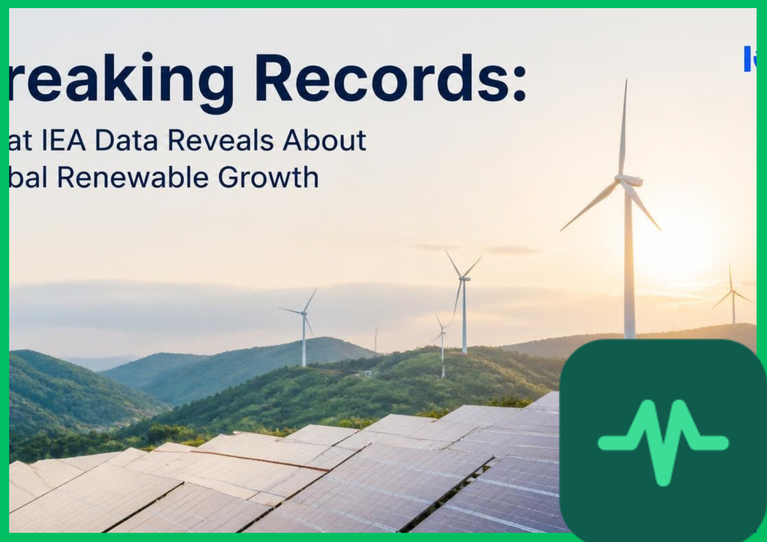
For decades, clean energy felt like an ambitious dream—something promising for the distant future, but too slow and expensive to power a modern industrialized world.
That narrative has completely shattered.
According to tracking data and comprehensive reports from the International Energy Agency (IEA), global renewable energy growth has broken every historical record.
The clean energy transition is no longer a slow-moving trend. It is an explosive, unstoppable global economic reality.
Here is what recent IEA data reveals about the unprecedented scale-up of renewable power worldwide.
The Exponential Leap in Renewable Capacity
To understand the magnitude of this shift, you have to look at the numbers.
Data from the IEA shows that global renewable power capacity is projected to increase by nearly 4,600 gigawatts between 2025 and 2030.
That staggering figure is roughly double the total deployment achieved over the previous five-year period.
To put that scale into perspective, the world is now adding as much renewable power capacity every few years as the entire global electricity system built in the decades following the industrial revolution.
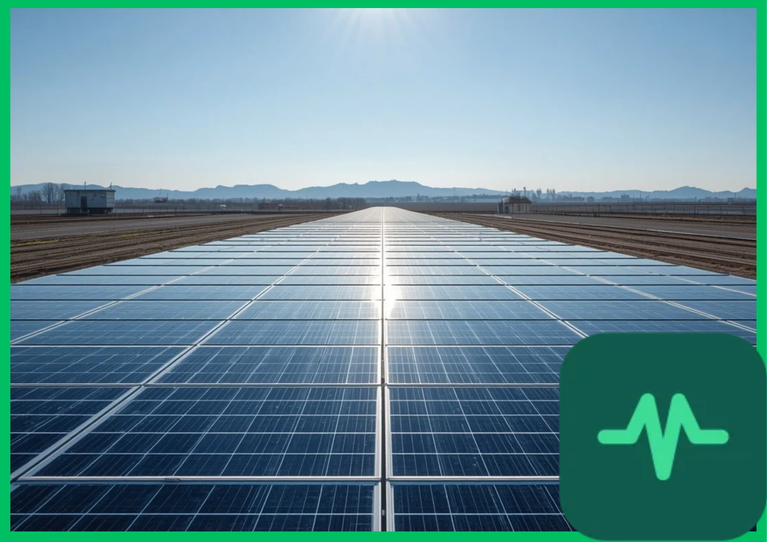
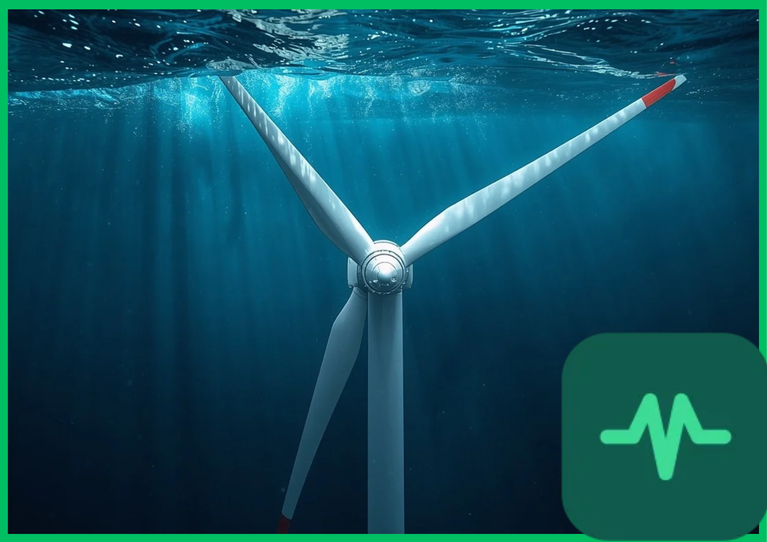
Solar photovoltaic installations lead the charge, accounting for the vast majority of capacity growth, closely paired with massive expansions in onshore and offshore wind farms.
According to the IEA's Global Energy Review, solar photovoltaic expansion met more than 25% of new global electricity demand growth, outperforming all other individual energy sources.
Why Economics Are Driving the Transition
Why is this massive acceleration happening now?
The answer comes down to pure market economics.
Over the last decade, the cost of manufacturing solar panels, building wind turbines, and producing battery storage has plummeted dramatically.
Academic research and IEA market analysis confirm that utility-scale solar and wind power represent the cheapest source of new electricity generation in a vast majority of countries worldwide.
Energy investors and utility companies do not build clean energy farms out of charity or environmental idealism. They build them because they deliver superior financial returns and lower operational risk.
Fossil fuels can no longer compete with the low capital costs and zero fuel expenses of wind and solar generation.
Overcoming Global Grid and Storage Challenges
Record-breaking renewable growth brings unique operational hurdles.
As solar and wind generation flood into local power grids, energy systems face growing pains.
As explored in recent energy transition studies, intermittent generation requires urgent investments in smart grid flexibility, transmission line modernization, and utility-scale battery storage.
Without flexible grids and large-scale storage systems to smooth out generation peaks and valleys, excess clean energy risks getting curtailed and wasted.
Fortunately, IEA tracking data shows that global battery storage capacity is scaling up exponentially alongside wind and solar deployment, transforming intermittent weather patterns into reliable, dispatchable power.
Powering a Cleaner Global Future
The data from the International Energy Agency tells a clear, inspiring story.
The global energy economy has crossed a permanent threshold.
Clean energy is no longer an alternative choice; it is the primary engine of worldwide electricity expansion.
By embracing renewable growth, modernizing our power grids, and investing in storage, we are building a resilient, affordable, and zero-carbon energy future for generations to come.
Comments (0)
Login to leave a comment.
No comments yet. Be the first to share your thoughts!