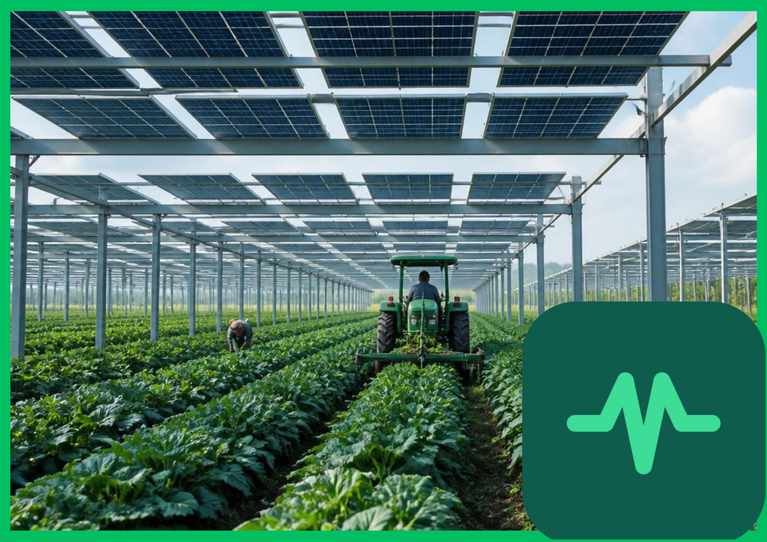
What Agrivoltaics Farming Actually Involves
This approach genuinely raises solar panels higher off the ground than typical installations, and spaces them to allow genuine sunlight penetration for crops growing underneath. Certain crops genuinely thrive in this partially shaded environment, while the panels above genuinely generate clean electricity simultaneously.
Why This Genuinely Solves a Real Land Use Conflict
Agricultural land and ideal solar sites genuinely often overlap, flat, open, sunny areas suit both purposes equally well. This genuine overlap has historically forced difficult choices between food production and clean energy generation. Agrivoltaics farming genuinely removes this forced trade-off.
Why 2026 Has Genuinely Proven This Concept at Real Scale
Several agrivoltaics farming projects that genuinely began as small research trials have now expanded into real, commercially productive operations this year, growing genuine crops while generating meaningful electricity simultaneously.
Why Certain Crops Genuinely Thrive Under Solar Panels
Surprisingly, some crops genuinely benefit from the partial shade solar panels provide, reduced water evaporation and protection from extreme heat, both genuinely valuable in increasingly hot growing seasons. Leafy greens and certain berries have genuinely shown particularly strong results in these systems.
Why This Genuinely Matters for Farmers' Bottom Lines
Farmers genuinely participating in agrivoltaics projects gain an additional income stream from electricity generation, alongside their traditional crop revenue. This genuine dual income can meaningfully improve farm economics, especially during challenging growing seasons.
Why This Feels Like Genuine, Practical Innovation
There's something genuinely satisfying about solving what seemed like an impossible trade-off through clever, practical engineering. Agrivoltaics farming proves that clean energy and food production genuinely don't have to compete for the same limited resources.
The Honest Challenges Still Worth Understanding
Let's be fair about real complexity here. Agrivoltaics farming genuinely requires more sophisticated planning than either standalone solar installation or traditional farming alone. Panel height, spacing, and crop selection all genuinely need careful, expert coordination to work well together.
Why Water Savings Genuinely Matter So Much Here
In regions genuinely facing water scarcity, the shade provided by agrivoltaics farming genuinely reduces irrigation needs meaningfully, offering real relief for farmers struggling with increasingly limited water resources during drought conditions.
What This Means for the Future of Land Use
Expect agrivoltaics farming to genuinely expand further as more farmers and solar developers recognize the real, mutual benefit of this shared approach, particularly in regions facing genuine pressure between agricultural and clean energy land needs.
Common Questions
Do all crops genuinely grow well under solar panels?
No, some crops genuinely thrive in this partial shade environment, while others genuinely perform better in full, direct sunlight.
Does agrivoltaics farming genuinely reduce water needs?
Yes, the shade provided genuinely reduces evaporation, helping conserve water, especially valuable in drought-prone regions.
Is agrivoltaics farming genuinely proven at commercial scale now?
Yes, several projects have genuinely moved from research trials into real, productive commercial operations in 2026.
Final Thoughts
Agrivoltaics farming in 2026 represents genuinely clever innovation, proving solar energy and food production can share land productively rather than competing for it. This approach deserves real, honest recognition as a practical win for both farmers and clean energy.
Comments (0)
Login to leave a comment.
No comments yet. Be the first to share your thoughts!