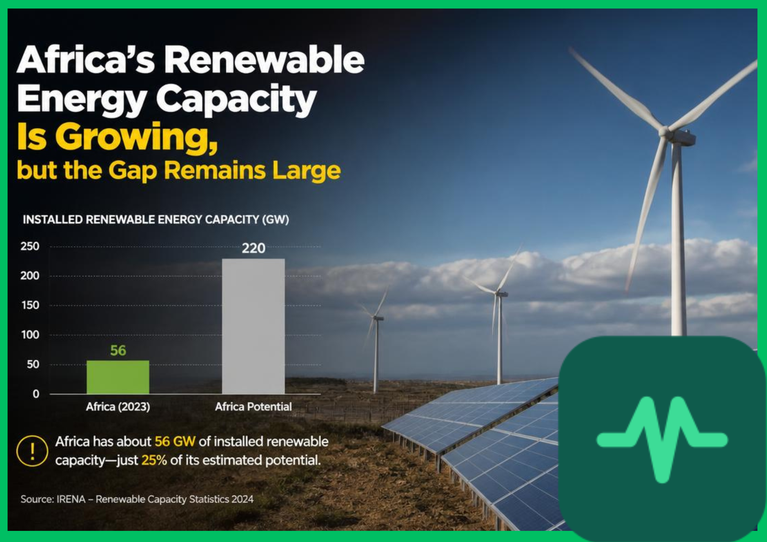
Africa renewable energy hit a real milestone in 2025. Growth reached a new high. Still, the continent has a long way to go. The numbers tell an interesting story. They show both real progress and a real gap.
Africa renewable energy is expanding fast on paper. Yet Africa still represents only a small slice of the global total. This creates an important, honest picture. There is real momentum here. There is also real room to grow.
In this guide, we will explore what is driving Africa renewable energy forward. We will look at solar, wind, and hydropower. We will look at the challenges standing in the way too. By the end, you will understand why this story matters far beyond the continent itself.
Africa Is Expanding Renewable Power
Africa renewable energy development reached an important milestone in 2025. IRENA reports that Africa's renewable capacity grew by 15.9% during the year. Total capacity reached about 82 GW. That was the continent's highest annual increase on record.
This growth is genuinely encouraging. It shows real investment is happening. It shows real projects are getting built. Still, one fact stands out clearly. Africa renewable energy still accounts for a small share of the global total, even with this record-breaking year.
The Global Gap Is Large
Let's look closer at the numbers. Africa added about 11.3 GW of renewable capacity in 2025. That number represents only about 1.6% of global renewable additions, according to IRENA.
This creates a striking contrast. Africa holds enormous renewable resources. Sunlight. Wind. Rivers for hydropower. Yet actual deployment remains relatively low compared to other regions. Therefore, Africa renewable energy has significant room left to grow.
This gap is not a sign of failure. It is a sign of untapped potential. The resources exist. The demand exists too. What often remains missing is the investment needed to connect these two things together.
Solar Has Huge Potential
Solar power represents one of the biggest opportunities for Africa renewable energy. Many African countries enjoy strong, consistent sunlight throughout the year. This makes solar a natural fit for the region.
Solar systems can scale in different ways too. Large solar farms can feed power directly into national grids. Smaller systems can power individual businesses or communities instead. Off-grid solar offers another path forward, reaching areas that remain difficult to connect to national power lines.
This flexibility matters enormously for Africa renewable energy. Not every region needs the same solution. Solar can adapt to local needs, whether that means a massive utility farm or a single rooftop system powering a rural clinic.
Wind Is Important Too
Wind energy plays a real role in this story as well. Countries across North Africa and parts of Southern Africa hold strong wind resources. This adds another valuable piece to the Africa renewable energy puzzle.
Wind complements solar nicely. Solar generation peaks during daylight hours. Wind can generate power at different times, depending on local weather patterns. Combining both technologies creates a more balanced, more reliable renewable energy system overall.
This pairing matters for grid stability. A single power source always carries risk. Blending solar and wind gives Africa renewable energy projects a stronger, more dependable foundation to build upon.
Hydropower Remains Important
Hydropower represents another major pillar of Africa renewable energy. Countries like Ethiopia have already built significant hydropower capacity, tapping into powerful river systems for reliable electricity.
Still, hydropower carries its own risks. Rainfall patterns shift. Droughts happen. When water levels drop, hydropower output can drop right along with them. This is exactly why Africa renewable energy needs a diverse mix of technologies, rather than leaning too heavily on any single source.
A balanced mix protects against these swings. When rainfall is low, solar and wind can help fill the gap. When conditions shift, this diversity keeps the lights on more reliably.
Energy Access Is a Major Issue
Here is where the African story looks different from many developed economies. In wealthier nations, renewable energy often simply replaces older power plants. In much of Africa, the challenge runs deeper.
Africa renewable energy also needs to reach people who currently have no reliable electricity access at all. This is not just about cleaner power. It is about basic access for the first time.
This distinction matters enormously. Electricity can support hospitals running critical equipment. It can power small businesses trying to grow. It can improve schools and education access. It can support manufacturing too. Africa renewable energy carries the weight of both climate goals and basic human development at the same time.
Financing Remains a Challenge
One of the biggest barriers facing Africa renewable energy is financing. Building solar farms, wind projects, and hydropower stations all require significant upfront capital.
Unfortunately, financing costs often run higher in African markets compared to other regions. This raises the overall cost of every project, making some potentially valuable investments harder to get off the ground.
Governments, development banks, and private investors all have important roles to play here. Lowering financing costs could unlock a much larger wave of Africa renewable energy projects, turning promising plans into real, working power systems.
Grid Infrastructure Matters
Building renewable generation is only half the equation. That power still needs to reach actual consumers. This is why Africa renewable energy also depends heavily on transmission and distribution infrastructure.
Mini-grids can help in certain areas, especially remote communities far from major power lines. National grids remain essential in others, particularly for larger cities and industrial zones. The right solution often depends entirely on local conditions and geography.
Without strong grid infrastructure, even the best solar or wind project cannot deliver its full value. Africa renewable energy needs both generation and delivery working together to truly succeed.
Local Industry Could Create Jobs
The renewable energy shift offers more than just electricity. It offers real economic opportunity too. Companies can install solar systems across growing markets. Businesses can maintain and service that equipment over time.
Manufacturers could produce select components locally, rather than importing everything from abroad. Technicians can find steady work servicing batteries and electrical systems as this industry expands.
This means Africa renewable energy can create opportunities well beyond simple electricity generation. It can build entire local industries, training programs, and long-term employment around this growing sector.
Why This Story Matters Globally
It would be easy to view Africa renewable energy as a purely regional story. It is not. Global climate goals depend on progress everywhere, not just in wealthy nations already investing heavily in clean power.
Africa also holds a young, growing population and rising electricity demand. Meeting that demand with clean power instead of fossil fuels matters enormously for global emissions in the decades ahead. Africa renewable energy is not a side story. It is a central piece of the broader global energy transition.
Common Questions About Africa Renewable Energy
How much did Africa's renewable capacity grow in 2025?
Africa's renewable capacity grew by 15.9% in 2025, reaching about 82 GW, according to IRENA. This was the continent's largest annual increase on record.
Why does Africa still represent a small share of global renewable growth?
Africa added about 11.3 GW in 2025, only around 1.6% of global additions. Financing costs, grid infrastructure gaps, and investment barriers all limit faster deployment.
Which renewable energy sources matter most for Africa?
Solar, wind, and hydropower all play major roles. Solar offers the largest overall potential, while wind and hydropower add valuable diversity and reliability.
What is the biggest barrier to faster Africa renewable energy growth?
Financing remains the top challenge. High capital costs in many African markets make renewable projects more expensive to build than in other regions.
EcoGreenPulse View
Africa should not be viewed simply as a future renewable energy market waiting to happen. It can become a genuine center for clean energy business right now. The continent already has strong natural resources. It has rising electricity demand. It has young, growing populations eager for opportunity. It also has major infrastructure needs still waiting to be met.
The real challenge lies in creating the right investment conditions. Africa renewable energy has already proven it can grow fast, as the record-breaking 2025 numbers clearly show.
Conclusion
Africa renewable energy capacity is genuinely growing. IRENA's 2025 figures confirm the continent achieved its largest annual increase on record. Still, Africa continues to represent only a small share of global renewable additions overall.
This gap represents enormous opportunity, not failure. With stronger financing, better grid infrastructure, and supportive government policy, Africa renewable energy could become a major driver of the continent's broader economic development in the years ahead.
Source: IRENA, Renewable Capacity Statistics 2026.
Comments (0)
Login to leave a comment.
No comments yet. Be the first to share your thoughts!