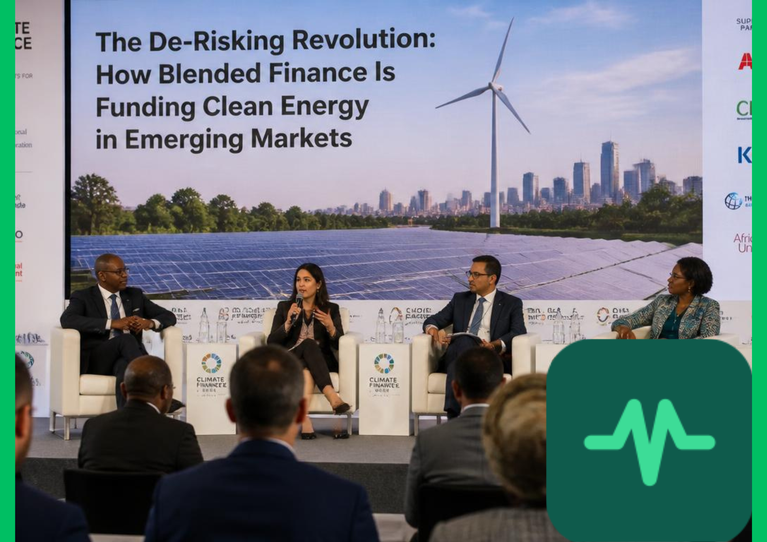
Pension funds. Insurance companies. Big American banks. All of them manage enormous pools of capital. All of them face the same problem when looking at solar and wind projects in developing countries. The risk feels too high. The returns feel too uncertain. Blended finance changes this calculation completely, making these deals safe enough for cautious American money to finally step in.
In this guide, we will explore how blended finance actually works. We will look at the real financial barriers keeping American capital sidelined from global clean energy growth. We will also look at how this model turns risky, overlooked markets into safe, attractive investments. By the end, you will understand why blended finance feels like such an important fix for both American investors and the developing world.
The Real Problem: American Capital Stuck on the Sidelines
Let's start with the actual problem. American pension funds and insurance companies manage massive amounts of money. They want stable, long-term returns. Clean energy projects fit this need perfectly, at least in theory.
The trouble starts when these projects sit overseas, especially in developing regions. Currency swings. Political instability. Weak local infrastructure. These risks make conservative American investors nervous, even when the underlying project looks genuinely promising.
This is exactly where blended finance steps in. Instead of asking American investors to accept all that risk alone, this model spreads the danger around, making these deals feel far safer for the cautious, risk-averse capital sitting in American pension funds and bank portfolios.
What Exactly Is Blended Finance?
So what is blended finance, in simple terms? It is a strategy that mixes different types of money together inside a single project. Public funds, often from organizations like the World Bank, get combined with private investment from banks and pension funds.
The public money goes in first, absorbing early risk. If something goes wrong, this public capital takes the hit before private investors lose a single dollar. This structure gives blended finance its real power, turning a scary, uncertain investment into something private American capital can actually stomach.
This model feels genuinely clever. Instead of asking charity to solve the entire problem, blended finance uses a small amount of public money to unlock a much larger flow of private capital, stretching limited public resources much further.
Why American Investors Avoid Emerging Markets Right Now
Here is the core financial problem driving this entire situation. Building a solar farm in Germany might get a loan around 4 to 5 percent interest. Build that exact same solar farm in a developing nation, and interest rates can jump past 15 or 20 percent instead.
This massive gap comes down to perceived risk. Currency values can swing wildly. Political situations can shift unexpectedly. Local power grids may lack the infrastructure needed to reliably deliver electricity. American investors see these risks and simply walk away, even when the actual project itself looks solid.
Blended finance directly tackles this exact gap. By absorbing the riskiest layer of a deal through public capital, this model brings borrowing costs down closer to what a project in a wealthy nation would pay, making the investment realistic for cautious American capital.
How Blended Finance Actually Protects Investors
Let's walk through how this protection actually works. A multilateral development bank, like the World Bank, steps into a proposed clean energy project first. It provides what is called concessional capital, meaning low-interest loans or grants specifically meant to absorb early risk.
This public money takes what is called a first-loss position. If the project runs into trouble, currency devaluation, unexpected delays, or a sudden drop in demand, this public capital absorbs the damage first. Private investors stay protected behind this financial buffer.
Blended finance also brings in additional protective tools. Political risk insurance. Currency hedging services. These extra layers give American pension funds and banks even more confidence, letting them finally commit real capital to projects they would have avoided entirely just a few years ago.
Why This Matters for American Financial Institutions
American banks and pension funds are not just looking for feel-good investments. They need real, reliable returns for their clients and beneficiaries. Blended finance offers exactly that, turning previously unreachable markets into legitimate investment opportunities.
This matters because clean energy demand overseas is enormous and growing fast. Countries across Africa, Southeast Asia, and South America need massive amounts of new power generation. American capital, protected through blended finance structures, can now participate in this growth instead of watching it happen from the sidelines.
For American fund managers under pressure to find solid, long-term investment opportunities, blended finance offers a genuinely attractive answer. Real returns. Real risk protection. Real access to markets that were previously considered off-limits for conservative investment portfolios.
Why This Also Matters for American Energy Security
Beyond investment returns, there is a broader strategic reason for American interest here. Countries that struggle to access clean energy financing often fall back on cheap, high-emission coal or diesel power instead. This affects global emissions everywhere, including the air quality Americans ultimately share.
Blended finance offers a real alternative path. By making clean energy financially viable in developing nations, this model helps steer global energy growth away from dirty legacy fuels. This matters for climate goals that affect every country, including the United States, regardless of where the actual power plants get built.
There is also a competitive angle worth mentioning. As American capital flows into these markets through blended finance, American companies and technology providers often follow closely behind, winning contracts to build and supply these very same clean energy projects overseas.
Which Institutions Are Leading This Effort
Several major global institutions are driving blended finance forward right now. The World Bank remains a central player, alongside the International Finance Corporation and regional development banks like the African Development Bank.
These institutions work directly with American financial firms, structuring deals that meet the risk tolerance requirements of pension funds and commercial banks. This close collaboration helps ensure blended finance deals actually attract the private capital they are designed to unlock.
American policymakers also play a role here, since the United States contributes funding to many of these multilateral institutions. Supporting blended finance mechanisms represents a practical way for American public dollars to multiply their impact, drawing in far larger amounts of private capital alongside them.
Addressing Skepticism From Conservative Investors
Some American fund managers remain skeptical of emerging market investments, even with blended finance protections in place. This caution makes sense. Fiduciary duty requires careful, conservative decision-making, especially with retirement funds and insurance reserves.
Blended finance addresses this skepticism directly, through real, demonstrated results rather than just theoretical promises. Successful projects across Sub-Saharan Africa and Southeast Asia are already proving that this model works, delivering steady returns while avoiding the losses skeptics originally feared.
As more American institutions participate successfully, comfort with blended finance continues growing. Real track records tend to convince cautious investors far more effectively than any amount of promotional material or theoretical modeling ever could.
The Bigger Picture for Global Clean Energy Growth
Blended finance represents something larger than just clever deal structuring. It offers a genuine pathway for connecting massive pools of American capital with the exact regions of the world that need clean energy investment most urgently.
This matters because the energy transition is genuinely global. Emissions reduced anywhere on the planet benefit everyone, including American communities. Blended finance creates the financial infrastructure needed to make this global cooperation actually happen at real, meaningful scale.
For American investors looking beyond traditional domestic markets, blended finance offers a rare combination: real financial opportunity paired with genuine, measurable global impact.
Common Questions About Blended Finance
Why do American investors avoid clean energy projects in developing countries? High perceived risks, including currency volatility and political instability, push interest rates too high for many projects to remain financially viable without extra protection.
How does blended finance protect private investors? Public capital from institutions like the World Bank absorbs early losses first, shielding private investors from much of the initial financial risk.
Which countries benefit most from blended finance projects? Regions like Sub-Saharan Africa, Southeast Asia, and parts of South America see the strongest benefit, given their high clean energy potential paired with historically limited financing access.
Do American pension funds actually participate in blended finance deals? Yes. Many American pension funds and insurance companies now invest in blended finance structures, drawn by the added risk protection these deals provide.
Scaling This Model for Even Bigger Impact
As successful blended finance deals continue proving their value, institutions are looking for ways to scale this approach even further. Early projects often started small, testing whether the risk protections truly worked as designed in real-world conditions.
Now that blended finance has a growing track record, larger projects are becoming realistic too. Massive Sub-Saharan solar grids and Southeast Asian wind fields are attracting bigger commitments from American investors, encouraged by the proven success of earlier, smaller deals using this same structure.
This scaling matters enormously for closing the global financing gap. Small pilot projects alone cannot meet the world's growing clean energy needs. Blended finance offers a genuine pathway toward mobilizing the trillions of dollars needed to meaningfully shift global energy infrastructure away from fossil fuels within the coming decades.
What American Policymakers Can Do to Support This Growth
Beyond individual investment decisions, American policymakers hold real influence over how effectively blended finance mechanisms function going forward. Continued funding for institutions like the World Bank directly strengthens the pool of concessional capital available to absorb early project risk.
Some American lawmakers have pushed for expanded support of these financial tools, recognizing that public dollars invested through blended finance structures often generate far greater impact than direct spending alone. Every public dollar committed can help unlock many more dollars in private capital, creating a genuine multiplier effect for American taxpayer contributions.
This kind of policy support could help blended finance grow even faster in the years ahead, expanding its reach into new regions and unlocking even larger pools of previously hesitant private capital from across the American financial system.
Final Thoughts
Blended finance offers a real, practical answer to a problem that has kept American capital sidelined from some of the world's most promising clean energy markets. High risk once made these investments feel impossible for conservative institutions. This model changes that equation directly.
From absorbing first losses to providing political risk insurance, blended finance gives American pension funds and banks the protection they need to finally participate confidently in emerging market growth. This is not charity. It is smart, structured investment strategy.
As more successful projects prove this model works, expect blended finance to keep growing as a standard tool connecting American capital with global clean energy opportunities. This shift offers real hope for closing the massive financing gap holding back clean power in developing nations.
In the end, blended finance reminds us that solving global problems often requires creative financial thinking, not just good intentions. Sometimes, the smartest fix is simply finding a smarter way to share the risk, and that is exactly what blended finance delivers.
Comments (0)
Login to leave a comment.
No comments yet. Be the first to share your thoughts!