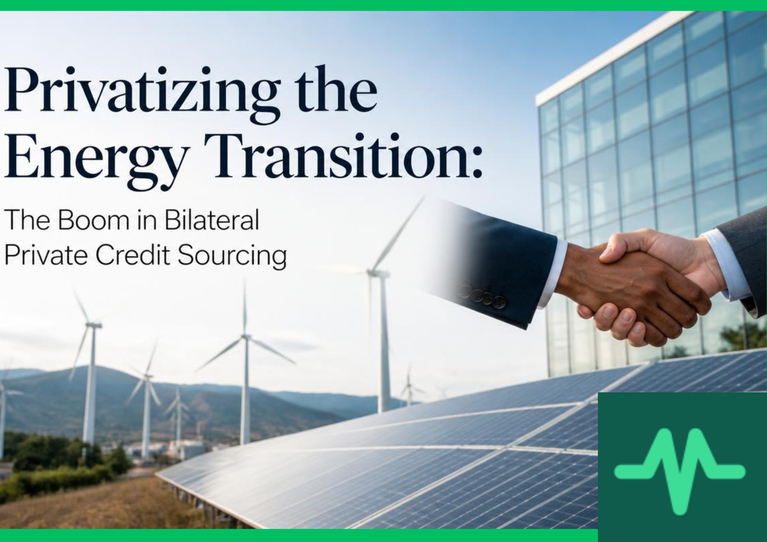
For years, getting a loan for a solar project felt simple. Secure some land. Sign a power contract. Walk into a bank. That path worked well for a long time. Then banking rules tightened. Banks grew cautious. Private credit filled the gap they left behind. Understanding private credit is now essential for anyone following clean energy financing.
In this guide, we will explore what private credit actually means. We will look at why smaller solar developers need it so badly. We will also look at the clever loan structures private credit lenders offer that banks simply cannot match. By the end, you will understand why private credit has become such an important engine behind clean energy growth today.
Why Banks Pulled Back From Smaller Projects
Let's start with the core problem. Banks faced new rules. Regulations grew stricter. Economic uncertainty grew too. To manage this risk, banks started favoring only massive, safe deals.
This left a real gap. Huge utility-scale solar farms could still get bank loans easily. Smaller projects, like solar panels on a warehouse roof, struggled much more. Private credit emerged specifically to serve this overlooked, mid-sized market. This is the exact niche where private credit thrives today.
Private credit lenders saw an opportunity here. Banks were leaving real, profitable deals on the table. Private credit firms moved in quickly, ready to fund the smaller projects that traditional banks no longer wanted to touch.
What Exactly Is Private Credit?
So what is private credit, in simple terms? It refers to loans that come from sources outside traditional banks. Instead of borrowing from a bank, developers borrow directly from private funds instead.
These lenders include private equity credit funds. They include insurance companies too. Sometimes, wealthy family investment offices join in as well. Private credit gathers money from many different private sources, then lends it directly to developers who need capital fast.
This approach feels genuinely different from old-fashioned bank lending. Private credit moves faster. It offers more flexible terms. It fills gaps that traditional banking systems were simply never built to handle efficiently.
Why Solar Developers Love Private Credit
Commercial and industrial solar projects are messy by nature. A single developer might manage fifty small projects scattered across different states. Each project has its own rules. Each has its own local paperwork.
Banks struggle badly with this kind of complexity. Their slow, rigid systems require months of review for every single site. This delay frustrates developers trying to move quickly. Private credit solves this problem directly.
Private credit lenders evaluate an entire portfolio of projects together, as one single package. This saves enormous amounts of time. Instead of months of waiting, private credit can approve and release funding within just a few weeks.
The Speed Advantage That Changes Everything
Speed matters enormously in solar development. Prices for equipment shift. Contracts have deadlines. Every month of delay costs developers real money. This is exactly why private credit has become so valuable.
Traditional banks move cautiously, checking every detail slowly. Private credit uses smarter, data-driven systems instead. These systems can review complex, scattered project portfolios much faster than old-fashioned bank underwriting ever could.
This speed lets developers break ground almost immediately. Private credit gives smaller solar companies a genuine competitive edge, letting them start construction while slower competitors are still waiting on paperwork from a traditional bank.
Creative Loan Structures Banks Cannot Offer
Beyond speed, private credit offers something else valuable: flexibility. Banks operate under strict legal rules. These rules limit how creative a bank loan can actually get. Private credit does not face the same restrictions.
One popular tool here is called mezzanine debt. This sits between a regular bank loan and full equity investment. Mezzanine financing through private credit can cover up to ninety percent of a project's total cost. Developers keep more ownership this way, instead of giving away large chunks of their company to investors.
Private credit lenders also design smarter repayment schedules. A solar project makes less power in winter. It makes more in summer. Private credit loans can match this natural rhythm, requiring smaller payments during weak months and bigger payments when the sun shines brightest.
The Trade-Off Worth Understanding
Nothing comes without a cost, and private credit is no exception. These loans typically carry slightly higher interest rates than a traditional bank would offer. This is the price paid for speed and flexibility.
Still, most developers see this trade-off as worthwhile. Private credit lets them access capital instantly, rather than waiting months for bank approval. For many mid-sized solar projects, that speed matters more than saving a small amount on interest rates.
This is exactly why private credit has grown so quickly across the clean energy sector. Developers are willing to pay a bit more, simply because private credit gets projects moving faster than banks ever could.
Why This Shift Feels So Important
There is something genuinely encouraging about watching private credit fill this financing gap so quickly. Without it, thousands of smaller solar and battery projects could have stalled completely, stuck waiting on banks that no longer wanted their business. This is precisely why private credit matters so much right now.
Private credit keeps momentum alive across the entire clean energy sector. Community solar projects. Rooftop installations on warehouses. Battery systems for local businesses. All of these smaller projects depend heavily on private credit continuing to step in where banks step back.
This matters for climate goals too. Every stalled solar project represents delayed progress. Private credit helps prevent that delay, keeping construction crews working and clean energy capacity growing steadily, even as traditional banking pulls back from this space.
Who Is Providing This Private Credit?
It helps to understand exactly who supplies this money. Private equity credit funds are major players here. Insurance companies also participate heavily, since they often manage huge pools of long-term investment capital.
Family offices, which manage wealth for very rich individuals or families, are joining this space too. All of these groups see private credit as a smart way to earn solid returns, while also supporting real, tangible clean energy infrastructure.
This diverse mix of lenders gives private credit real staying power. It does not depend on just one type of investor. Multiple sources keep flowing into this space, ensuring private credit remains a stable, reliable option for developers moving forward.
Common Questions About Private Credit
Why do solar developers choose private credit over bank loans? Private credit offers much faster approval times and more flexible repayment terms, which matter enormously for smaller, time-sensitive solar projects.
Is private credit more expensive than bank financing? Yes, typically. Private credit loans carry slightly higher interest rates, though developers often accept this trade-off in exchange for speed and flexibility.
What is mezzanine debt within private credit financing? It is a flexible loan structure that sits between senior bank debt and full equity investment, letting developers cover most project costs without giving up major ownership stakes.
Who provides private credit for clean energy projects? Common sources include private equity credit funds, insurance companies, and family investment offices, all looking for solid returns tied to real infrastructure.
Final Thoughts
Private credit has quietly become one of the most important financial tools supporting clean energy growth today. As traditional banks pull back from smaller, complex solar and battery projects, private credit has stepped in to keep construction moving forward. This growing role for private credit shows no signs of slowing down.
This shift matters far beyond spreadsheets and interest rates. Every project funded through private credit represents real, tangible progress. New solar panels on warehouse roofs. New battery systems supporting local businesses. Real jobs created through steady, uninterrupted construction.
As banks continue tightening their lending standards, expect private credit to keep growing in importance across the clean energy sector. This financing tool proves that when traditional systems fall short, creative, flexible alternatives can rise quickly to fill the gap.
In the end, private credit reminds us that funding the clean energy transition takes more than just good technology. It also takes smart, adaptable financing, willing to move at the speed modern clean energy development actually demands.

Comments (0)
Login to leave a comment.
No comments yet. Be the first to share your thoughts!