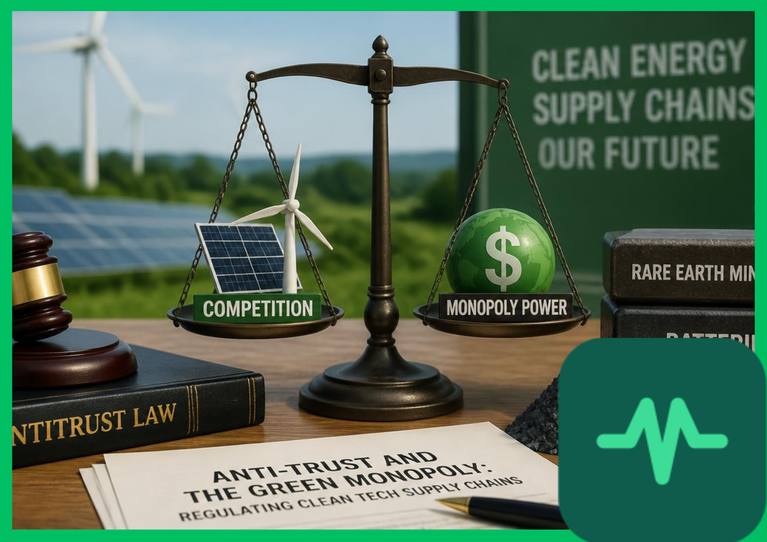
Billions of dollars are pouring into solar, batteries, and grid technology. That should be good news. But this flood of money is creating a real problem. A handful of massive companies are buying up smaller competitors. They are locking down key patents. A clean tech monopoly is forming right in the middle of the fight against climate change.
In this guide, we will explore how a clean tech monopoly actually forms. We will look at the real battles happening over solar patents and grid software. We will also look at how regulators are stepping in to stop this problem before it gets worse. By the end, you will understand why a clean tech monopoly threatens more than just fair business competition.
Why This Problem Feels So Ironic
Let's start with the obvious irony here. Clean energy was meant to open doors. It was meant to give small companies and new inventors a real shot at building something meaningful. Instead, a clean tech monopoly is starting to close those same doors.
Massive companies are moving fast. They are buying up startups before those startups can grow into real competitors. They are stacking up patents on critical technology. This behavior looks familiar to anyone who has studied old-school monopolies in oil, railroads, or telecom.
This is exactly why a clean tech monopoly worries regulators so much. The technology itself is clean. The business behavior chasing it is anything but new or clean. It follows an old, familiar pattern of consolidation and control. History shows exactly where this pattern leads if a clean tech monopoly goes unchecked.
What Exactly Does a Clean Tech Monopoly Look Like?
So what does a clean tech monopoly actually involve? It happens when a small handful of companies gain overwhelming control over a critical piece of clean technology. This could mean owning the key patents. It could mean controlling the software that connects everything together.
Once this kind of control exists, competition becomes nearly impossible. Smaller companies cannot compete fairly. New ideas struggle to reach the market. A clean tech monopoly essentially puts a small group of corporate gatekeepers in charge of how fast, and how cheaply, clean energy actually reaches everyday people.
This matters enormously for the pace of climate progress. A clean tech monopoly does not just hurt competitors. It can slow down the entire transition away from fossil fuels, simply by keeping prices high and innovation locked behind expensive legal walls.
The Battle Happening Inside Solar Panels
One of the clearest examples of a clean tech monopoly is playing out inside the solar industry right now. New solar technology, like TOPCon and perovskite tandem cells, generates far more electricity than older panels. This should be exciting news for everyone. Instead, it has become ground zero for one of the industry's biggest clean tech monopoly battles.
Instead, a small group of dominant solar manufacturers grabbed the foundational patents behind this new technology early. Rather than sharing this innovation to speed up global solar adoption, these companies are suing smaller competitors instead. Lawsuit after lawsuit blocks cheaper solar products from ever reaching the market.
This is a textbook example of a clean tech monopoly in action. Instead of competing on price and quality, these companies are competing through courtrooms. Homeowners and installers end up paying more, simply because a clean tech monopoly is protecting corporate profit margins instead of encouraging real competition.
The Quiet Monopoly Hiding in Your Smart Devices
Solar panels are not the only battleground. A second, quieter clean tech monopoly is forming inside home energy software. Smart meters. Home batteries. Solar inverters. EV chargers. All of these devices need software to talk to each other and to the power grid.
Large software companies are buying up the independent platforms that manage these connections. Once acquired, these platforms often get locked behind expensive, proprietary systems. If you buy a certain brand of smart inverter, you might be forced to use that company's software just to connect to your own utility company.
This closed-off approach represents another dangerous form of clean tech monopoly. Instead of an open system where anyone can build helpful apps and tools, homeowners get stuck inside a single company's expensive, walled-off ecosystem.
Why Regulators Are Finally Paying Attention
Government regulators do not usually move quickly. But this growing clean tech monopoly problem has caught real attention. In the United States, the Federal Trade Commission is watching closely. In Europe, the Competition Directorate is doing the same.
These agencies understand something important. A clean tech monopoly does not just hurt competing businesses. It hurts everyday consumers too. Higher prices. Slower innovation. Fewer choices. All of these problems trace back to too much power sitting in too few corporate hands.
This regulatory attention feels like a genuinely hopeful sign. A clean tech monopoly left unchecked could quietly control the pace of the entire climate fight. Stepping in now, before this consolidation gets even worse, gives regulators a real chance to protect fair competition.
How Regulators Plan to Fight Back
So how exactly do regulators plan to break up a clean tech monopoly? One major tool involves mandatory patent cross-licensing. This would force dominant companies to share their critical patents with smaller competitors, instead of using lawsuits to block them entirely.
Another key strategy targets the software side of this problem. Regulators want to require open-access data protocols. This means smart devices from different manufacturers would need to work together, rather than staying locked inside a single company's closed system.
In more extreme cases, regulators are even considering antitrust breakups. This would mean forcibly splitting up the largest companies if their market control becomes too extreme. While rare, this kind of action shows just how seriously officials are treating this clean tech monopoly threat.
Why This Fight Matters for Everyday People
It would be easy to view this as a distant, corporate issue. It is not. A clean tech monopoly directly affects how much people pay for solar panels, batteries, and smart home devices. It affects how quickly new, better technology actually reaches the market.
When a handful of companies control too much, prices tend to stay artificially high. Innovation slows down, since smaller companies cannot compete fairly against patent lawsuits and closed software systems. Breaking up a clean tech monopoly could mean cheaper solar panels, better smart home tools, and faster clean energy adoption overall.
This matters for climate goals too. Every delay caused by a clean tech monopoly is a delay in cutting global emissions. Fair competition genuinely speeds up the fight against climate change, while consolidated corporate control slows it down.
The Delicate Balance Regulators Must Strike
It is worth noting that fighting a clean tech monopoly is not as simple as attacking every large company automatically. Patents exist for good reason. They reward companies for taking real research risks and investing heavily in new technology.
Regulators must walk a careful line here. They need to protect genuine innovation incentives while still preventing a clean tech monopoly from forming through unfair, anti-competitive behavior. Punishing every large company equally, regardless of their actual behavior, could accidentally discourage the very research needed to keep improving clean technology.
This balancing act explains why solutions like patent cross-licensing feel smarter than simply breaking up every large company automatically. It lets innovators still profit fairly, while preventing a clean tech monopoly from locking out smaller competitors entirely.
What Success Would Actually Look Like
Imagine a world where this clean tech monopoly problem gets solved successfully. Solar patents would be shared more openly, letting many companies build affordable, high-efficiency panels instead of just a chosen few. Smart home devices from different brands would work together seamlessly, without forcing homeowners into expensive, closed ecosystems.
This kind of open competition tends to drive prices down fast. It also speeds up innovation, since more companies are racing to build better products instead of just defending existing patents through lawsuits. Breaking the grip of a clean tech monopoly could genuinely accelerate the global shift away from fossil fuels.
For everyday consumers, this success would mean real, tangible benefits. Cheaper solar installations. More flexible smart home options. Faster technological progress across the entire clean energy industry, rather than slow, expensive innovation controlled by just a handful of dominant players.
Common Questions About Clean Tech Monopoly Concerns
How does a clean tech monopoly form in the solar industry? Dominant manufacturers acquire foundational patents for new technology, then use lawsuits to block smaller competitors from using similar innovations, keeping prices artificially high.
What is the software side of the clean tech monopoly problem? Large companies acquire independent platforms managing smart devices, then lock users into expensive, proprietary ecosystems instead of allowing open competition between developers.
How are regulators trying to stop a clean tech monopoly? Tools include mandatory patent cross-licensing, requirements for open-access data protocols, and in extreme cases, antitrust breakups of dominant companies.
Why does a clean tech monopoly matter for climate goals? Reduced competition slows innovation and keeps prices high, which directly slows the pace of clean energy adoption needed to fight climate change effectively.
Why Global Coordination Matters Here
Fighting a clean tech monopoly is not something one single country can accomplish alone. Clean energy companies operate across borders, selling products and licensing patents worldwide. A single national crackdown could easily get sidestepped if a company simply shifts its dominant activity to a country with weaker regulations.
This is why coordination between agencies like the U.S. Federal Trade Commission and Europe's Competition Directorate matters so much. When multiple major regulatory bodies target a clean tech monopoly together, dominant companies have far fewer places to hide their anti-competitive behavior.
International cooperation also helps establish more consistent global standards. If open-access software requirements only exist in one region, companies could simply concentrate their closed, proprietary systems elsewhere. A truly effective response to a clean tech monopoly requires multiple governments working together, rather than isolated, uncoordinated efforts that dominant companies can easily route around.
Final Thoughts
A clean tech monopoly represents a real, serious threat hiding inside an otherwise hopeful industry. Clean energy was supposed to open doors for innovation and competition. Instead, a small group of dominant companies is quietly closing those same doors through patent lawsuits and closed software systems. Few industries face a clean tech monopoly threat as significant as this one right now.
Regulators are finally paying attention, and their tools, patent cross-licensing, open data requirements, and antitrust enforcement, offer a real path toward fixing this problem. A clean tech monopoly does not have to become the permanent future of this industry.
As more attention gets focused on this issue, expect real change to follow. Breaking up a clean tech monopoly could unlock cheaper technology, faster innovation, and a genuinely accelerated path toward a cleaner global energy system.
In the end, fighting a clean tech monopoly reminds us that good intentions alone cannot guarantee fair outcomes. Even the most hopeful, world-saving industries need real rules and real oversight to stay open, competitive, and genuinely accessible to everyone. That is the true stake behind every clean tech monopoly battle unfolding right now.




Comments (0)
Login to leave a comment.
No comments yet. Be the first to share your thoughts!