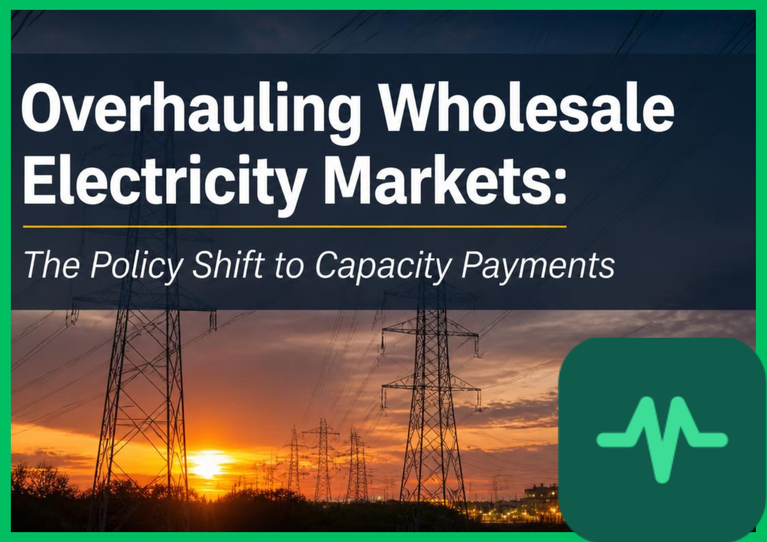
For decades, power markets worked one simple way. Plants got paid for every unit of electricity they made. This worked fine when coal and gas ruled the grid. Solar and wind changed everything. They make power for free, so their price often falls to zero. Capacity payments were built to solve the mess this creates.
In this guide, we will explore how capacity payments actually work. We will look at the strange problem called the cannibalization effect. We will also look at why grid batteries and backup plants need this new kind of income to survive. By the end, you will understand why capacity payments matter so much for keeping the lights on.
Why Cheap Power Became a Real Problem
Let's start with the odd truth here. Solar and wind cost nothing to run once built. No fuel bill. No coal shipment. Because of this, they can sell power at rock-bottom prices and still make sense financially.
On a sunny day, this creates a flood of cheap power. Every solar farm pushes power onto the grid at the same time. Prices crash toward zero. Sometimes prices even go negative. This sounds wonderful for anyone paying a power bill.
The problem hides underneath this cheap power. Capacity payments exist because this price crash quietly starves the grid of the money it needs to stay reliable when the sun goes down.
What Is the Cannibalization Effect?
This strange price crash has a name: the cannibalization effect. It happens because every solar farm competes with every other solar farm at the exact same sunny hour. Supply floods the market. Prices fall through the floor.
This hurts more than just the solar farms themselves. Gas plants and battery systems that only run occasionally also get squeezed. They cannot earn steady money from selling power alone anymore. Capacity payments were designed specifically to fix this financial squeeze.
Without a fix, this problem grows worse over time. Fewer companies want to build backup power plants if they cannot make money running them. Capacity payments step into this exact gap.
Why Backup Power Still Matters So Much
Here is the catch that makes this problem serious. The sun does not shine all day. Wind does not blow all the time. When evening comes, demand for power spikes just as solar output disappears completely.
Grids need backup resources ready for this exact moment. Batteries. Gas peaker plants. Pumped hydro storage. All of these must switch on fast when the sun sets and everyone gets home and turns on lights, ovens, and air conditioners.
If nobody gets paid to keep these backup systems ready, nobody will build them. Capacity payments solve this by rewarding readiness itself, not just the electricity these systems occasionally sell.
What Exactly Are Capacity Payments?
So what are capacity payments, in simple terms? They are steady, guaranteed payments made to power resources just for being available. A battery does not need to sell electricity every single day to earn this income. It just needs to stay ready.
Think of capacity payments like an insurance premium. A grid battery gets paid a stable monthly amount simply for staying connected and ready to deliver power the moment it is needed. This payment happens whether or not the battery actually discharges power that month.
This shift feels genuinely clever. Capacity payments separate two different jobs. One is making electricity. The other is being ready to make electricity. Under the old system, only the first job earned any money at all.
How This Fixes the Broken Incentive
Without capacity payments, investors avoid building backup power. Why would anyone spend millions on a gas plant or battery system if it might earn zero dollars most days, thanks to cheap solar power crashing prices?
Capacity payments remove this fear. They give investors a predictable, steady source of income. This steady income makes it financially safe to build the very systems the grid depends on during dark, windless evenings.
This matters enormously for grid safety. Capacity payments essentially bribe the market into building enough backup power, even during years when solar and wind keep driving regular electricity prices toward zero.
Who Actually Benefits From Capacity Payments?
Several types of power resources benefit directly from capacity payments. Utility-scale batteries are major winners here. These systems can switch on almost instantly, making them ideal for filling gaps left by disappearing solar power each evening.
Pumped hydro storage also benefits strongly. These systems store water at height, then release it through turbines when power is needed. Capacity payments give these projects a much more predictable financial future than relying only on unpredictable daily electricity sales.
Fast-starting gas peaker plants round out this list too. While less clean than batteries, these plants can fire up quickly during emergencies. Capacity payments help keep enough of these plants available, even though they might only run a handful of hours each year.
Where Capacity Markets Are Already in Use
This is not just a theoretical fix. Several major grid systems already use capacity payments today. The PJM Interconnection, which covers a huge portion of the eastern United States, runs an established capacity market.
Parts of Europe use similar systems too, helping stabilize national grids as solar and wind power keep growing rapidly. Australia's National Electricity Market has also explored capacity-style mechanisms, adapting to the same cannibalization pressures showing up worldwide.
These real-world examples prove that capacity payments are not just an abstract policy idea. They are already working, helping grid operators avoid blackouts while renewable energy keeps expanding at a rapid pace.
Why This Feels Like a Smart, Necessary Fix
There is something satisfying about watching a market quietly fix itself before disaster strikes. Capacity payments were not created out of panic. They emerged as a thoughtful response to a genuinely new problem that nobody fully predicted decades ago.
This matters because renewable energy keeps growing fast, and that growth is a genuinely good thing. Capacity payments make sure this growth does not accidentally destabilize the very grid that clean energy depends on to reach homes and businesses.
For anyone worried that cheap solar power might somehow backfire, capacity payments offer real reassurance. They prove that markets can adapt, protecting reliability even as the underlying technology completely reshapes how electricity gets priced and sold.
Addressing Concerns About Extra Costs
Some critics worry that capacity payments simply add extra costs onto electricity bills. This concern deserves honest attention. Paying resources just to stand ready does cost real money, and that money ultimately comes from somewhere.
However, the alternative carries a much steeper price. Blackouts cause real economic damage, disrupting businesses, hospitals, and daily life. Capacity payments represent a relatively small ongoing cost compared to the massive expense and danger of a widespread grid failure during a heat wave or cold snap.
Regulators generally view capacity payments as a reasonable insurance cost. A small, steady expense protects against a much larger, unpredictable disaster. This tradeoff feels sensible when weighed against the real risks of an unreliable power grid.
What the Future Holds for Capacity Markets
As more solar and wind power comes online worldwide, expect capacity payments to spread into even more regions. The cannibalization effect will only intensify as renewable energy keeps growing, making this kind of backup incentive increasingly necessary.
Battery technology is also improving rapidly, which should make backup power cheaper and more efficient over time. This could help lower the overall cost of capacity payments, even as more of these systems get built across expanding power grids.
Grid operators will likely keep refining these payment structures too, adjusting rules to reward the fastest, cleanest backup resources most effectively. This ongoing evolution should help capacity payments become an even smarter, more targeted tool over the coming years.
Common Questions About Capacity Payments
Why did cheap solar power create a problem for the electricity grid? When solar and wind flood the market with zero-cost power, wholesale prices crash toward zero, leaving backup power plants and batteries with little financial incentive to stay available.
How do capacity payments actually work? They pay power resources a steady fee just for being ready to deliver electricity when needed, separate from any payment for the electricity they actually generate.
Which regions already use capacity payments? The PJM Interconnection in the United States, parts of Europe, and Australia's electricity market have all adopted similar capacity-based mechanisms.
Do capacity payments raise electricity bills? They add a modest cost, but this cost is generally far smaller than the economic damage caused by blackouts from an unreliable power grid.
A Familiar Idea From Other Industries
The logic behind capacity payments is not entirely new. Many industries already pay for readiness, not just actual output. Fire departments get funded year-round, even during quiet months with few emergencies. Insurance companies collect premiums whether or not a policyholder ever files a claim.
Capacity payments apply this same familiar logic to electricity. Instead of only paying for power actually delivered, grid operators now pay for the guarantee that power will be available exactly when needed most. This concept feels intuitive once you see it applied to other essential services people already understand and accept.
This comparison helps explain why capacity payments have gained acceptance among regulators and grid operators fairly quickly. It is not a radical new idea. It is simply the electricity market catching up to a funding model that other critical infrastructure sectors adopted long ago.
Final Thoughts
Capacity payments solve a problem that few people saw coming when solar and wind power first started scaling up rapidly. Cheap, clean electricity seemed like an unambiguous win, until it accidentally threatened the financial survival of the backup systems the grid still desperately needs.
By paying power resources simply to stay ready, capacity payments restore the missing financial incentive that renewable energy quietly erased. This fix protects grid reliability without slowing down the continued growth of solar and wind power.
As more regions adopt this approach, capacity payments are likely to become a standard part of modern electricity markets everywhere. This shift offers real reassurance that the clean energy transition can keep moving forward without sacrificing the reliability people depend on every single day. Capacity payments make that steady reliability possible.
In the end, capacity payments remind us that even brilliant technological progress sometimes needs a little financial engineering to work smoothly. Sometimes, keeping the lights on requires paying for readiness, not just for power itself. That simple insight is exactly what makes capacity payments such an important fix.

Comments (0)
Login to leave a comment.
No comments yet. Be the first to share your thoughts!