However, hydrogen is not a primary energy source like coal, oil, or wind. It is an energy carrier. It does not exist on its own in pure pools or pockets underground. It is always tightly bound to other elements, most commonly to oxygen in water (H₂O) or to carbon in methane (CH₄).
To use hydrogen, we must first break those molecular bonds to isolate the gas. This isolation process requires a significant amount of energy, and the source of that energy determines its environmental impact. To track this, the energy sector uses a color-coded classification system. Understanding these differences is essential to evaluating its true ecological worth.
The Baseline Reality of Grey Hydrogen
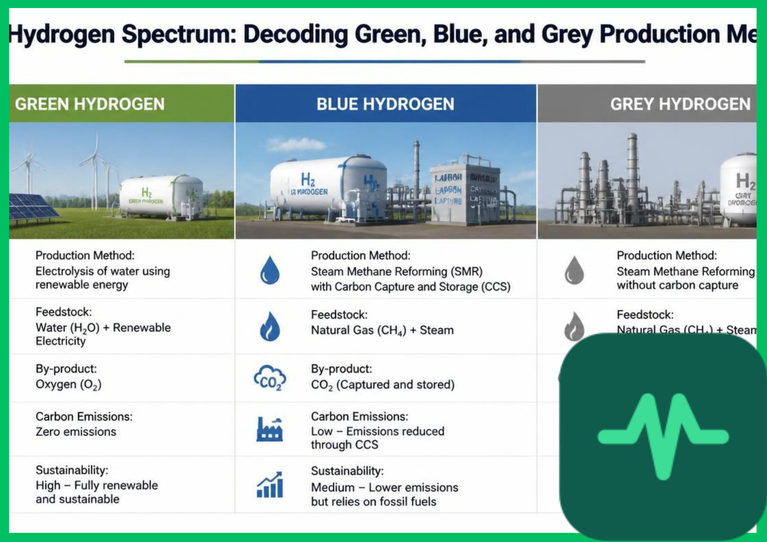
To understand the push for cleaner alternatives, we must first examine the industrial standard that currently dominates global production: grey hydrogen. This method accounts for the vast majority of the hydrogen manufactured today, but it is not a clean energy solution.
The grey process relies on a chemical method called steam methane reforming. Industrial plants take natural gas, mix it with superheated steam under high pressure, and trigger a chemical reaction that splits the methane apart into pure hydrogen and carbon dioxide (CO₂).
Because this process relies entirely on fossil fuels as both the raw ingredient and the heat source, its environmental impact is severe. For every kilogram of grey hydrogen produced, roughly ten kilograms of carbon dioxide are vented straight into the atmosphere. It is an industrial process that shifts emissions from one place to another rather than eliminating them, making it entirely incompatible with long-term climate goals.
The Transitional Promise of Blue Hydrogen
As industries look for rapid ways to reduce their environmental impact without completely abandoning existing pipelines and manufacturing infrastructure, blue hydrogen has emerged as a major transitional step.
The manufacturing process for blue hydrogen begins exactly the same way as the grey method. Facilities use steam methane reforming to split natural gas apart into its basic components. The critical difference occurs after the chemical split takes place.
Instead of venting the resulting carbon dioxide straight into the sky, blue hydrogen facilities deploy carbon capture and storage technology. They capture the greenhouse gases right at the factory smokestack, compress them into a liquid, and pump them deep underground into permanent geological formations, such as depleted oil fields or deep saline aquifers. While this drastically reduces the immediate climate impact compared to grey production, it is still tethered to fossil fuel extraction and relies on permanent, leak-free subterranean storage to maintain its environmental integrity.
The Clean Target of Green Hydrogen
The ultimate destination for a truly sustainable energy network is green hydrogen. This production method breaks away from fossil fuels entirely, replacing natural gas with water and dirty power plants with renewable energy.
To manufacture the green gas, facilities deploy a machine called an electrolyzer. This device passes an intense electrical current through water, splitting the liquid molecules apart into pure hydrogen and oxygen gas. The oxygen is simply released back into the atmosphere as a harmless, natural byproduct.
Crucially, the electricity used to run these electrolyzers must come entirely from zero-emission renewable sources, such as wind turbines, solar fields, or hydroelectric installations. When this condition is met, the entire lifecycle of the fuel becomes carbon-free from start to finish. Conducting a thorough green hydrogen carbon footprint comparison reveals that true green production yields virtually zero greenhouse gas emissions, making it the only version of the fuel capable of driving deep decarbonization across the globe.
Weighing the Economic and Practical Trade-offs
If green hydrogen is so clean, why hasn't it completely replaced grey and blue methods across the world? The answer comes down to the stark realities of economics and energy efficiency.
Right now, splitting water with renewable electricity is an incredibly expensive process. Building massive electrolyzer facilities requires rare, premium materials like platinum and iridium. Furthermore, the process involves significant energy conversion losses. You lose a percentage of your starting solar or wind electricity when you use it to split water, another percentage when you compress or liquefy the hydrogen gas for transport, and a final percentage when you convert that gas back into usable energy inside a fuel cell.
Blue hydrogen remains economically attractive because it leverages massive supply chains and industrial infrastructure that have been optimized for over half a century. It provides a cheaper, high-volume alternative that can help transition heavy industries away from raw fossil fuels while the technology for green production scales up, manufacturing costs drop, and renewable electricity capacity grows large enough to meet global demand.
Navigating the Future Energy Landscape
The color spectrum of hydrogen teaches us a vital lesson: a fuel is only as clean as the energy used to create it. We cannot simply look at the word "hydrogen" on a product label and assume it is automatically good for the planet.
As a consumer, staying informed means looking past marketing buzzwords and demanding transparency regarding production origins. While blue hydrogen provides a necessary bridge to reduce emissions today, the ultimate goal remains the widespread adoption of green hydrogen. By scaling up true renewable electrolysis, we can transform the world's most abundant element into a foundational pillar of a clean, self-sustaining global energy network.

Comments (0)
Login to leave a comment.
No comments yet. Be the first to share your thoughts!