
That magic gas is hydrogen. Because it is the most common element on earth and releases nothing but pure water vapor when consumed, it has long been praised as the holy grail of clean energy. News segments and technology exhibitions frequently showcase prototype homes that run entirely on this lightweight fuel.
But moving from an experimental laboratory demonstration to a practical, everyday household asset is a massive leap. While the science behind this technology is completely sound, the practical consumer realities present a very different set of hurdles. For the average homeowner, deploying a clean gas network involves navigating steep economic trade-offs, infrastructure limitations, and complex safety considerations.
Understanding the Residential Fuel Cell Process
To evaluate this setup fairly, we have to look at how a hydrogen-powered system actually works inside a domestic environment. The core of the entire operation is a device called a fuel cell. Unlike a traditional generator that burns fuel to spin a mechanical alternator, a fuel cell uses a quiet electrochemical reaction.
The machine takes hydrogen gas from a storage tank and combines it with oxygen drawn straight from the ambient air outside. As these two elements interact across a specialized membrane, they generate a steady flow of direct current electricity.
This process produces two useful byproducts: water and raw heat. A well-designed system does not let that heat go to waste. Instead, it captures the thermal energy and routes it into your home's central plumbing, providing a highly effective solution for space heating and hot water. This dual-action approach is what gives the technology its unique appeal, turning a simple power generator into a comprehensive climate control hub.
The Reality of Upfront Costs and Market Availability
The most significant barrier facing interested consumers today is the initial financial commitment. When researching a realistic residential hydrogen fuel cell generator price, many buyers experience immediate sticker shock. These systems are highly specialized pieces of laboratory-grade engineering, and they are not yet mass-produced on the same scale as traditional solar panels or standard standby generators.
The cost challenges extend far beyond the price tag of the fuel cell unit itself. To build a truly independent system, you have to invest in a multi-stage equipment stack. You need an onsite electrolyzer to manufacture your own hydrogen from water, a massive array of solar panels to power that electrolyzer during the day, and a specialized compressor to prep the gas for long-term storage.
When you calculate the total hydrogen powered home system cost, you are looking at an investment that can be many times more expensive than a premium solar-and-lithium-battery installation. For a standard suburban household connected to a stable public grid, this math makes very little financial sense. The upfront expenditure is simply too high to justify the monthly savings on your utility bill, keeping the technology restricted to well-funded pilot projects and highly customized architectural designs.
Navigating the Off-Grid Power Supply Landscape
Where this technology does shine is in hyper-specific scenarios where traditional options fall short. For deep rural properties or isolated islands, securing a reliable off grid hydrogen power supply can be a total game-changer.
Traditional off-grid properties rely heavily on solar panels paired with large chemical batteries. This works beautifully during the summer, but it falls apart in regions that experience dark, sub-zero winter seasons with weeks of continuous cloud cover. Lithium-ion batteries are excellent at holding energy for a few days, but they slowly lose their charge if they sit idle for months, and they struggle to perform efficiently in freezing conditions.
Hydrogen acts as a form of seasonal energy storage. During the bright summer months, your solar panels produce far more electricity than your home can consume. Instead of letting that extra power go to waste, you use it to split water into hydrogen gas. You pump that gas into a secure storage tank, where it can sit safely for six months without a single ounce of energy degradation. When the dead of winter arrives and your solar panels are covered in snow, your fuel cell steps in, using that stored summer gas to keep your home warm and powered for weeks on end.
Evaluating the Reality of Home Heating Conversions
Beyond generating electricity, there is a parallel global conversation regarding a complete hydrogen home heating conversion. Many utility providers are exploring the feasibility of retrofitting existing natural gas pipelines to deliver a blend of hydrogen straight to standard residential neighborhoods, allowing homeowners to run clean boilers and cooktops.
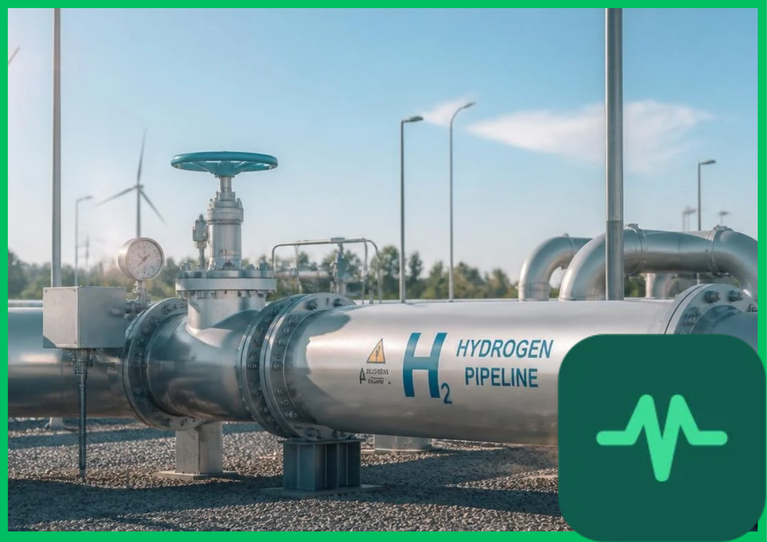
While this sounds like a seamless transition, the physical traits of hydrogen make pipeline retrofits incredibly difficult. Hydrogen is the smallest, lightest molecule in existence. Because it is so tiny, it can easily leak through minute microscopic seals and joints that are perfectly airtight for standard natural gas. Furthermore, when high-pressure hydrogen comes into contact with traditional steel pipes, it can cause a chemical reaction known as embrittlement, making the metal brittle, cracked, and highly prone to dangerous ruptures.
To safely transport pure hydrogen to households, utility networks must replace miles of underground pipes with specialized plastics or high-grade composite materials. Inside the home, standard appliances cannot safely process the gas. Hydrogen burns at a much higher velocity and temperature than natural gas, meaning you would have to replace your entire furnace, water heater, and stove with completely redesigned, hydrogen-certified burners.
Balancing Domestic Fuel Cell Efficiency
The ultimate choice between hydrogen and traditional chemical batteries comes down to a clear look at domestic fuel cell efficiency metrics. In the engineering world, we look at round-trip efficiency—the percentage of energy you get back compared to the amount of energy you put in.
Standard lithium-ion battery setups are incredibly efficient, boasting a round-trip efficiency of roughly 90 percent. You put ten kilowatt-hours of solar energy into the battery, and you get about nine kilowatt-hours back out when you plug in your appliances later that night. Very little energy is lost as waste heat.
A residential hydrogen loop is far less efficient. The process of using electricity to split water, compressing the resulting gas into a high-pressure tank, and then running that gas back through a fuel cell results in massive energy conversion losses. The round-trip efficiency of a residential hydrogen setup often hovers around 30 to 40 percent. This means you lose more than half of the clean solar energy you harvested just by changing its physical form. Unless you have an endless supply of free, excess solar power and a critical need for seasonal storage, standard batteries remain the vastly superior option for daily household energy management.
Finding the Right Place for a Powerful Fuel
Hydrogen is not a flawed technology, but it is a highly specialized tool that has been weighed down by excessive marketing hype. It is not an immediate, drop-in replacement for the average household's energy needs, and it will not replace the simplicity of residential solar panels and chemical batteries anytime soon.
However, as production methods improve and the initial manufacturing costs scale down, hydrogen will find its vital place in the global landscape. It will secure remote off-grid communities, provide seasonal backup for regions facing extreme winter climates, and clean up heavy industrial sectors that cannot run on batteries alone. By separating realistic engineering truths from science-fiction dreams, we can view hydrogen for what it truly is: a powerful, niche ally in our shared journey toward a cleaner, more resilient world.



Comments (0)
Login to leave a comment.
No comments yet. Be the first to share your thoughts!