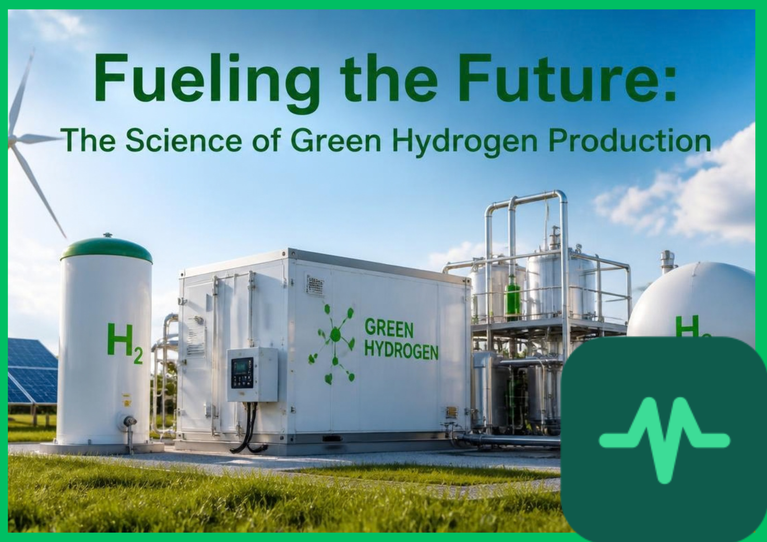
You see the immense scale of modern industry.
Powering that scale required a heavy toll on our planet for generations, relying almost entirely on coal, oil, and natural gas.
While electric batteries and renewable wind and solar power handle light transport and home heating easily, heavy sectors face a different barrier.
Cargo ships, long-distance aviation, steel manufacturing, and chemical refining cannot run on batteries alone. They demand a high-density, clean energy carrier.
Enter hydrogen.
For decades, hydrogen powered industrial chemistry, but it was produced by burning fossil fuels, releasing millions of metric tons of greenhouse gases in the process.
A cleaner path is emerging.
According to tracking data from the International Energy Agency (IEA), environmental assessments from the United Nations Environment Programme (UNEP), and academic clean energy research, green hydrogen production is rewriting the rules of industrial energy.
Here is how green hydrogen works, why it represents a true scientific breakthrough, and how it fuels our zero-emission future.
The Dirty Secret of Traditional Hydrogen
To understand why green hydrogen is revolutionary, you have to look at how the world currently produces most of its hydrogen.
Hydrogen is the most abundant element in the universe, but it rarely exists on Earth in its pure, gaseous form. It is always locked up in chemical compounds—most notably in water (H2O) and hydrocarbons like natural gas (CH4).
Historically, industrial producers extracted hydrogen using a process called steam methane reforming.
They baked natural gas with high-temperature steam, stripping the carbon atoms away and releasing pure hydrogen gas.
The catch? The leftover carbon atoms bonded with oxygen and escaped straight into the atmosphere as carbon dioxide.
Producing traditional hydrogen generates nearly 1,000 million metric tons of carbon emissions globally each year.
Using fossil fuels to make a clean-energy carrier defeated the entire purpose of the transition.
We needed a way to split hydrogen from its chemical bonds without burning anything.
What Is Green Hydrogen?
Green hydrogen changes the equation completely by using renewable electricity to split water molecules apart.
The entire process relies on a scientific technique called water electrolysis.
An electrolyzer is filled with water and equipped with two electrodes—a cathode and an anode—separated by a specialized membrane.
When you apply a direct electrical current to the water, a chemical reaction takes place.
Water molecules at the negative electrode break down, releasing pure hydrogen gas. At the same time, oxygen molecules gather at the positive electrode, releasing clean oxygen into the atmosphere.
The resulting hydrogen gas is captured, compressed, and stored as a high-density energy carrier.
When you burn green hydrogen later—or feed it into an electrochemical fuel cell to generate electricity—the only byproduct of that reaction is pure water vapor.
No smoke, no carbon dioxide, no toxic pollutants.
The Power of Renewable Water Electrolysis
The environmental brilliance of green hydrogen depends entirely on its power source.
If an electrolyzer plugs into a traditional coal-fired power grid, the hydrogen it produces is dirty.
For hydrogen to earn the "green" label, the electricity driving the electrolyzer must come entirely from zero-emission renewable sources like wind, solar, or hydroelectric power.
According to IEA market reviews and academic energy studies, falling costs for solar panels and wind turbines are making renewable electricity cheaper than ever.
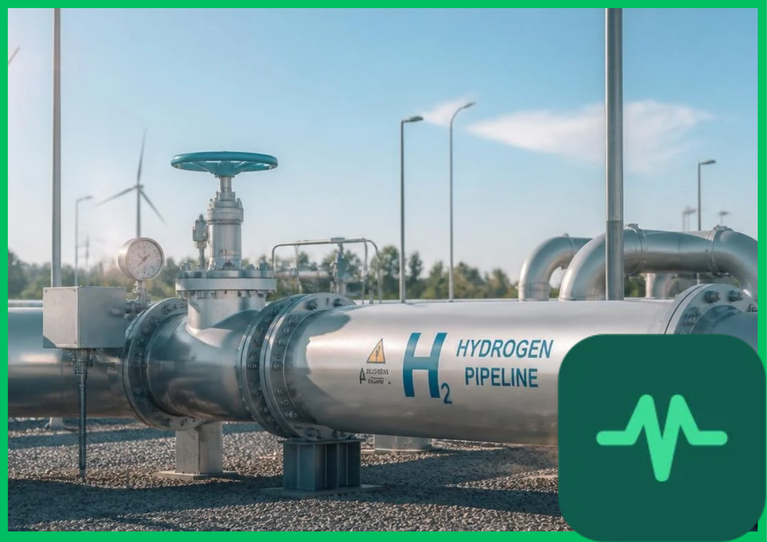
As clean power generation scales up globally, electrolyzers can be installed directly next to solar farms and wind parks.
When the sun shines brightly or winds blow hard and local grids cannot absorb all the electricity, that excess renewable power runs electrolyzers, storing surplus clean energy safely as liquid or gaseous hydrogen.
Fueling Hard-to-Abate Global Sectors
Why is green hydrogen such a critical piece of the global climate puzzle?
Because batteries are too heavy and bulky to power massive container ships crossing open oceans, commercial cargo planes flying long-distance routes, or industrial blast furnaces melting iron ore.
Green hydrogen and its derivatives—like green ammonia and synthetic e-fuels—provide the high energy density required for these hard-to-abate sectors.
A cargo ship fueled by green ammonia can travel thousands of miles across the sea, emitting zero carbon along the way.
Steel mills can inject green hydrogen into reduction furnaces instead of metallurgical coal, turning iron ore into pure steel with water vapor as the only exhaust.
As IEA tracking data confirms, scaling up low-emission hydrogen is essential to decarbonizing heavy industry and stabilizing global supply chains.
Overcoming Scaling Hurdles and Looking Ahead
Every breakthrough technology faces growing pains, and green hydrogen is no exception.
Manufacturing large-scale electrolyzers requires specialized materials, and building dedicated renewable power plants takes massive capital investment.
Furthermore, transporting and storing a gas as light as hydrogen requires specialized cryogenic tanks and high-pressure infrastructure.
Yet, global momentum is undeniable. Capital investments in low-emission hydrogen projects are accelerating rapidly as industrial manufacturers secure long-term supply agreements.
By harnessing the power of renewable water electrolysis, green hydrogen bridges the gap between clean electricity and heavy industrial demands.
It transforms water and sunlight into a powerful, clean fuel, driving our global economy toward a truly sustainable future.
Comments (0)
Login to leave a comment.
No comments yet. Be the first to share your thoughts!