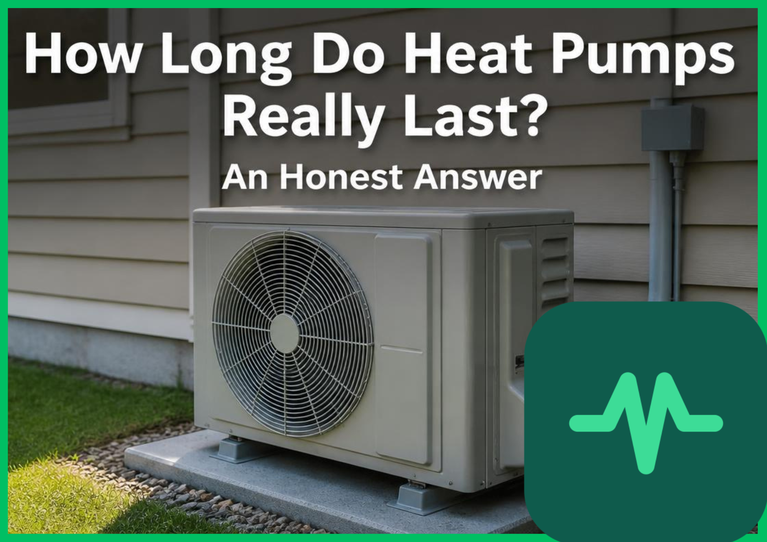
So let's answer that honestly, without the marketing gloss.
The general, honest answer
Most heat pumps genuinely last a solid, meaningful number of years when properly installed and reasonably maintained. It's not a device you'll replace every couple of years, and it's not something that lasts forever either.
Think of it similarly to a reliable car. With reasonable care, it serves you well for a long, meaningful stretch of time. Neglect it, and that timeline shrinks considerably.
What actually determines the lifespan
Installation quality matters enormously, more than most people realize. A heat pump installed correctly, sized properly for the home, tends to last considerably longer than one installed carelessly or mismatched to the space it's meant to serve.
Climate plays a genuine role too. A heat pump working constantly in extreme conditions, whether brutally hot summers or harsh winters, naturally experiences more wear than one operating in milder, more moderate conditions.
Maintenance habits matter just as much. A heat pump that receives regular filter changes and occasional professional check-ups tends to outlast one that's simply installed and forgotten about entirely.
The honest warning signs of aging
A heat pump nearing the end of its useful life often gives quiet warning signs before it fails completely.
Rising energy bills, without any change in your actual usage habits, can signal declining efficiency. The unit is working harder to achieve the same result it once managed easily.
Inconsistent temperatures throughout your home, uneven heating or cooling between rooms, can indicate the system is struggling to perform as reliably as it once did.
More frequent repairs, even small ones, often signal a system reaching the point where replacement genuinely becomes more sensible than continuing to patch it.
Unusual noises, especially new ones that weren't there in earlier years, are worth having checked promptly rather than ignored.
Simple habits that genuinely extend lifespan
Regular filter changes matter more than almost anything else on this list. A clogged filter forces the entire system to work harder, quietly wearing down components faster than necessary.
Keeping the outdoor unit clear of leaves, debris, and overgrown vegetation helps it breathe properly, which reduces unnecessary strain during operation.
Scheduling occasional professional inspections, even when nothing seems wrong, catches small issues early, before they become larger, more expensive problems.
Avoiding constant, extreme temperature swings on the thermostat also helps. Gradual adjustments put less sudden strain on the system compared to dramatic jumps.
The replacement question, honestly addressed
At some point, every heat pump reaches an age where repair costs start rivaling the cost of simply replacing the unit entirely. This is a genuinely personal decision, but a useful rule many professionals suggest is comparing the repair cost against a meaningful percentage of a full replacement's cost.
If a repair approaches that threshold, replacement often makes more financial sense than continuing to invest in an aging system.
Why newer isn't automatically better
It's worth noting that heat pump technology has genuinely improved over recent years. A newer replacement doesn't just match your old unit's performance, it often exceeds it, using less energy to deliver the same or better comfort.
This means an aging heat pump nearing replacement isn't purely a loss. It's also an opportunity to upgrade to genuinely more efficient technology than what was available when your current system was first installed.
Setting realistic expectations
No heat pump lasts indefinitely, and that's genuinely fine. Like any major home system, it has a realistic, expected working life, and understanding that upfront helps you plan rather than feel blindsided years down the road.
Budgeting mentally for eventual replacement, even if it's years away, removes some of the stress when that day eventually arrives.
The honest bottom line
A well-installed, properly maintained heat pump genuinely serves a home for a long, meaningful stretch of years. The exact number depends on your specific climate, installation quality, and how consistently you maintain it.
Pay attention to the warning signs. Keep up with simple maintenance. And when replacement day eventually comes, know that newer technology will likely serve you even better than what came before it.
That's not a disappointing ending. That's simply how good, reliable technology is supposed to work.

Comments (0)
Login to leave a comment.
No comments yet. Be the first to share your thoughts!