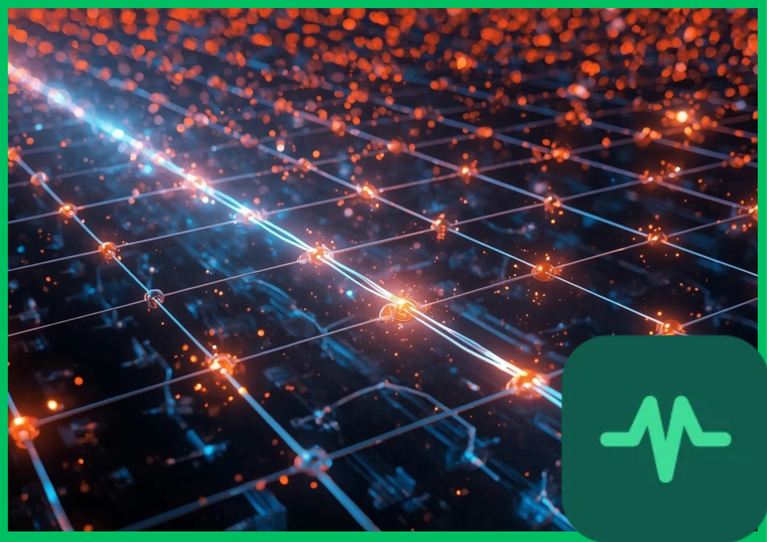
You listen closely to the air.
You hear a distinct, angry electrical hum buzzing overhead.
Thousands of volts of electricity push hard against copper and aluminum wires miles above your head.
As that power races across the countryside from a distant power plant to your city, a massive chunk of it vanishes.
It never reaches a lightbulb, a refrigerator, or a school.
It leaks away into the atmosphere as waste heat, warming the metal cables and the air around them.
For over a century, electrical grids operated on a wasteful physical rule.
Every metal wire used to carry electricity has electrical resistance.
Resistance fights the flow of electrons, turning precious electricity into useless heat every single second of the day.
That invisible transmission loss wastes between 5% and 10% of all the electricity generated worldwide.
We burn fossil fuels or harness clean wind and solar power, only to watch millions of kilowatt-hours bleed away as thermal waste on power lines.
We cannot build a fully efficient clean energy future while letting our transmission lines bleed energy into thin air.
What if electrical cables could carry power with absolute zero resistance?
What if electricity could flow across miles of wire without losing a single watt of energy along the way?
A quiet, brilliant physics revolution is transforming electrical engineering laboratories across the globe.
According to global energy reports from the International Energy Agency (IEA), resource governance frameworks from the United Nations Environment Programme (UNEP), efficiency benchmarks from ENERGY STAR, and academic superconductivity research, superconducting power transmission grid cables are changing our electrical infrastructure.
By replacing conventional metal wires with high-temperature superconducting materials cooled by liquid nitrogen, we eliminate transmission resistance and transmit power without loss.
Here is how superconductivity works, why lossless grid cables change energy economics, and how zero resistance secures our sustainable future.
The Hidden Waste of Conventional Copper Wires
To understand why superconducting grid cables matter so much, you have to look at the physical limits of traditional electrical wires.
Since the birth of the electrical age, power grids relied on copper and aluminum.
Both metals conduct electricity well, but neither is perfect.
As electric current flows through a copper wire, electrons collide constantly with the metal's internal atomic structure.
Those collisions create friction, and friction creates heat.
The hotter the wire gets, the higher its resistance climbs, and the more electricity gets wasted.
To push more power through congested urban corridors where building new overhead towers is impossible, utilities must raise the voltage higher and higher.
High voltage requires massive transformers, thick insulation, and wide safety clear-cutting zones through forests and communities.
Skeptics once argued that superconductors required temperatures near absolute zero, making them far too expensive and impractical for everyday city power grids.
Physicists and materials engineers proved those skeptics wrong.
Modern high-temperature superconducting materials operate at much warmer temperatures, opening the door to a completely lossless electrical grid.
What Is a Superconducting Grid Cable?
A superconducting grid cable is an advanced underground power transmission line built with specialized ceramic alloy tapes that lose all electrical resistance when cooled by liquid nitrogen, allowing them to carry up to five times more electricity than traditional copper cables within a fraction of the physical space.
Instead of a thick overhead tower cutting across the landscape, a superconducting cable runs cleanly underground:
- Ceramic Superconductor Tapes: Layers of bismuth-based or rare-earth barium copper oxide ceramics replace traditional copper wires.
- Liquid Nitrogen Cooling: A vacuum-insulated cryostat pipe circulates liquid nitrogen at approximately -196°C or -321°F around the superconducting tapes, keeping them in their zero-resistance state.
- Compact Underground Footprint: A single narrow underground trench housing a superconducting cable can carry the electrical load of multiple bulky overhead high-voltage lines.
You get massive power delivery hidden safely beneath city streets with zero external electromagnetic fields and zero energy loss.
The Science of Electron Pairing and Zero Resistance
How can a ceramic material carry electric current without generating a single drop of heat or losing any energy over long distances?
It comes down to quantum mechanics and Cooper pair physics.
Academic superconductivity research shows that when certain advanced materials drop below their critical transition temperature, electrons stop colliding randomly with atomic lattices.
Instead, they form synchronized pairs known as Cooper pairs that glide effortlessly through the crystal structure without friction.
Resistance drops to absolute zero.
Because there is zero electrical resistance, a superconducting cable transmits massive blocks of power without generating any internal heat.
Furthermore, ENERGY STAR and international grid efficiency evaluations prove that eliminating transmission losses saves massive amounts of primary energy generation, reducing the fuel required at power plants.
Energy flows freely, cleanly, and perfectly.
Environmental Integrity and Urban Space Conservation
The environmental benefits of high-temperature superconducting grid cables extend far beyond eliminating electrical resistance or saving energy on power transmission lines.
They offer a powerful solution to urban land congestion and environmental footprint reduction.
According to UNEP resource governance frameworks, traditional overhead power lines require clearing wide corridors of natural vegetation, disrupting local ecosystems and wildlife habitats.
Because superconducting cables run underground in narrow trenches and carry massive power loads, utilities can replace unsightly overhead wires and restore natural landscapes.
According to IEA clean energy roadmaps, scaling up lossless transmission technology is an essential pillar to connect remote renewable energy sources—such as massive desert solar farms and offshore wind arrays—to urban centers hundreds of miles away without losing power in transit.
When energy moves without friction, our entire grid becomes remarkably clean and efficient.
Overcoming Cryogenic Maintenance and Capital Realties
Scaling superconducting grid cables from pioneering urban pilot projects into universal grid infrastructure involves navigating real-world engineering and economic hurdles.
Maintaining cryogenic liquid nitrogen cooling loops along miles of underground cable requires reliable refrigeration stations, vacuum monitoring sensors, and specialized maintenance protocols.
Electrical engineers and grid operators solve these challenges by building redundant automated cooling pumps, installing robust vacuum-insulated double-wall piping, and designing modular refrigeration stations that keep systems running smoothly for decades.
As manufacturing techniques for ceramic superconducting tapes scale up and production costs decline, superconducting cables are transitioning successfully from specialized scientific showcases into standard metropolitan grid infrastructure worldwide.
Reaching Zero Resistance Toward a Sustainable Future
Superconducting power transmission grid cables prove that quantum physics can solve the most stubborn infrastructure challenges of our modern energy grid.
We no longer have to accept that transmitting electricity across our civilization requires bleeding millions of kilowatt-hours of power away as waste heat.
By replacing copper wires with high-temperature superconductors cooled by liquid nitrogen, we achieve zero resistance and absolute transmission efficiency.
We step away from wasteful energy loss, embracing a clean, compact, and enduring standard of power delivery.
Through brilliant materials science, rigorous academic research, and a deep respect for our planetary resources, zero resistance secures a clean, boundless, and sustainable future for every community on Earth.

Comments (0)
Login to leave a comment.
No comments yet. Be the first to share your thoughts!