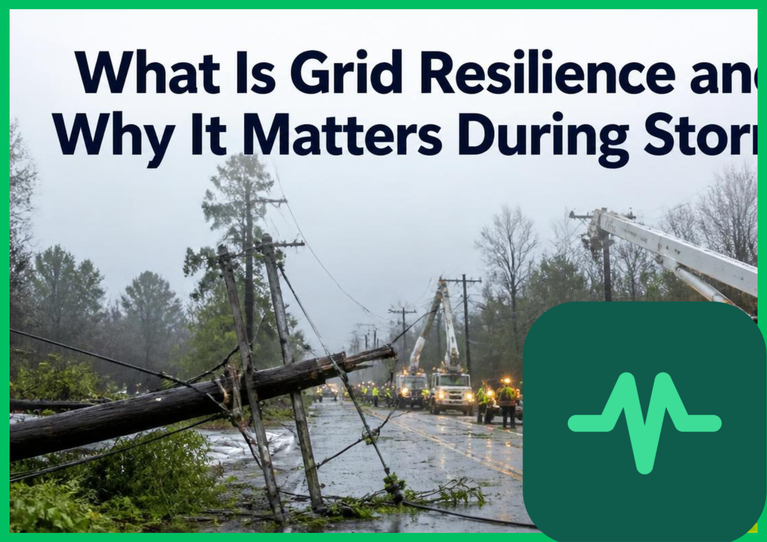
You've probably noticed this pattern before. One neighborhood loses power for days after a storm. Another, just a few miles away, barely flickers. That difference isn't random luck. It comes down to something called grid resilience.
Let's talk honestly about what this actually means, and why it genuinely matters for your own family's safety and comfort.
Grid Resilience, Explained Simply
Grid resilience refers to how well an electrical grid can withstand, and quickly recover from, disruptions, storms, extreme heat, physical damage, or any other stress that threatens power delivery.
A genuinely resilient grid doesn't just avoid failures entirely, since that's honestly impossible with any complex system. It fails gracefully when something does go wrong, and it recovers quickly afterward, rather than leaving people without power for days at a time.
Why This Concept Matters More Than Ever
Extreme weather is becoming more frequent and more severe across much of America. Hurricanes hit harder. Winter storms bring brutal, unexpected cold. Heat waves stretch longer and hotter than they used to.
A grid that wasn't genuinely built for this level of stress struggles badly when these events hit. Grid resilience is essentially the honest measure of how well our infrastructure can handle this genuinely new normal.
What Makes a Grid More Resilient, Practically Speaking
Several real factors contribute to genuine grid resilience, and they're worth understanding individually.
Physical infrastructure matters first. Buried power lines, for instance, survive windstorms far better than exposed overhead lines, though burying lines costs significantly more upfront to install.
Grid design matters too. A more interconnected grid, one where power can reroute automatically around damaged sections, recovers faster than a rigid system with few alternate paths for electricity to travel.
Local energy resources matter as well. Communities with solar panels, batteries, and microgrids can sometimes keep critical systems running even when the broader regional grid goes down entirely.
Why Some Communities Recover Faster Than Others
This is where grid resilience becomes genuinely personal, not just abstract policy talk. Wealthier communities and newer developments often have more resilient infrastructure, buried lines, modern equipment, sometimes even localized backup systems.
Older, lower-income neighborhoods sometimes rely on aging infrastructure that simply wasn't built, or maintained, to the same resilient standard. This creates a genuine equity concern worth taking seriously, not just an interesting technical difference.
The Emotional Toll of Extended Outages
Let's be honest about something that often gets lost in technical discussions. Losing power for days during a heat wave or winter storm isn't just inconvenient. It's genuinely frightening, especially for families with young children, elderly relatives, or anyone with medical equipment depending on reliable electricity.
Grid resilience isn't an abstract engineering concept when you're sitting in a dark, increasingly hot or cold home, worried about food spoiling or medical equipment failing. It's a genuinely personal, urgent safety issue.
How Microgrids Are Improving Local Resilience
One genuinely promising development involves microgrids, smaller, localized power systems that can operate independently from the broader regional grid when needed.
Some hospitals, schools, and entire neighborhoods are building microgrids specifically so critical services can keep running even during a major regional outage. This represents real, meaningful progress in improving grid resilience at the local, community level.
What Utilities Are Actually Doing About This
Many utilities are investing seriously in resilience improvements now, burying vulnerable power lines in storm-prone areas, upgrading aging equipment, and building smarter systems that can automatically reroute power around damaged sections.
Progress varies significantly by utility and region, honestly. Some are moving impressively fast. Others are moving more slowly, often due to genuine funding constraints or competing priorities.
What You Can Do to Prepare Personally
While you can't personally fix grid resilience at the infrastructure level, there are genuinely practical things worth doing at home.
Consider a home battery system if you can afford one, particularly if you live somewhere prone to severe weather. Keep basic emergency supplies on hand regardless. And genuinely know your specific utility's outage reporting and restoration process before you actually need it during a crisis.
Why This Issue Deserves More Public Attention
Grid resilience doesn't get the same public attention as flashier topics like electric cars or solar panels. It's genuinely less exciting to talk about. It's also, arguably, just as important, maybe more so, for basic public safety.
Paying attention to your local utility's resilience investments, and genuinely supporting policies that fund infrastructure improvements, matters for your community's real safety during the next major storm.
Climate Change Is Raising the Stakes
As extreme weather keeps intensifying due to climate change, grid resilience becomes an increasingly urgent priority, not just a nice-to-have improvement for the distant future.
This creates a genuine feedback loop worth understanding. Climate change makes extreme weather more likely, which makes grid resilience more urgent, which requires real investment to address properly and thoroughly.
Common Questions About Grid Resilience
Why do some neighborhoods recover from outages faster than others?
It often comes down to infrastructure differences, buried versus overhead lines, equipment age, and how interconnected the local grid actually is.
Can homeowners personally improve their own grid resilience?
Not the broader grid itself, but home batteries and backup systems can provide personal resilience during outages, regardless of the surrounding grid's condition.
Is grid resilience improving across America right now?
Yes, though progress varies significantly by region and utility. Real investment is happening, but genuinely more work remains.
Why does climate change make grid resilience more urgent?
More frequent and severe extreme weather events place greater stress on infrastructure, making resilience improvements genuinely more critical than in past decades.
Final Thoughts
Grid resilience might sound like dry, technical infrastructure talk, but it directly shapes something deeply personal: whether your family stays safe and comfortable during the next major storm. That's not abstract at all.
As extreme weather keeps becoming more common, this quiet infrastructure work deserves real attention and genuine investment. It's not the flashiest part of the clean energy story, but it might genuinely be one of the most important for everyday safety.
Comments (0)
Login to leave a comment.
No comments yet. Be the first to share your thoughts!