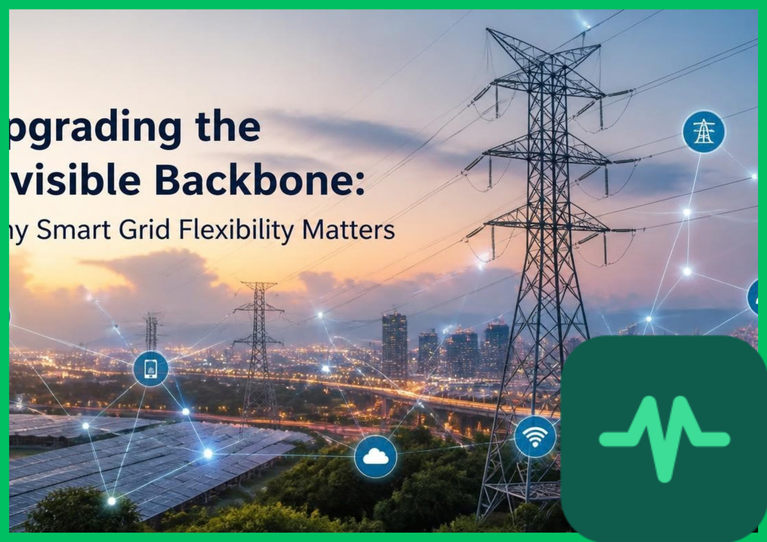
You plug in your phone, charge your electric vehicle, and run your appliances without ever thinking about how that electricity gets to your home.
The electrical grid works silently in the background. It is the invisible nervous system of modern civilization.
Yet, for decades, that backbone was built for a simpler era. It moved power in one direction from massive, centralized coal and gas power plants straight to passive consumers.
As renewable energy scales up worldwide, that legacy grid is reaching its physical limits.
According to tracking data and electricity analysis reports from the International Energy Agency (IEA) and academic research, power system flexibility is the single most critical requirement for secure and cost-effective clean energy transitions.
Without upgrading our electrical grids to be smart, flexible, and responsive, clean energy generation risks going to waste.
Here is why grid flexibility is the invisible backbone of our sustainable energy future.
The Flexibility Challenge of Variable Renewables
To understand why grid flexibility matters, you have to look at the fundamental physics of electricity.
Electricity must be generated the exact millisecond it is consumed. Supply and demand must balance with absolute precision every second of the day.
Traditional power grids maintained this balance easily. When demand rose, operators simply burned more fossil fuels.
Renewable energy introduces dynamic variability.
The sun shines intermittently, and wind speeds fluctuate across regions. When massive waves of solar and wind generation flood into local power networks, rigid legacy grids struggle to absorb the sudden surge.
Without sufficient flexibility, grid operators are forced to curtail clean energy—meaning zero-emission power generated by solar and wind farms goes completely to waste because the network cannot handle or store it.
Upgrading the grid is no longer just about stringing new copper wires; it is about adding digital intelligence and operational flexibility across the entire power system.
The Four Pillars of Grid Flexibility
According to comprehensive energy analyses, keeping a modern power system in balance requires flexibility across four core pillars supported by advanced technologies:
- Flexible Generation: Power plants—including fast-ramping hydropower and modern gas turbines—that adjust their electricity output rapidly to compensate for sudden drops in renewable generation.
- Energy Storage: Utility-scale battery installations and pumped-storage facilities that capture surplus clean energy when production peaks and discharge it back out when demand spikes.
- Demand Response: Smart systems that shift or reduce household and industrial electricity consumption during periods of high grid stress.
- Digital Grids and Distributed Resources: Smart meters, real-time sensors, and automated software that coordinate local solar self-consumption, home batteries, and electric vehicles across regional networks.
When these four pillars work together, the electrical grid transforms from a rigid monolith into a responsive, self-healing digital network.
Empowering Consumers Through Smart Integration
Grid flexibility is not just an engineering challenge managed inside utility boardrooms. It directly involves everyday consumers.
As highlighted in energy efficiency standards and smart home research, modern digital meters and dynamic pricing tariffs allow households to participate actively in grid stabilization.
When millions of smart home appliances, heat pumps, and electric vehicles coordinate their power usage through automated chargers and energy management systems, they form a powerful demand-response resource.
Instead of burning dirty fossil fuels to meet peak evening demand, grid operators can signal connected home batteries and smart EV chargers to pause or discharge tiny amounts of stored energy.
Consumers save money on their utility bills while helping stabilize their local communities.
Building a Resilient Energy Architecture
The transition to a flexible, smart electrical grid drives essential industrial and technological progress.
By investing in digital automation, artificial intelligence, energy storage, and modern transmission lines, we eliminate bottlenecks and cut system operating costs.
A flexible grid ensures that clean energy generated miles away reaches urban centers without loss or curtailment.
Upgrading our invisible electrical backbone secures absolute resilience, keeping lights on reliably through extreme weather and market shifts.
Flexibility is the key that unlocks our clean energy future.

Comments (0)
Login to leave a comment.
No comments yet. Be the first to share your thoughts!