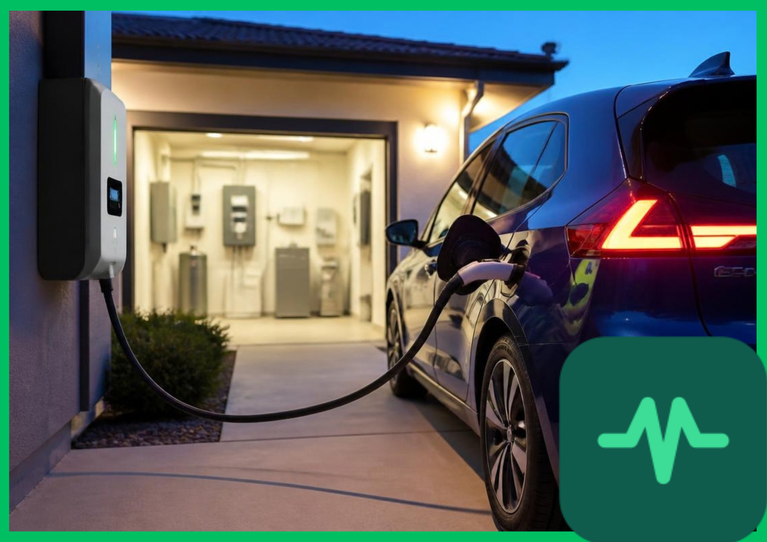
The transition to electric mobility is completely rewriting that script. An electric vehicle (EV) is essentially a massive, high-capacity battery pack enclosed in a protective metal frame with four wheels attached. For perspective, the battery inside a typical electric passenger car holds enough raw electrical energy to run an average household for several days straight.
Yet, for years, that immense energy reserve was trapped. Power could only flow into the car, never out. That technical barrier is finally dropping. With the arrival of bidirectional EV charger for home use, your vehicle is turning into a dynamic power station capable of keeping your lights on, your food cold, and your home safe during a crisis.
Breaking Down the Mechanics of Two-Way Power
To understand how this shift works, we have to look at the underlying technology often called vehicle to grid technology or V2G. Traditional car charging is a one-way street. Alternating current (AC) from your household wiring travels into the car, where an onboard converter turns it into direct current (DC) to store in the battery cells.
Bidirectional systems open up the traffic lanes in both directions. The specialized charger can pull that DC power back out of the vehicle, convert it cleanly back into AC electricity, and feed it straight into your home’s breaker panel.
This transformation requires two specific pieces to work together. First, the electric vehicle itself must have an internal system designed to allow outward energy flow. Second, you must install a dedicated bidirectional home charging unit. When these two systems connect, your vehicle stops being a passive consumer of energy and becomes an active, rolling power reserve.
The Practical Realities of Installation
Bringing this capability to your own property requires planning and a clear understanding of the hardware involved. The process begins with a professional vehicle to grid home installation evaluation. You cannot simply plug a bidirectional cable into a standard household wall outlet and expect it to power your appliances.
An electrician must install a specialized inverter unit on your wall, along with an automatic transfer switch near your main electrical panel. This transfer switch is a critical safety feature. When the main power grid goes down, the switch instantly disconnects your house from the public lines. This prevents your car from accidentally sending high-voltage electricity back down the street wires, which could severely injure utility technicians working to fix the storm damage.
You will also need to choose the hardware that matches your goals. When looking to buy V2G car charger units, you will find options ranging from compact wall boxes to larger, more robust power hubs. These units communicate constantly with your car's computer, ensuring the power transfer happens safely without overheating the vehicle's battery cells.
Balancing the Financial Ledger
Investing in this advanced equipment involves an upfront commitment, making a clear EV backup power system cost analysis essential for any household budget. Bidirectional chargers and the necessary electrical panel upgrades are significantly more expensive than standard, one-way home charging stations.
However, the financial return comes from evaluating what you are replacing. Traditionally, if you wanted to protect your home from blackouts, you had to purchase a dedicated, stationary backup battery or a noisy, fossil-fueled combustion generator. These standby systems can cost thousands of dollars, require regular engine maintenance, and sit completely idle for 99% of the year.
By utilizing your electric vehicle, you are leveraging an asset you already own. You bypass the need to buy a separate, expensive piece of emergency backup hardware. Furthermore, as utility companies offer more flexible incentives, your car can actively save you money on a daily basis. Instead of just waiting for an emergency blackout, the system can feed power into your home during peak evening hours when electricity prices are high, and then refill the car's battery late at night when power is cheap.
Protecting the Core Asset
The most common concern among new users centers on vehicle longevity. Will constantly drawing power out of your car to run your air conditioner, refrigerator, or heaters wear out the vehicle's battery pack prematurely?
Battery engineers have spent years studying this exact issue. The physical strain placed on a car battery when powering a home is remarkably gentle. Driving an electric vehicle down a highway requires massive, rapid bursts of energy to move thousands of kilograms of metal against wind resistance. In contrast, running a television, a refrigerator, and a few lights requires a slow, steady, low-voltage trickle of power.
Modern bidirectional software also lets you establish strict boundaries. Through an app on your phone, you can tell the system to never let the car's battery drop below 50% or 60% capacity. This ensures that no matter how long a household outage lasts, your car will always retain more than enough driving range to handle an emergency trip or your morning commute.
A Shared Cushion for Communities
When you look past the boundaries of your own driveway, the wider implications of this technology become clear. Imagine a regular suburban street where ten or fifteen households all have electric vehicles parked out front. If a severe storm hits the area and snaps a primary power line, those vehicles can instantly step in to power house with electric vehicle capabilities.
Instead of thousands of homes immediately plunging into darkness and stressing emergency services, an entire neighborhood can sustain itself quietly for days. This localized resilience protects vulnerable individuals, reduces the immediate pressure on emergency repair crews, and prevents localized blackouts from cascading into regional grid failures.
Your car is no longer just a tool for transportation. It is a vital piece of personal infrastructure, an insurance policy against unpredictable weather, and a smart asset that can actively manage your domestic energy budget every single day.


Comments (0)
Login to leave a comment.
No comments yet. Be the first to share your thoughts!