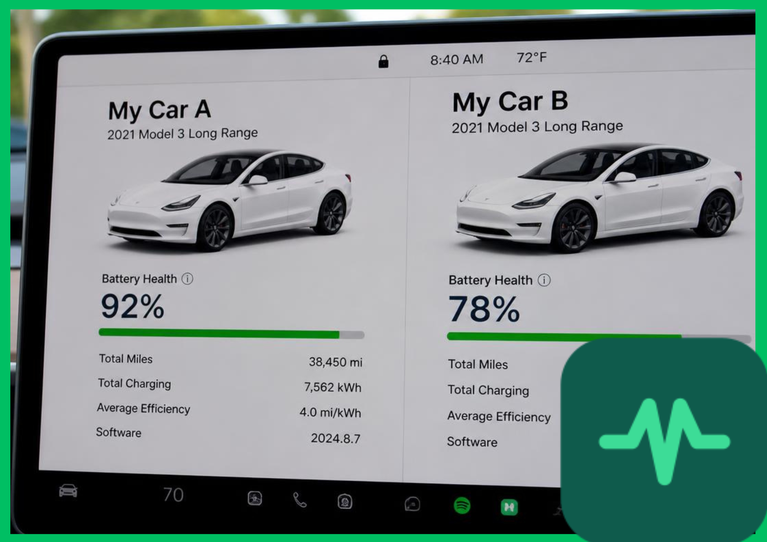
How does that happen? The honest answer involves a mix of factors, some within your control, and some genuinely not.
The uncomfortable truth about manufacturing
Even with careful, modern manufacturing, no two batteries come off the production line in absolutely identical condition. Tiny, natural variations exist in cell quality, even within the same batch.
Most of these differences are small enough to never matter in daily use. But over years of charging cycles, small initial differences can gradually widen into noticeably different degradation patterns.
Why charging habits genuinely matter
Here's where individual choices start to matter more. Regularly charging a battery to completely full, and then letting it sit at that full charge for extended periods, tends to accelerate wear compared to keeping the charge level in a more moderate range most of the time.
Similarly, frequently draining a battery down to nearly empty before recharging puts additional stress on the cells compared to more moderate charging patterns.
None of this means you need to obsess over every single charge. It simply means that consistent habits, day after day, genuinely add up over the years you own the vehicle.
The honest role of climate
Extreme heat is genuinely harder on battery longevity than milder conditions. Vehicles regularly parked in intense, prolonged heat tend to show faster degradation than similar vehicles in more temperate climates.
Extreme cold affects performance differently, temporarily reducing available range, though this effect is generally less permanent than heat-related degradation over the long term.
This means two identical vehicles, driven similarly but living in genuinely different climates, can reasonably show different battery health after the same number of years.
Why fast charging habits play a role too
Fast charging is genuinely convenient, and modern batteries are designed to handle it. But relying on fast charging as your primary, near-exclusive charging method, rather than occasional standard charging, tends to generate more heat within the battery over time, which can contribute to slightly faster degradation.
Occasional fast charging for genuine convenience is perfectly reasonable. Making it your only charging method, when slower options are readily available, is where the extra wear tends to add up.
What this honestly means for buyers
If you're buying new, this variance means your specific battery's future health isn't entirely predictable on day one. Following sensible charging habits genuinely improves your odds of a healthier battery over time, though it can't completely eliminate natural manufacturing variation.
If you're buying used, this variance means mileage alone doesn't tell the whole story. A used vehicle with modest mileage but poor charging history could have worse battery health than a similar vehicle with higher mileage but more careful ownership.
Practical habits that genuinely help
Keep your regular daily charge level in a moderate range rather than consistently charging to completely full, reserving a full charge specifically for longer trips when you genuinely need the extra range.
Avoid letting the battery sit at a very low charge level for extended periods, particularly in hot conditions, since this combination tends to be genuinely harder on long-term battery health.
Use fast charging when it's convenient, but don't make it your exclusive method if slower, standard charging is realistically available to you at home or work.
Why understanding this actually empowers you
Knowing that battery health isn't purely a matter of luck gives you genuine, practical control over part of the equation. You can't control every factor, manufacturing variation and unavoidable climate conditions remain outside your influence.
But the habits genuinely within your control, charging patterns and moderate charge levels, meaningfully improve your odds of ending up on the healthier side of that variance, rather than the disappointing side.
The honest bottom line
Two identical electric vehicles can genuinely age very differently, and the reasons are a mix of manufacturing variation, climate, and daily charging habits. Some of this you can't control. Much of it, you genuinely can.
Adopt sensible charging habits from the day you bring your electric vehicle home, and you're giving your specific battery the best realistic chance of aging well, rather than leaving its long-term health entirely up to chance.

Comments (0)
Login to leave a comment.
No comments yet. Be the first to share your thoughts!