Electric cars aren't just for new-car buyers anymore. As more EVs enter the market, used electric cars are becoming a genuinely important option for many people.
That's exciting news for consumers. A used EV can offer real access to electric mobility at a lower purchase price. There's one component that deserves special attention, though, before you hand over any money.
That component is the battery. It's one of the most valuable parts of an electric vehicle. Understanding EV battery health, in other words, is essential before buying any used model.
Why the Battery Matters
An electric vehicle depends entirely on its battery for energy. That battery powers the motor. It supports other systems throughout the vehicle too.
Over time, batteries naturally lose some capacity. This process is called battery degradation. Some degradation is completely normal. The speed of that decline can vary a lot, though. This is exactly why buyers need to understand the specific vehicle they're considering, not just battery technology in general.
Battery Degradation Does Not Mean the Battery Is Bad
This point deserves real emphasis. A battery can lose some capacity and still work genuinely well.
An older EV, for instance, may not travel quite as far on a full charge as it did when new. That alone doesn't make the vehicle unreliable, though. Instead, look at the remaining battery capacity and compare it honestly against your own daily needs. If it still covers your typical drive with room to spare, a little degradation may not matter much at all.
Range Is Important
Driving range is one of the easiest things for a buyer to focus on. Advertised range, though, isn't always the same as real-world range.
Weather affects it. Driving speed affects it. Road conditions affect it. Heating and air conditioning use pull from the same battery too. Don't judge battery condition from a single short test drive alone. Real performance shows up over varied conditions, not one quick loop around the block.
Ask for Battery Information
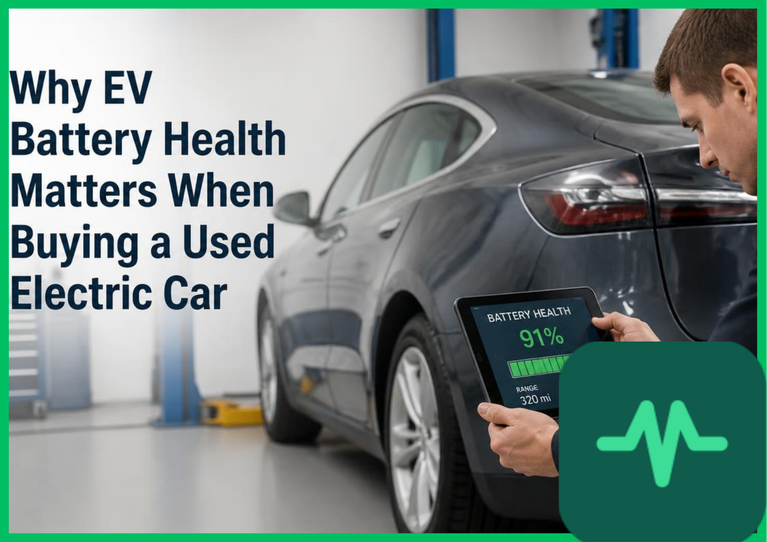
When buying a used EV, ask the seller directly whether battery-health information is available. Some vehicles display battery data through their own onboard systems. Others require a professional diagnostic check instead.
A proper battery report gives you real, useful information about the battery's actual condition. That kind of data builds genuine confidence before you commit to a purchase.
Battery Warranty
Battery warranties deserve close attention too. Many manufacturers offer separate warranty coverage specifically for EV batteries.
Terms vary quite a bit between manufacturers and models. Some warranties are based purely on years. Others include mileage limits too. Check whether the warranty is still active on the specific vehicle you're considering. Also understand exactly what level of battery degradation the warranty actually covers, since terms differ.
Charging History Can Matter
Charging habits can influence how a battery ages over time. Avoid drawing firm conclusions from limited information, though.
A vehicle's overall battery-management system matters far more than any single charging event you might hear about secondhand. A professional battery assessment gives you a much clearer, more reliable picture than guesswork ever could.
Fast Charging
Fast charging is genuinely useful, letting drivers add energy quickly during longer trips. Don't automatically assume, though, that frequent fast charging has severely damaged a battery.
Modern EVs use battery-management systems specifically designed to control charging safely. Once again, the battery's actual measured condition matters far more than speculation about how it was charged in the past.
Mileage Is Not Everything
Here's a common mistake worth avoiding: assuming a low-mileage EV automatically has a healthier battery. Mileage matters, sure. But so does time. So do usage patterns. So does temperature exposure. So does charging behavior over the years.
Consider the complete history of the vehicle, not just the number on the odometer. Two EVs with identical mileage can have very different battery health depending on how they were actually used.
Check the Rest of the Car
Battery condition matters enormously, but it's not the only thing worth inspecting. Check:
- Tires
- Brakes
- Suspension
- Lights
- Interior
- Charging equipment
- Software
- Body condition
An EV is still a car underneath everything else. The normal used-car checks you'd apply to any vehicle remain just as important here.
Battery Replacement Costs
Understand the potential cost of major battery repairs before buying. Modern batteries can genuinely last for many years without major issues.
Replacement, when it's needed, can be expensive, though. This doesn't mean every used EV will eventually need a new battery. It simply means buyers should understand the financial risk going in, rather than being blindsided later.
Buying From a Dealer
A reputable dealer can often provide more information about a vehicle's history. Ask for maintenance records directly. Ask about warranty coverage specifically. Ask whether the vehicle has been professionally inspected.
Don't be afraid to walk away if important information is missing or the dealer seems reluctant to share it. That hesitation itself tells you something.
Buying From a Private Seller
Private sales can offer genuinely attractive prices. Buyers need to be more careful here, though, since there's typically less accountability than with a dealer.
A professional inspection becomes especially valuable in this scenario. It can reveal real problems that aren't obvious during a short test drive around the block.
The Future of Used EVs
The used-EV market is likely to grow significantly as the first big wave of electric cars starts aging out of typical ownership periods. This should make battery-health testing more common and more accessible over time.
It could also create entirely new services built around EV inspections specifically. That's genuinely good news for consumers. More available information makes the whole used market more transparent for everyone involved.
EcoGreenPulse View
EV battery health shouldn't scare buyers away from used electric cars entirely. It should encourage better, more informed buying decisions instead.
A battery is a major component of real financial value. Buyers deserve clear, honest information about its actual condition before spending their money.
Conclusion
Buying a used electric car can be a genuinely smart move. Do your homework first, though. Check battery health carefully. Review warranty coverage in detail. Consider the vehicle's real-world range. Inspect the rest of the car thoroughly too. And when possible, get a professional battery report before finalizing anything.
A little research before buying can save you from an expensive surprise later, and help you drive away with real confidence in your purchase.
Sources: International Energy Agency resources on electric vehicles and batteries; manufacturer warranty documentation should be checked for individual models.
Comments (0)
Login to leave a comment.
No comments yet. Be the first to share your thoughts!