The honest numbers worth understanding
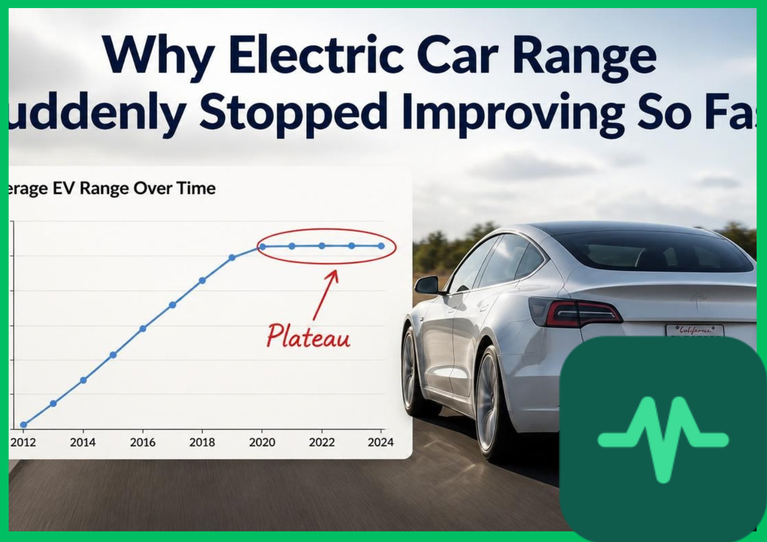
Recent data shows that the typical range of new battery electric cars increased by roughly 10 percent between 2020 and 2025, a genuinely modest pace compared to the dramatic improvements seen in earlier years of electric vehicle development.
This represents a real, measurable slowdown, not simply a temporary pause before another big leap forward. It reflects a genuine shift in how manufacturers are now approaching battery size and vehicle design more broadly.
Why bigger batteries create real, honest tradeoffs
Adding more battery capacity to increase range isn't as simple as it might sound. A larger battery adds real weight to a vehicle, and that extra weight itself requires additional energy to move, partially offsetting some of the range benefit the bigger battery was meant to provide in the first place.
Larger batteries also cost more to produce, given how significant battery cost represents within a vehicle's overall price. This creates a genuine, practical tension between offering more range and keeping vehicles reasonably affordable for typical buyers.
Why this represents diminishing returns, not failure
As charging infrastructure has expanded and fast-charging technology has improved considerably, discussed extensively elsewhere, the practical need for ever-larger batteries has genuinely lessened. If charging quickly and conveniently becomes easier, the pressure to carry an enormous, heavy battery specifically to minimize charging stops naturally decreases too.
This means each additional increase in battery size increasingly delivers a smaller, less meaningful practical benefit compared to earlier years, when starting ranges were considerably more limited and genuinely constraining for many typical daily uses.
Why today's typical range already covers most real driving needs
Current data suggests today's average electric car range comfortably covers the vast majority of typical daily driving needs for most owners. This means further range increases increasingly benefit only a smaller share of trips, specifically longer journeys beyond typical daily use.
Given this, manufacturers face a genuinely reasonable question. Does it make sense to add significant cost and weight specifically to address a relatively smaller, less frequent use case, when most daily driving already works perfectly well within existing range capability?
Why manufacturers have shifted focus elsewhere instead
Rather than continuing to chase ever-larger range numbers, many manufacturers have redirected their attention toward other genuinely valuable improvements, like faster charging speeds, improved efficiency, and more affordable pricing, discussed extensively elsewhere in current industry analysis.
This shift reflects a genuinely sensible engineering judgment. Faster charging can address longer trip needs just as effectively as a bigger battery, often at a lower overall cost and weight penalty for the vehicle.
Why this connects directly to the broader affordability story
As discussed elsewhere, falling battery costs have directly supported meaningful improvements in electric vehicle affordability recently. Choosing not to simply pour every bit of that cost improvement into ever-larger batteries, instead keeping battery size more reasonable, helps translate more of that savings directly into lower overall vehicle prices for buyers.
This represents a genuinely thoughtful tradeoff, prioritizing broader affordability over chasing diminishing range improvements that would benefit a comparatively smaller share of actual driving situations.
Why this doesn't mean range no longer matters at all
This doesn't suggest range has become irrelevant. For certain buyers, particularly those regularly driving longer distances or living in areas with less developed charging infrastructure, meaningfully larger range genuinely remains valuable and worth prioritizing.
Manufacturers still offer larger-battery options specifically for these buyers. The broader industry trend simply reflects that most typical buyers no longer need to prioritize maximum possible range above other genuinely important considerations like price and charging speed.
Why this represents genuine technology maturation
Early in any new technology's development, dramatic year-over-year improvement in a single headline metric, like maximum range, often makes sense, since starting capability genuinely limits practical, everyday use in ways that need urgent addressing.
As a technology matures and that initial limitation becomes less pressing, attention naturally shifts toward other factors, cost, convenience, reliability, that increasingly matter more to typical buyers than continuing to push a single number ever higher.
Why this pattern shows up across many mature technologies
This kind of shift, from rapid improvement in one headline metric toward broader, more balanced improvement across multiple factors, appears commonly as many technologies mature over time, not just within electric vehicles specifically.
Recognizing this pattern helps set realistic, honest expectations about how electric vehicle technology will likely continue evolving, rather than assuming dramatic range increases should indefinitely continue at the same pace seen during the technology's earlier, more immature years.
What this means if you're shopping for an electric car today
Rather than focusing primarily on maximizing available range, it's genuinely worth considering your own realistic, typical driving patterns first, then evaluating whether a given vehicle's range comfortably covers those actual needs, alongside other factors like price, charging speed, and overall value.
The bottom line
Electric car range improvement has genuinely slowed in recent years, not because the technology has stalled, but because manufacturers have made a genuinely sensible tradeoff, recognizing that further range increases increasingly deliver diminishing practical benefit compared to other improvements like charging speed and affordability.
This represents honest technology maturation, not failure or disappointment. For most typical drivers, today's electric vehicles already comfortably cover real, everyday driving needs, making this shift in manufacturer priorities a genuinely sensible response to where the technology and its buyers actually stand today.




Comments (0)
Login to leave a comment.
No comments yet. Be the first to share your thoughts!