
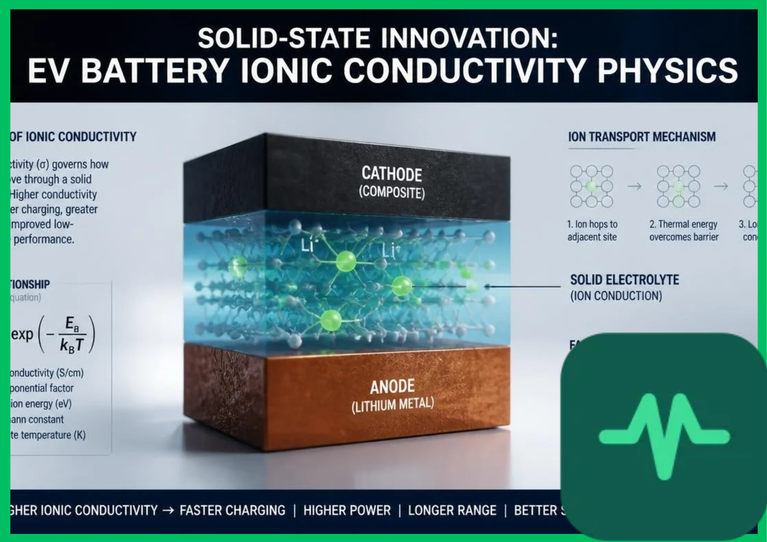
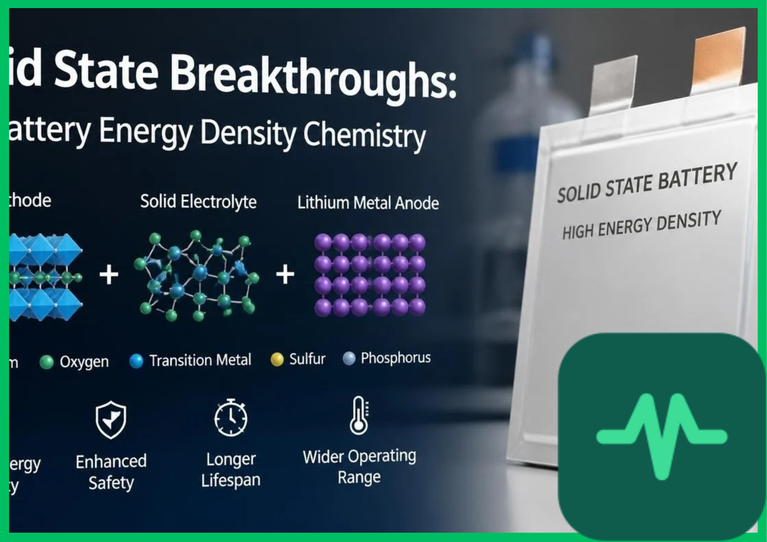
 and posing severe thermal runaway risks. Solid-state lithium batteries replace liquid organic solvents with inorganic solid electrolyte membranes—such as oxide-based garnet structures, sulfide-based superionic conductors, or solid polymer electrolytes—enabling the integration of pure metallic lithium anodes. This architectural transition elevates volumetric and gravimetric energy densities past
 and
 while eliminating electrolyte combustion hazards.
Ionic Conductivity Mechanics and Arrhenius Kinetics
The foundational physical property governing solid-state battery performance is bulk ionic conductivity ( ), which dictates how rapidly lithium ions (
 ) migrate through the solid crystal lattice under an electrical potential gradient. Ionic conductivity in solid electrolytes follows the Arrhenius relationship:
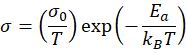
where  represents the pre-exponential factor,
 is absolute temperature,
 denotes the activation energy for ion hopping, and
 is the Boltzmann constant.
Solid electrolytes are categorized primarily into oxide-based ceramics (such as 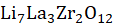 [LLZO] with garnet structures), sulfide-based glass-ceramics (such as
 [LGPS] and argyrodites like
 ), and solid polymer matrices. Sulfide electrolytes exhibit exceptionally high room-temperature ionic conductivities exceeding
 (comparable to liquid organic electrolytes), driven by large polarizable sulfur anions that lower electrostatic binding energies for migrating lithium ions. Conversely, oxide garnets like LLZO offer superior chemical stability against reactive lithium metal anodes and wide electrochemical stability windows (
 vs.
 ), though grain boundary resistance can impede bulk ion transport if sintering density is imperfect.
Lithium Dendrite Suppression and Critical Current Density
A major thermodynamic and mechanical advantage of solid-state electrolyte membranes is their ability to suppress lithium dendrite penetration during high-rate charging cycles. In liquid electrolyte cells, uneven current distributions during rapid charging cause localized lithium electrodeposition, forming sharp microscopic metallic dendrites that pierce porous polymer separators and trigger catastrophic internal short circuits, thermal runaway, and cell fires.
In contrast, rigid inorganic solid electrolytes possess high shear moduli ( for oxide garnets) that exceed the shear modulus of metallic lithium (
 ). When lithium ions plate onto the anode interface during charging, the rigid solid matrix exerts mechanical compressive stress that suppresses localized whisker growth. However, high current densities exceeding critical current density (CCD) thresholds (
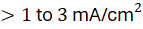 ) induce localized stress concentrations at microscopic pore defects or grain boundaries within the ceramic membrane, leading to mechanical crack propagation and dendrite shorting. Engineers optimize ceramic microstructure density via spark plasma sintering (SPS) and grain boundary doping to maximize mechanical fracture toughness.
Interfacial Resistance Metrics and Solid-Solid Contact
While solid electrolytes eliminate liquid flammability, solid-solid interfacial contact resistance represents a severe engineering hurdle. Unlike liquid electrolytes that wet microscopic electrode surface pores spontaneously, solid-solid interfaces between the ceramic electrolyte membrane and composite cathode active particles suffer from poor physical contact, high interfacial impedance, and continuous volume fluctuations during charge-discharge cycling.
During lithiation and delithiation, cathode active materials (such as nickel-rich layered oxides like  [NMC811]) undergo volumetric expansion and contraction of 2% to 5%. This mechanical strain causes interfacial delamination, forming micro-gaps that block lithium-ion transfer and elevate area-specific resistance (ASR). Furthermore, thermodynamic space-charge layers form at oxide-electrolyte boundaries, creating local potential barriers that impede ion flow. Researchers apply atomic layer deposition (ALD) coatings—such as thin
 or
 buffer layers—between the cathode particles and solid electrolyte to suppress parasitic chemical reactions and reduce interfacial charge-transfer resistance.
Technical Data Specifications of Solid-State Electrolyte Parameters
| Solid Electrolyte Class | Room-Temperature Ionic Conductivity ( ) | Shear Modulus ( ) | Electrochemical Stability Window | Interfacial Resistance Characteristics |
|---|---|---|---|---|
| Oxide Garnet (LLZO) |  to  |  |  vs.  | High (Requires sintering / buffer layers) |
Sulfide Argyrodite ( ) |  to  |  |  vs.  | Moderate (Mechanical ductility aids contact) |
| Solid Polymer (PEO-based) |  to  (at  [  ]) |  |  vs.  | Low (Compliant polymer wets interfaces) |
| Liquid Organic (Baseline) |  |  (Fluid) |  vs.  | Negligible (Wets porous separators) |
Volumetric Energy Density and Manufacturing Scalability
Implementing solid-state lithium metal batteries enables high volumetric and gravimetric energy densities by removing bulky graphite anode hosts and eliminating heavy liquid electrolyte packaging. Standard liquid-electrolyte lithium-ion cells achieve gravimetric energy densities between  and
 . Solid-state cells utilizing pure lithium metal anodes (
 to
 [
 ] thickness) achieve projected energy densities exceeding
 to
 and volumetric densities exceeding
 .
Manufacturing robust, ultrathin ceramic electrolyte membranes ( to
 [
 ]) at industrial gigafactory scale requires advanced tape casting, slurry formulation, and continuous high-temperature sintering furnaces operating above
 (
 ). Controlling green-tape density and eliminating microstructural defects is essential to prevent structural warping and electrical shorting across large-format pouch cells.
The Final Take
Mastering solid-state ev battery ionic conductivity physics advances electrochemical energy storage by uniting high-conductivity ceramic membranes with pure lithium metal anodes. Citing IEA advanced battery assessments and academic literature, optimizing sulfide and garnet solid electrolytes overcomes interfacial resistance and suppresses lithium dendrite formation. By scaling ultrathin membrane manufacturing, solid-state batteries establish an indispensable technical foundation for high-energy-density electric vehicle propulsion.

Comments (0)
Login to leave a comment.
No comments yet. Be the first to share your thoughts!