Energy storage remains the single biggest bottleneck in modern technology.
For decades, we have relied on traditional liquid lithium-ion batteries. They power our phones, laptops, and cars effectively, but they have hit a hard physical ceiling.
They are heavy. They degrade over time. Worst of all, they carry a persistent risk of overheating and catching fire.
A quiet revolution is taking shape in research laboratories and manufacturing plants across the globe.
According to tracking data from international energy reports, solid-state battery technology is poised to replace the liquid chemistry we have used for generations. This shift promises to redefine energy storage, unlocking unprecedented power density, blazing charging speeds, and absolute safety.
The Flaw in Traditional Liquid Batteries
To understand why solid-state tech matters, you have to look inside a standard battery.
A traditional lithium-ion battery contains a positive electrode, a negative electrode, and a liquid electrolyte solution that allows lithium ions to flow back and forth during charging and discharging.
That liquid electrolyte is volatile. It is typically flammable. If a battery is punctured, overcharged, or subjected to extreme heat, the liquid can ignite, triggering a runaway thermal reaction.
Furthermore, liquid electrolytes create microscopic needle-like structures called dendrites over time. These dendrites grow inside the battery until they pierce the separator membrane, causing short circuits and sudden battery failure.
Engineers have pushed liquid chemistry as far as physics allows. To take the next great leap forward, we needed to eliminate the liquid entirely.
What Is a Solid-State Battery?
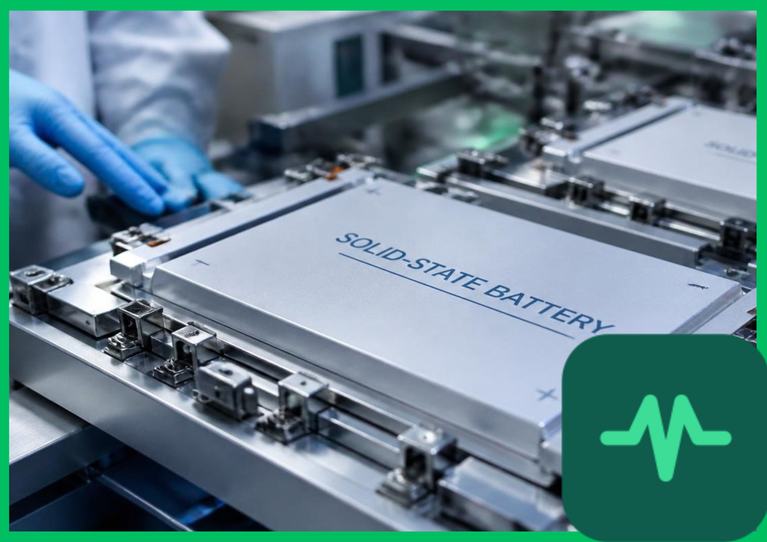
Solid-state batteries swap out the volatile liquid electrolyte for a solid material. This solid layer can be made of ceramics, solid polymers, or glass-based compounds.
The fundamental physics remain similar: ions still move between electrodes to store and release electrical power. But changing the medium changes everything.
Without a flammable liquid inside, the core fire hazard vanishes. Solid materials act as a sturdy physical barrier, blocking dendrites from forming and short-circuiting the cell.
This stability lets manufacturers pack energy storage materials much tighter. The result is a lighter, smaller battery that holds significantly more power.
Unlocking Massive Energy Density
Energy density measures how much power a battery can store relative to its physical size and weight.
Solid-state technology delivers a massive leap in energy density. A solid-state cell can store up to double the energy of a conventional liquid battery of the exact same size and weight.
Imagine an electric vehicle traveling up to 800 kilometers (500 miles) on a single charge, while shedding hundreds of kilograms of dead weight from its chassis.
Imagine a smartphone that runs for three full days on a single charge, housed in a casing as thin as a credit card.
Higher energy density removes the physical weight penalties that currently hold back portable electronics and electric transportation.
Blazing Charging Speeds Without Degradation
Charging speed is another area where solid-state technology changes the game.
Traditional batteries suffer from internal resistance. When you force electricity into them too quickly, they generate intense heat. That heat degrades the internal structure, shortening the lifespan of the battery.
Because solid-state electrolytes handle high ionic conductivity with incredible stability, they accept rapid energy transfers effortlessly.
Early laboratory tests show solid-state cells reaching an 80% charge in less than 15 minutes, with virtually zero thermal stress or long-term capacity degradation.
Batteries that last for decades without losing their holding capacity will transform how we power everything from personal gadgets to global power grids.
The Path Ahead for Advanced Energy Storage
Every revolutionary technology faces hurdles before it reaches everyday consumers. For solid-state batteries, the primary challenge is manufacturing at scale.
Producing flawless solid ceramic layers requires extreme precision. Scaling up production lines while driving down costs takes time, engineering breakthroughs, and massive global investment.
Yet, the momentum is undeniable. Research teams across multiple continents are refining production techniques every single day.
We are standing on the precipice of a new era in energy storage. Solid-state technology is moving from scientific theory to tangible reality, promising a lighter, safer, and infinitely more powerful future for our global society.


Comments (0)
Login to leave a comment.
No comments yet. Be the first to share your thoughts!