Frost covers the windshield of your electric vehicle.
You climb inside, turn on the ignition, and check your dashboard.
With older electric cars, winter cold was a cruel enemy. Freezing temperatures slowed down chemical reactions inside the battery, cutting your driving range by a third and making fast chargers crawl at a frustratingly slow pace.
Today, that chilly anxiety is fading away.
Beneath the floorboards of your car, a radical new kind of battery chemistry pulses with life.
It does not rely on rare, expensive lithium mined from deep remote pits. It runs on something far more common.
It runs on table salt.
For over a decade, lithium-ion batteries ruled the electric vehicle revolution. They changed personal transport forever, cleaning our air and giving us silent, instant torque.
They also carry a heavy hidden flaw. Lithium is scarce, expensive, and tied to brutal mining operations that scar fragile natural ecosystems.
We cannot power a billion electric vehicles across the globe using lithium alone.
What if the secret to universal clean transport was sitting right in the ocean and drying up in ancient salt flats?
A quiet, brilliant electrochemical revolution is unfolding in laboratories across the globe.
According to global clean transport reports from the International Energy Agency (IEA), resource protection frameworks from the United Nations Environment Programme (UNEP), appliance efficiency standards from ENERGY STAR, and academic electrochemistry research, sodium-ion EV batteries are changing our horizon.
By replacing scarce lithium with abundant sodium, we step into an era of affordable, cobalt-free, and cold-weather-resistant mobility.
Here is how sodium-ion technology works, why removing cobalt changes battery economics, and how earth-abundant chemistry secures our sustainable future.
The Hidden Limits of the Lithium Monopoly
To understand why sodium-ion batteries matter so much, you have to look at the fragile supply chain supporting traditional electric vehicles.
Every standard EV battery relies heavily on lithium, nickel, and cobalt.
Extracting those metals requires massive industrial mining operations that consume billions of liters of water, destroy local landscapes, and generate toxic waste slurry.
Worse still, global supplies of these critical minerals are concentrated in just a few geographic regions, leaving vehicle manufacturers vulnerable to severe trade bottlenecks and wild price spikes.
When the price of lithium climbs on global commodity markets, the cost of electric cars rises right along with it.
That price barrier keeps clean transportation out of reach for millions of working families across the globe.
We needed a chemistry built on materials that are cheap, ethical, and available everywhere.
Chemists looked down the periodic table from lithium and found its chemical cousin sitting right beneath it: sodium.
What Is a Sodium-Ion EV Battery?
A sodium-ion EV battery is an advanced rechargeable energy storage cell that replaces lithium ions with sodium ions to shuttle electrical charge back and forth between electrodes.
Sodium is the exact same element that combines with chlorine to form ordinary table salt.
It is practically inexhaustible. It coats our ocean floors and sits in vast dry mineral deposits across every continent on Earth.
You do not need to dig up remote deserts or fight geopolitical trade wars to find sodium.
From an architectural standpoint, a sodium-ion cell looks very similar to a traditional lithium-ion cell.
It features an anode, a cathode, a separator, and an electrolyte solution.
The profound difference lies inside the atomic structure.
Sodium ions are larger and heavier than lithium ions, which historically presented a major engineering hurdle.
Recent breakthroughs in cathode materials and hard-carbon anodes solved that problem completely, allowing sodium ions to slide smoothly into crystal structures without degrading the battery.
The Science of Cold-Weather Performance and Cobalt-Free Safety
How do sodium-ion batteries perform in the punishing conditions of the real world?
Academic electrochemistry research shows that sodium chemistry outperforms traditional lithium-ion cells in two critical areas: cold-weather resilience and safety.
When temperatures plummet below freezing, traditional lithium cells struggle because their internal electrolyte fluid thickens, slowing down ion transport.
Sodium ions maintain high ionic conductivity even in deep winter chills.
An EV powered by sodium cells maintains its driving range and accepts fast charges smoothly when winter storms strike.
Furthermore, sodium-ion batteries are entirely cobalt-free and nickel-free.
Because they contain zero toxic heavy metals, the risk of thermal runaway and battery fires drops dramatically.
According to ENERGY STAR and international appliance efficiency evaluations, sodium-ion cells can be discharged completely down to zero volts for safe transport and storage without damaging the internal chemistry.
Closing the Loop on Sustainable Manufacturing
The environmental benefits of sodium-ion batteries extend far beyond avoiding cold-weather range anxiety.
They transform the ethics of industrial manufacturing.
According to UNEP resource circularity frameworks, shifting from scarce transition metals to earth-abundant sodium eliminates the human and ecological toll of destructive deep-rock mining.
When battery supply chains rely on common salt derivatives rather than scarce geopolitical commodities, manufacturing costs plummet.
According to IEA clean transport roadmaps, lower production costs allow automakers to build affordable, compact electric vehicles that bring zero-emission driving to everyday drivers worldwide.
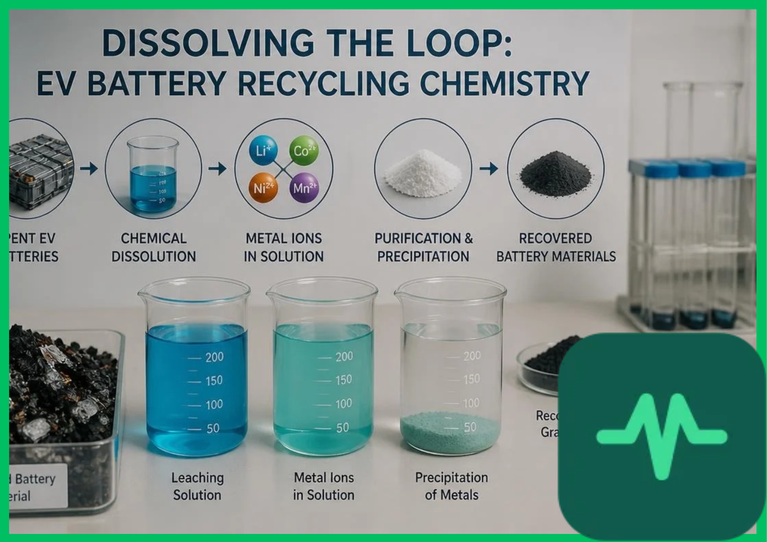
Furthermore, at the end of their operational lifespan, sodium-ion packs are remarkably easy and cheap to recycle, reinforcing a closed-loop circular economy.
Overcoming Energy Density Realities
If sodium-ion batteries offer such clear advantages, why aren't they powering every high-performance sports car on the highway today?
The answer lies in energy density.
Because sodium ions are physically larger than lithium ions, sodium-ion cells store slightly less energy per kilogram of weight compared to premium nickel-manganese-cobalt lithium cells.
For long-haul semi-trucks or luxury hypercars requiring 1,000 kilometers or 600 miles of highway range on a single charge, lithium and solid-state batteries remain the preferred choice.
For city cars, daily commuter vehicles, and public transit buses, however, sodium-ion batteries deliver more than enough range at a fraction of the cost.
Engineers continue refining hard-carbon microstructures, pushing sodium energy density higher every single year.
Driving Beyond Lithium Toward a Sustainable Future
Sodium-ion EV batteries prove that true technological progress often comes from looking back at the simple, abundant elements provided by nature.
We no longer have to accept that cleaning our transport sector requires depleting rare mineral reserves or funding destructive mining operations.
By harnessing earth-abundant sodium, cobalt-free chemistry, and exceptional cold-weather endurance, we make electric mobility universally accessible.
We step away from scarce commodities, embracing an affordable, ethical, and enduring standard of clean transportation.
Through brilliant electrochemical research, sustainable material engineering, and deep respect for our planetary ecosystem, sodium-ion batteries drive our world toward a bright, equitable future.
Comments (0)
Login to leave a comment.
No comments yet. Be the first to share your thoughts!