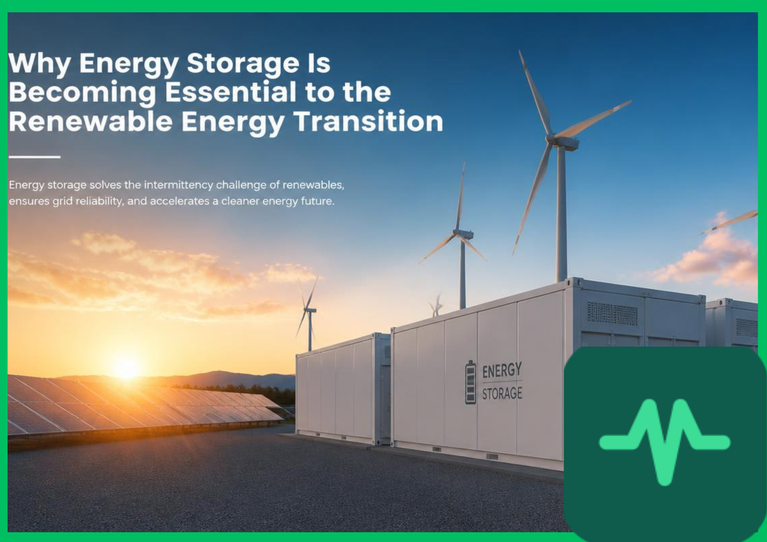
Energy Storage Is Changing the Renewable Energy Transition
The global energy system is changing quickly. Solar and wind power are expanding in many countries. As a result, electricity systems are becoming more dependent on renewable sources that do not produce power at the same time every day.
This is where energy storage becomes important. Renewable electricity is valuable. However, producing electricity is only part of the challenge. The electricity must also be available when people and businesses need it.
For example, solar panels produce most of their electricity during daylight hours. Yet electricity demand can remain high in the evening.
Energy storage can help connect these two periods. It can store electricity when supply is high. Then, it can release that electricity when demand increases.
Therefore, energy storage is becoming an increasingly important part of the renewable energy transition.
Renewable Energy Is Growing Quickly
The growth of renewable energy is creating new demands on electricity systems.
IRENA's Renewable Capacity Statistics 2026 shows that renewable power continued to expand strongly in 2025. Solar and wind accounted for the vast majority of new renewable capacity added during the year.
This growth is encouraging. However, it also creates a new question for energy planners.
The question is no longer simply: How can countries build more renewable power? Instead, they must also ask: How can renewable electricity be delivered when consumers need it? That is why energy storage is becoming more important.
Solar and wind projects can generate large amounts of electricity. But their output can change depending on weather conditions and the time of day. Storage can help manage some of these changes.
How Energy Storage Works
The basic idea behind energy storage is simple. Electricity can be stored when there is more supply than demand. It can then be released later.
Battery systems are one of the most common examples. Suppose a solar farm produces more electricity than the grid needs in the afternoon. Instead of allowing some of that electricity to go unused, a battery can store part of it.
Later, when solar production falls, the battery can send electricity back to the grid. This makes energy storage useful for balancing electricity supply and demand.
However, batteries are not the only storage technology. Other options include pumped-storage hydropower and several forms of long-duration storage. Each technology has different strengths.
Energy Storage Can Support Solar Power
Solar energy is one of the biggest drivers of renewable-energy growth. However, solar production follows the sun. Electricity demand does not. For many households and businesses, electricity use can remain high after sunset. This creates a gap.
Energy storage can help fill that gap. During the day, batteries can store some of the electricity produced by solar panels. Then, during the evening, that stored electricity can be used. This can increase the value of solar generation.
It can also reduce the need for some electricity from other sources during periods of high demand.
Energy Storage Can Support Wind Power
Wind power also benefits from energy storage. Wind turbines can produce electricity at different times of the day and night. Sometimes wind production can be high when electricity demand is low.
At other times, wind output may fall. Storage can help manage these changes. When renewable production is higher than demand, storage can absorb some of the electricity. When production falls, stored electricity can be released.
As a result, energy storage can make it easier for electricity systems to use larger amounts of variable renewable power.
Key Benefits of Energy Storage
There are several reasons why energy storage is becoming important.
1. Moving Electricity to Later
Storage can move electricity from periods of high production to periods of higher demand.
This is especially useful for solar power.
2. Supporting the Grid
Fast-responding batteries can help electricity systems respond to sudden changes in supply and demand.
3. Reducing Wasted Renewable Power
Sometimes renewable generators produce more electricity than the grid can use.
Storage can absorb some of this excess electricity.
4. Improving Energy Resilience
Storage can provide backup electricity during some disruptions.
This can be particularly useful for homes, businesses and critical facilities.
5. Supporting Renewable Growth
More storage can help electricity systems manage increasing amounts of solar and wind power.
Together, these benefits explain why energy storage is becoming a strategic technology.
Batteries Are Growing in Importance
Battery storage is receiving significant attention because batteries can respond quickly. They can also be installed at different scales. A small battery can be used in a home with solar panels. A much larger system can support an electricity grid.
Businesses can also use batteries to manage electricity consumption. As battery technology improves and costs change, more applications are becoming possible.
However, batteries also have limitations. They depend on materials and manufacturing supply chains. Their duration is also important.
A battery designed to provide electricity for a few hours may not be suitable for storing energy over several days. Therefore, different energy storage technologies will likely serve different roles.
Storage Cannot Replace the Electricity Grid
There is an important point to remember. Energy storage is not a replacement for electricity-grid investment. Batteries can help manage electricity.
However, electricity still needs to travel from generators to consumers. If a transmission network does not have enough capacity, adding more batteries may not solve the underlying problem.
Countries therefore need to invest in several areas at the same time. They need renewable generation. They need energy storage. They also need transmission networks, distribution systems and smart energy-management technologies.
These parts must work together.
Energy Storage and the Future of Clean Energy
The importance of energy storage is likely to increase as renewable generation grows. Solar panels and wind turbines can provide large amounts of clean electricity.
However, electricity systems need flexibility. Storage can provide part of that flexibility.
At the same time, better forecasting, stronger grids and flexible electricity demand can also help. As such, the future energy system will probably use several solutions rather than relying on one technology.
EcoGreenPulse View
The renewable-energy transition is no longer just about building more solar panels and wind turbines. It is increasingly about creating an electricity system that can manage those resources effectively.
That makes energy storage strategically important. Batteries, pumped-storage hydropower and other technologies can help move electricity through time.
However, storage works best as part of a larger system. Strong grids are still necessary. Good energy policies are still necessary.
Efficient electricity markets are also important. For investors, technology companies and policymakers, energy storage is therefore becoming more than an optional addition to renewable energy.
It is becoming part of the infrastructure needed to make the clean-energy transition work effectively.
Conclusion
The growth of solar and wind power is changing the way electricity systems operate. As renewable generation increases, the timing of electricity production becomes more important.
Energy storage can help solve part of this challenge. How? This is by storing electricity when supply is high and releasing it when demand increases.
Batteries can shift solar power into evening hours. They can also support wind power. In fact, they can even help balance electricity systems and reduce some renewable-energy waste.
However, energy storage cannot work alone. Countries also need stronger transmission networks to achieve this. They also need better distribution systems and smarter energy management if they want it to work effectively
Ultimately, the renewable-energy transition will depend on how well these technologies work together.
As solar and wind continue to expand, energy storage is likely to become an increasingly important part of the global electricity system.
Source: International Renewable Energy Agency (IRENA), Renewable Capacity Statistics 2026 and related renewable-energy data.
Comments (0)
Login to leave a comment.
No comments yet. Be the first to share your thoughts!