Massive wind turbines spin gracefully against the horizon, generating clean electricity out of thin air.
At the same time, bright solar panels soak up brilliant sunshine across open fields.
Nature provides energy in wild, unpredictable bursts.
When the wind blows hard at midnight or the sun shines fiercely while offices sit empty, clean power floods the electrical grid.
If we cannot store that surplus electricity safely, it goes to waste.
For generations, power grids solved supply mismatches by burning fossil fuels on demand.
When clean energy surged past what the grid could use, operators simply shut down wind farms or dialed back solar arrays.
Throwing away clean electricity is a tragic waste of human ingenuity and natural resources.
We cannot build a fully decarbonized energy future while relying on chemical batteries that degrade over time or throwing away surplus renewable power.
Lithium-ion batteries excel at storing short-term power for a few hours in a home garage or neighborhood substation.
Yet storing days or weeks of bulk grid energy requires something vastly bigger, tougher, and more enduring.
What if we could store electricity by lifting massive blocks of steel and concrete hundreds of meters into the sky?
What if gravity itself could act as a giant mechanical battery for our entire electrical grid?
A quiet, brilliant mechanical revolution is transforming energy engineering across the globe.
According to global energy reports from the International Energy Agency (IEA), resource protection frameworks from the United Nations Environment Programme (UNEP), efficiency benchmarks from ENERGY STAR, and academic mechanical research, gravity energy storage systems at grid scale are changing our clean energy landscape.
By using surplus renewable electricity to hoist heavy composite blocks up tall mechanical towers or lower them into deep underground shafts, we create long-duration energy storage solutions that stabilize regional power grids.
Here is how gravity storage works, why mechanical lifting changes grid economics, and how lifting power secures our sustainable future.
The Long-Duration Storage Challenge of Renewable Energy
To understand why gravity energy storage matters so much, you have to look at the physical limits of traditional chemical batteries.
Lithium-ion batteries are brilliant for short bursts of power.
They absorb solar energy during the sunny afternoon and discharge it back into homes during evening peak hours.
Chemical batteries become heavy, expensive, and environmentally taxing when scaled up to store weeks of continuous wind and solar energy across a continent.
During prolonged winter stretches when skies stay cloudy and winds drop for days on end, chemical batteries run dry.
Grids need long-duration energy storage solutions that can sit charged for months, waiting quietly until a renewable drought strikes.
Skeptics once argued that mechanical energy storage was too inefficient, claiming that lifting and lowering heavy weights lost too much energy along the way.
Mechanical engineers and physicists proved those skeptics wrong.
You do not need chemical minerals to store electricity if you use fundamental Newtonian physics and gravity.
What Is a Gravity Energy Storage System?
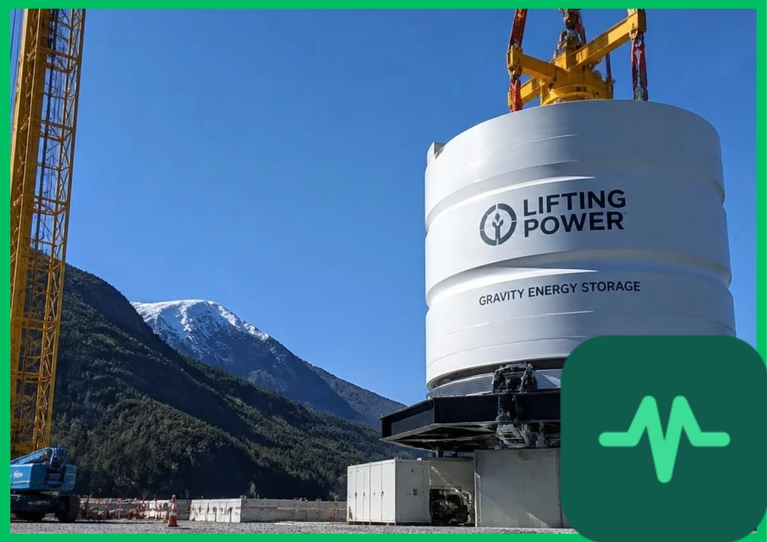
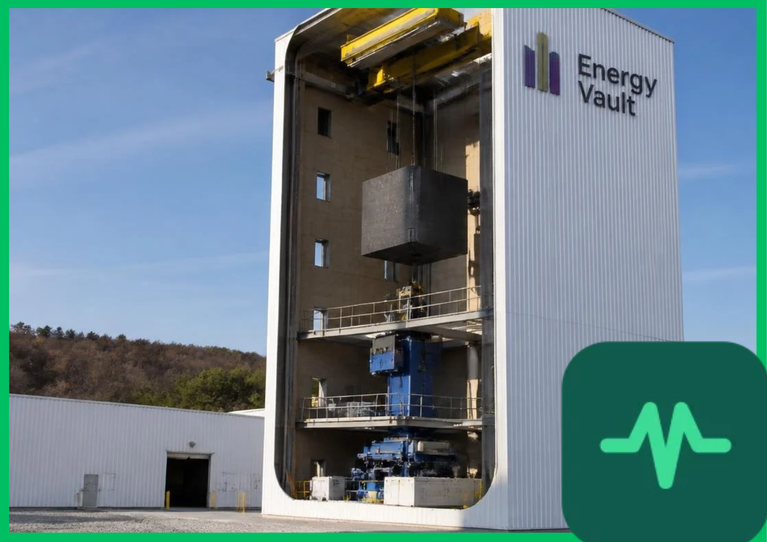
A gravity energy storage system is an advanced utility-scale mechanical installation that uses surplus electricity from wind and solar farms to power electric hoists that lift thousands of heavy composite blocks—weighing hundreds of metric tons or thousands of pounds each—up a towering steel crane structure or lower them down deep underground mine shafts, storing energy as potential mechanical elevation.
Instead of trapping electrons in chemical cells, the system stores energy as sheer physical height:
- The Charging Phase: When renewable energy floods the grid and demand is low, surplus electricity powers heavy electric motors that lift massive concrete blocks upward to a height of 100 meters to 300 meters or 330 feet to 1,000 feet.
- Potential Energy Storage: The raised blocks hang motionless in the tower or shaft, holding immense potential energy safely without degrading or losing charge over time.
- The Generation Phase: When evening demand spikes or wind generation drops, the heavy blocks are lowered slowly back toward the ground.
- Electricity Generation: The descending weight spins high-efficiency electric generators, pumping clean, reliable power straight back into the regional transmission grid.
You harness the midnight breeze, pack it tight inside towering physical elevation, and unleash it whenever humanity needs power.
The Science of Potential Energy and Mechanical Efficiency
How can lifting heavy blocks store enough electrical energy to power entire cities through calm winter weeks without losing power to friction or heat loss?
It comes down to classical mechanics and high-efficiency regenerative braking.
Academic mechanical research shows that gravity storage systems convert electrical energy into mechanical potential energy with astonishing precision.
When electric motors hoist a block upward, conversion efficiencies exceed 85% to 90%.
When the block descends, the gravitational pull turns the generator cleanly and silently.
Unlike chemical batteries that degrade chemically after thousands of charge cycles, concrete and steel blocks suffer zero physical wear over decades of lifting and lowering.
Furthermore, ENERGY STAR and international grid efficiency evaluations prove that mechanical gravity storage systems maintain high round-trip efficiencies without consuming toxic heavy metals or rare earth minerals.
Physics replaces chemistry. Clean mechanics preserve our resources.
Environmental Integrity and Land Stewardship
The environmental benefits of gravity energy storage systems extend far beyond balancing regional power grids or storing surplus wind energy.
They provide a remarkably gentle footprint on the earth compared to massive open-pit mining operations required for chemical battery production.
According to UNEP resource governance frameworks, utilizing structural steel towers or repurposing exhausted underground coal and metal mine shafts requires zero chemical refining, zero toxic wastewater ponds, and zero child labor mining concerns.
When energy storage relies on gravity, steel, and concrete, industrial infrastructure harmonizes cleanly with local geography.
According to IEA clean energy roadmaps, scaling up long-duration mechanical storage is an essential pillar to achieve global net-zero emissions targets without straining global mineral supply chains.
When gravity itself becomes our battery, our clean energy transition rests on solid physical ground.
Overcoming Structural Siting and Capital Realties
Scaling gravity energy storage from pioneering utility pilot sites into universal grid infrastructure involves navigating real-world structural and economic hurdles.
Building towering mechanical cranes capable of lifting thousands of heavy blocks requires rigorous civil engineering, durable materials, and strong foundations.
Energy developers, structural engineers, and utility planners solve these challenges by building enclosed modular towers, utilizing recycled industrial waste for heavy blocks, and partnering with mining firms to use existing underground shafts.
As engineering techniques mature and standardized modular tower designs enter the global market, gravity storage is transitioning successfully from experimental mechanical trials into standard utility-scale grid balancing technology worldwide.
Lifting Power Toward a Sustainable Future
Gravity energy storage systems prove that humanity can master fundamental Newtonian physics to solve the most complex energy storage challenges of our modern grid.
We no longer have to accept that capturing the unpredictable power of wind and solar energy requires endless chemical batteries or polluting fossil-fuel backup.
By lifting heavy blocks into the sky and lowering them through high-efficiency generators, we store clean power safely using the pull of the earth.
We step away from energy waste, embracing a resilient, durable, and enduring standard of bulk power management.
Through brilliant mechanics, rigorous academic research, and a deep respect for our planetary laws, lifting power secures a clean, reliable, and sustainable future for every community on Earth.
Comments (0)
Login to leave a comment.
No comments yet. Be the first to share your thoughts!