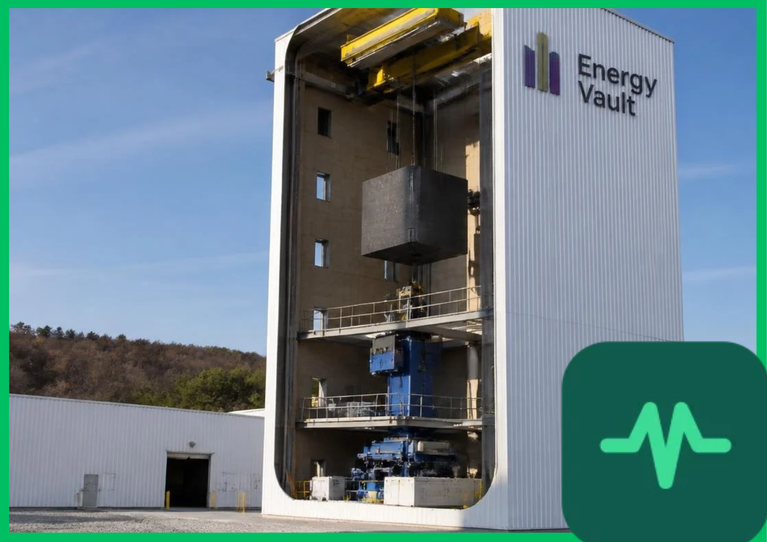
Massive steel cables stretch taut against the sky. A towering crane hovers silently above, holding a multi-ton block of solid composite material in mid-air.
Below you, a colossal mechanical hoist hums with controlled power.
There are no chemical batteries here. There is no toxic lithium, no cobalt, and no rare earth mining sludge.
Instead, this industrial tower relies on the oldest, most reliable force in our universe: gravity.
When excess wind and solar electricity flood local power lines, electric motors use that surplus energy to winch massive weighted blocks straight up into the air.
They store clean power as potential energy, suspended high above the ground.
When the sun sets and the wind dies down, the operation reverses.
The heavy weights descend slowly toward the earth. Their downward pull spins heavy generators, feeding clean electricity back into the grid.
It is simple, elegant physics operating on a monumental scale.
As our global civilization transitions away from burning fossil fuels, we need massive amounts of energy storage to balance renewable power grids.
Lithium-ion batteries work wonderfully for daily cycles and electric cars. They can become expensive and resource-intensive when you need to store power for weeks, months, or across massive industrial regions.
We needed a completely different way to hold electricity.
A quiet, brilliant mechanical revolution is bringing gravity storage out of the laboratory and onto the world stage.
According to global energy reports from the International Energy Agency (IEA), resource protection frameworks from the United Nations Environment Programme (UNEP), efficiency benchmarks from ENERGY STAR, and academic mechanical engineering research, gravity energy storage technology is changing our industrial horizon.
By lifting and lowering heavy masses using surplus renewable energy, we build durable, chemical-free storage systems that last for generations.
Here is how gravity storage works, why mechanical energy storage changes long-duration power reserves, and how weighted towers secure our sustainable future.
The Long-Duration Storage Challenge
To understand why gravity energy storage matters so much, you have to look at the physical limits of chemical batteries.
Lithium-ion batteries are fantastic technology, but they degrade over time.
After thousands of charge and discharge cycles, chemical cells wear out. Their internal resistance climbs, and their total storage capacity fades away.
Furthermore, building massive battery installations requires mining thousands of tons of lithium, nickel, and cobalt.
Relying exclusively on chemical storage for multi-day or seasonal energy reserves creates severe supply chain bottlenecks and heavy environmental footprints.
Grid operators need long-duration energy storage that can sit idle for months, handle countless charge cycles without chemical wear, and operate for fifty years or more without losing efficiency.
We looked up at the mountains and down into deep abandoned mine shafts, and we remembered how gravity works.
What Is Gravity Energy Storage Technology?
Gravity energy storage technology is an advanced mechanical system that stores surplus electrical energy by lifting heavy masses—such as blocks of concrete, composite steel weights, or water—against the pull of gravity, and recovers that energy by letting the weights descend.
Instead of moving chemical ions through an electrolyte solution, gravity storage moves physical weight through space.
There are two primary engineering configurations capturing global attention:
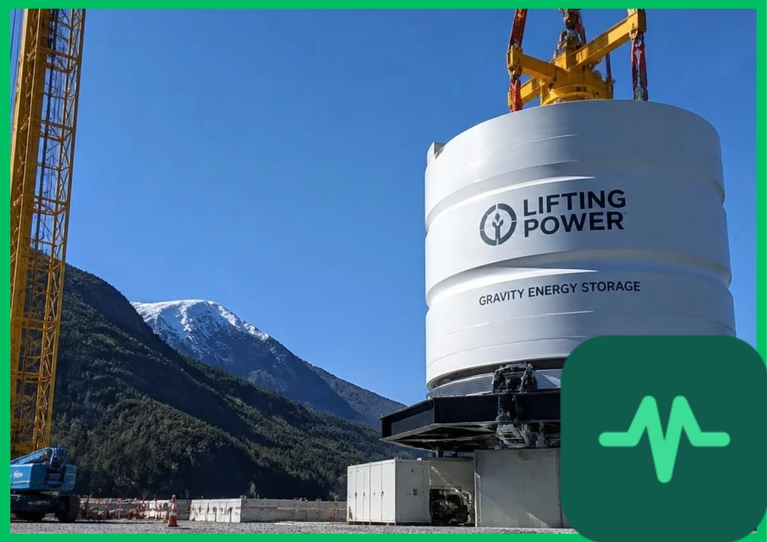
- Tower Systems: Massive automated cranes housed inside towering steel or concrete structures lift heavy composite blocks vertically, stacking them high when energy is cheap and lowering them to spin generators when demand spikes.
- Underground Shaft Systems: Heavy weighted pistons slide up and down inside deep, abandoned vertical mine shafts, using surplus electricity to hoist the weight upward and gravity to drop it when power is needed.
When wind and solar farms generate more power than homes and factories can consume, automated software routes the surplus electricity to the gravity hoist motors.
When the sun goes down, the process reverses instantly, converting potential energy back into clean electricity.
The Science of Potential Energy and Mechanical Efficiency
How do falling weights turn mechanical motion into reliable electricity for modern cities?
It comes down to foundational physics and potential energy equations.
Academic mechanical engineering research shows that the amount of energy stored in a gravity system depends on two simple factors: the mass of the lifted object and the vertical distance it travels.
Lifting a massive block weighing thousands of metric tons or tons hundreds of meters or feet into the air stores an immense amount of potential energy.
When those blocks descend, computer-controlled regenerative brakes manage their speed with pinpoint accuracy, turning the physical descent into smooth rotational force that spins high-efficiency turbine generators.
According to ENERGY STAR and international industrial efficiency evaluations, mechanical gravity systems achieve round-trip storage efficiencies exceeding 80% to 85%, rivaling traditional pumped-hydro installations without requiring massive natural river basins or mountain lakes.
Environmental Integrity and Mineral Stewardship
The environmental benefits of gravity energy storage extend far beyond bypassing the need for chemical batteries.
They provide a masterclass in sustainable material stewardship.
According to UNEP resource circularity frameworks, gravity storage towers can be built using recycled industrial byproducts, local stone, and low-carbon concrete, avoiding the destructive ecological impacts of mining rare earth minerals.
Unlike chemical batteries that eventually require recycling or disposal, a steel cable, a concrete weight, and a mechanical motor can operate for half a century with basic maintenance.
According to IEA clean energy roadmaps, deploying long-duration mechanical storage is essential to eliminate the need for fossil-fuel backup plants during prolonged periods of low renewable generation.
When grids have access to cheap, durable, multi-day storage, the transition to 100% clean energy becomes technically and economically unstoppable.
Overcoming Infrastructure and Footprint Realties
Like any heavy industrial technology, gravity energy storage involves real-world engineering hurdles.
Building towering mechanical cranes or drilling deep underground mine shafts requires significant initial capital investment and careful structural planning.
Engineers must ensure that mechanical hoists, braking systems, and digital control software maintain absolute reliability under heavy physical loads.
As pilot projects scale up into commercial utility installations across diverse geographies, costs continue to fall.
Because gravity systems do not depend on specific chemical elements or scarce mineral deposits, they can be deployed anywhere on Earth where energy storage is needed.
Lifting Our Future Toward Sustainability
Gravity energy storage technology proves that the most enduring engineering solutions often draw upon the fundamental laws of nature.
We no longer have to rely exclusively on chemical batteries to store our clean electricity.
By lifting heavy masses with surplus wind and solar power and letting them fall to generate electricity on demand, we build durable, chemical-free energy reserves.
We step away from resource-intensive storage models, embracing a reliable, resilient, and enduring standard of power management.
Through brilliant mechanical engineering, fundamental physics, and deep respect for our planetary climate, falling weights secure a clean, bright, and sustainable future for our world.

Comments (0)
Login to leave a comment.
No comments yet. Be the first to share your thoughts!