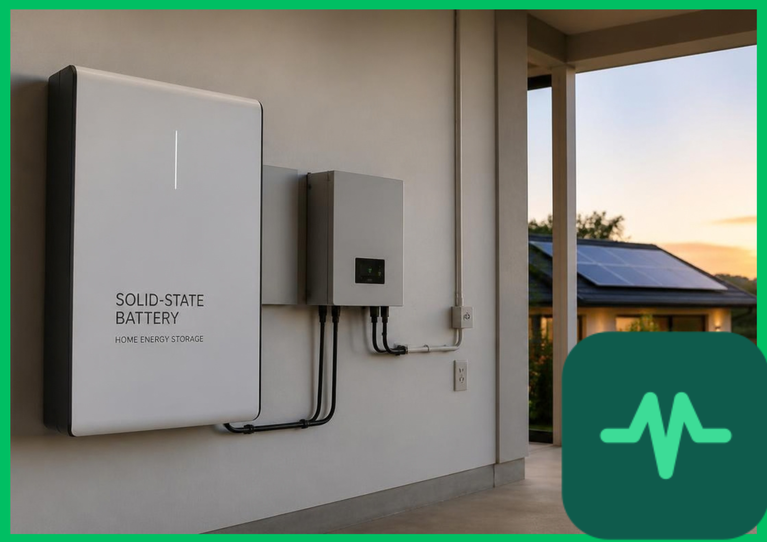
While lithium-ion technology has successfully driven the initial wave of home energy independence, it has its limits. The systems are heavy, they degrade slowly over years of daily cycling, and they carry a tiny, inherent risk of catching fire if they are physically damaged or suffer a manufacturing flaw.
Because of these limitations, the tech world is focused on a new development: the solid-state battery. It promises more power, a vastly longer lifespan, and complete safety from fire risks. However, as developers push this technology toward store shelves, consumers are left with a difficult choice: should you buy what is available today, or wait for the next generation to arrive?
Understanding the Solid Shift
To make an informed decision, it helps to understand what makes this new chemistry fundamentally different. Every traditional battery relies on three core components to function: a positive electrode (the cathode), a negative electrode (the anode), and a medium that allows electrical charges to move between them (the electrolyte).
Traditional lithium-ion units use a liquid or gel-like chemical electrolyte. This liquid is highly effective at moving charges, but it is also volatile, chemically sensitive to extreme temperatures, and flammable under stress.
A solid-state system completely eliminates this liquid layer. Engineers replace the volatile chemical gel with a solid material, usually made of advanced ceramics, specialized glass, or stable polymers. This single swap alters the battery's characteristics. Because the internal structure is solid, there is no liquid to leak out, no gel to degrade over time, and zero risk of a runaway chemical fire, even if the unit is physically punctured.
The Practical Performance Benefits
The lack of liquid inside the battery housing opens up massive performance upgrades for everyday households. The first major improvement is energy density. Because solid electrolytes take up significantly less space than liquid dividers, engineers can pack far more active, energy-storing material into the exact same physical footprint.
For the average homeowner, this means a much lighter and more compact unit. A solid-state unit can offer double the storage capacity of a traditional battery while taking up half the wall space in your garage or utility room.
The second major benefit is longevity. Every time you charge and discharge a standard liquid-based battery, the internal chemical reactions cause minute physical degradation. Over five to ten years of daily use, the battery's total capacity shrinks significantly, eventually requiring an expensive replacement. Solid-state structures are incredibly stable and can withstand thousands of additional charge cycles without losing capacity. A single investment could easily power your home for decades, outlasting the solar panels on your roof.
Gauging the Market and Availablity
Given these clear advantages, the immediate temptation is to pause any current shopping plans and wait to buy solid-state home battery systems the moment they launch. However, moving a high-tech concept from a pristine laboratory to a mass-production factory is a notoriously slow and difficult process.
Manufacturing advanced ceramic or glass separators at a massive scale without a single micro-defect requires entirely new factory setups and immense quality control.
Because of these production bottlenecks, the technology is rolling out in distinct phases. The initial wave of commercial solid-state cells is being funneled directly into high-end electric vehicles and specialized aerospace projects where weight and space carry a massive premium. The residential energy sector is next in line. While early-stage pilot programs and boutique installations are active, wide consumer availability for standard households is a progressive rollout, with production volumes scaling up steadily over the coming years.
The Cost Reality Check
When these systems finally arrive in large numbers at local distribution hubs, the initial pricing will reflect their premium status. The complex manufacturing processes mean that the early retail prices will be high.
If you are looking for the absolute cheapest way to back up your home next month, an entry-level lithium-ion unit or a time-tested iron phosphate pack will still be the budget-friendly winner.
The true financial value of solid-state technology only reveals itself when you look at the total cost of ownership over a twenty or thirty-year window. A cheaper liquid battery might need to be torn out, recycled, and replaced entirely after a decade of hard, daily use. A solid-state system will keep running smoothly over the exact same period without any noticeable drop in performance. By avoiding a mid-lifecycle replacement, the premium upfront investment often proves to be the much smarter, lower-cost option over the lifespan of your property.
Making the Right Choice for Your Home
Ultimately, deciding whether to wait comes down to your immediate household needs and your personal tolerance for tech timelines. If your local power grid is highly unstable, if you are experiencing frequent blackouts today, or if your local utility company is offering massive, immediate financial incentives to install storage right now, waiting makes very little sense. The financial losses from lost productivity and spoiled food during an actual blackout outweigh the future benefits of a better battery. Current storage systems are highly capable, reliable tools.
However, if you are in the early, speculative planning stages of building a new home, or if your current power setup is perfectly adequate for the next few years, keeping your eyes on the horizon is highly practical. The energy landscape is shifting away from volatile liquid chemistries toward stable, long-lasting solid components. By keeping your options open, you will be perfectly positioned to adopt a safer, more efficient, and incredibly durable storage system the moment it scales to your local market.

Comments (0)
Login to leave a comment.
No comments yet. Be the first to share your thoughts!