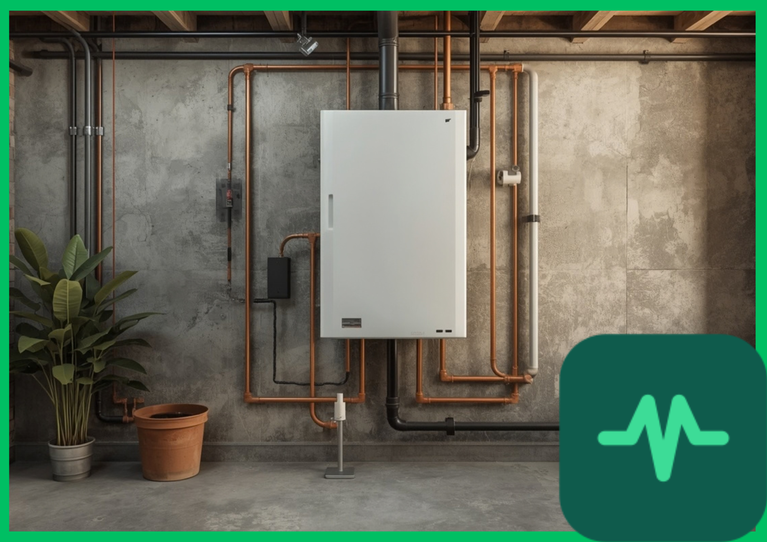
However, if you look closely at where your household actually spends its energy, a completely different picture emerges. The vast majority of the electricity and fuel entering a standard residential building does not go toward running small appliances or electronics. It goes toward managing temperature. Heating living spaces, cooling them down during summer peaks, and warming water for showers consumes the massive lion's share of your monthly utility budget.
Attempting to solve this thermal challenge by simply buying more chemical batteries is incredibly inefficient and expensive. Storing electricity in a lithium-ion cell just to turn it back into raw heat a few hours later involves major energy conversion losses. This realization has driven a major shift toward a completely different approach: capturing and storing temperature directly.
The Underlying Science of Heat Batteries
To understand this technology, it helps to look at the mechanics of a residential thermal energy storage system. Instead of storing chemical charges to produce electricity later, these systems store raw thermal energy inside a heavily insulated container. They are essentially high-tech thermal buffers for your property.
Inside the core of a modern thermal battery is a specialized storage medium. This can be as simple as a highly engineered water tank, or as advanced as a phase-change material like non-toxic salts or specialized waxes. When your solar panels are producing excess energy at midday, or when the local grid is offering ultra-low electricity rates late at night, the thermal storage system turns on.
It runs a high-efficiency heat pump or an internal heating element to change the temperature of the storage core. If the goal is home heating, it bakes the material until it reaches an incredibly high temperature. If the goal is air conditioning, it chills the core down to near-freezing. Because the container is surrounded by space-grade insulation, the core can hold that exact temperature for days with almost zero energy loss. When your home needs climate control hours later, the system simply blows air or pumps water past the core, distributing the stored temperature instantly without drawing a single watt from the public grid.
Navigating the True Installation and Equipment Costs
Bringing this mechanical framework onto your property requires analyzing a realistic residential thermal energy storage system cost breakdown. Like most advanced infrastructure, the financial commitment is heavily weighted toward the initial purchase and integration phase.
The price of a residential thermal unit varies significantly depending on the scale of your property and the specific medium used inside the battery core. A standard, high-efficiency water-based thermal buffer is highly accessible and can be integrated into most existing plumbing networks with minimal disruption. On the upper end, compact, solid-state phase-change modules that pack massive amounts of thermal capacity into a tiny utility closet carry a higher premium.
The installation phase requires an experienced technician who understands both electrical wiring and hydronic HVAC principles. The thermal battery must be linked directly to your home’s existing climate control loop, whether you use radiant floor heating, ducted central air, or a standard hot water network. While the upfront invoice is often higher than simply replacing a standard hot water tank, you are purchasing a dual-purpose asset that replaces both an emergency backup source and a massive portion of your standard heating and cooling equipment.
Maximizing Daily Operational Savings
The true value of this technology reveals itself on your monthly utility statement. By shifting when you draw power for temperature management, you completely bypass peak electricity pricing structures.
Instead of turning on an expensive air conditioner at 5:00 PM when rates are at their absolute highest, your home pulls cold air directly from the thermal core you charged at 10:00 AM when the sun was shining bright or electricity was cheap. This decoupling of generation and consumption results in massive, immediate structural savings.
Furthermore, thermal storage media are incredibly durable compared to chemical alternatives. A lithium-ion battery suffers minute physical degradation every single time it goes through a charge and discharge cycle, meaning its capacity slowly fades over a decade of use. A thermal battery relying on water, stone, or stable phase-change salts can melt and freeze, or heat up and cool down, tens of thousands of times across thirty or forty years without a single drop in performance. It is a long-term fixture that outlasts almost every other mechanical appliance in your house.
The Ultimate Impact on Energy Security
Stepping back to look at the wider community grid reveals why thermal engineering is taking over modern home design. When extreme heatwaves or winter storms put immense pressure on public infrastructure, the primary reason the grid collapses is due to the collective surge in climate control demands.
If a neighborhood integrates thermal storage, that catastrophic peak demand vanishes. Entire streets can keep their living spaces perfectly comfortable for hours during a regional blackout without needing massive electrical backup arrays.
By focusing on storing temperature rather than just electricity, you address your home’s heaviest energy burden directly at its source. It is a practical, safe, and exceptionally long-lasting solution that turns your home into a self-sustaining thermal sanctuary while keeping your monthly operational expenses down to an absolute minimum.

Comments (0)
Login to leave a comment.
No comments yet. Be the first to share your thoughts!