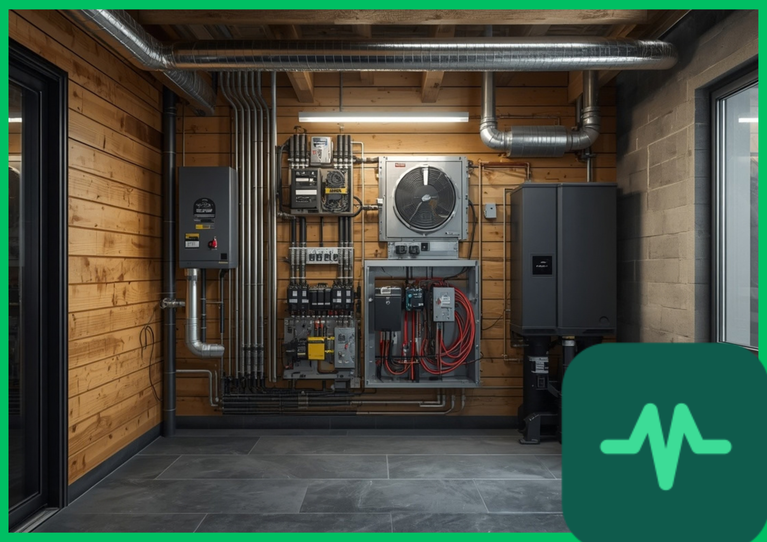
To the casual observer, it looks like a simple metal box.
Inside that enclosure, however, lies an advanced technological ecosystem. It stores clean energy from your rooftop solar panels, protects your home when the local power grid fails, and optimizes every kilowatt your household consumes.
Home energy storage has evolved rapidly over recent years. As independent engineering analyses and academic research highlight, modern residential battery systems are triumphs of safety, high round-trip efficiency, and smart digital control.
Here is a closer look at the advanced engineering that makes modern home batteries safe, efficient, and entirely under your control.
The Core Blueprint: Chemistry and Safety Architecture
To understand modern home batteries, you have to look past the outer casing and examine what happens at the cellular level.
Earlier generation energy storage systems relied heavily on volatile chemical formulations that required strict physical isolation.
Today, the vast majority of residential systems utilize lithium-iron phosphate (LFP) chemistry. LFP cells offer remarkable thermal stability, high resistance to degradation, and an exceptionally long lifecycle spanning thousands of deep charging cycles.
Safety is built into every layer of the hardware.
Advanced home batteries incorporate a sophisticated Battery Management System (BMS) that monitors voltage, current, and cell temperatures continuously. If any individual cell begins to drift outside safe operating parameters, the BMS intervenes instantly, balancing currents or isolating the module to prevent hazards.
Paired with active or passive thermal management systems that regulate internal airflow and operating temperatures, modern residential batteries meet the strictest global fire safety and engineering certifications.
Understanding Round-Trip Efficiency
Safety is essential, but efficiency dictates how well your investment performs day in and day out.
When you store electricity in a battery and pull it back out later, a small amount of energy is naturally lost as heat during the conversion process.
Engineers measure this performance using a metric called round-trip efficiency.
Independent performance studies and academic research show that modern home storage systems achieve round-trip efficiencies between 80% and 95%.
System design heavily influences these numbers:
- Direct Current (DC) Coupling: Systems connected directly on the DC side of a solar array avoid multiple power conversions, achieving higher overall efficiency.
- Alternating Current (AC) Coupling: Systems that integrate an independent inverter convert electricity twice—from solar DC to AC, and back to DC for storage—introducing minor conversion losses.
- Peripheral Power Draws: Smart cloud features and continuous monitoring electronics account for minor baseline power draws, which leading manufacturers work tirelessly to minimize.
Choosing a well-designed, appropriately sized storage system ensures that nearly all the clean solar energy you capture makes it back into your household appliances.
Smart Energy Management and Digital Control
Hardware safety and electrical efficiency form the physical foundation of modern home storage, but software brings the system to life.
Inside your battery enclosure sits an Energy Management System (EMS)—the digital brain coordinating all power flows.
The EMS communicates seamlessly with your home Wi-Fi network, smart meters, and local utility pricing feeds.
It analyzes real-time weather forecasts to predict tomorrow's solar production, monitors your daily electricity habits, and adapts automatically.
If a severe storm warning is issued in your region, the software overrides standard routines to charge your battery to 100% capacity, preparing your home for potential grid blackouts.
When normal weather returns, it resumes economic optimization, charging on cheap midday solar power and discharging during expensive evening peak hours.
Empowering the Modern Household
Modern home energy storage represents a profound shift in how we interact with electricity.
It replaces passive consumption with active, intelligent control.
By combining rigorous LFP safety standards, high round-trip efficiency, and automated energy management software, residential storage systems give households absolute autonomy over their power.
You control the energy you generate, secure your home against uncertainty, and embrace a cleaner, more resilient way of living.


Comments (0)
Login to leave a comment.
No comments yet. Be the first to share your thoughts!